




Restraint Responsibility, Special-Needs Transportation Highlighted at California Conference
School transportation providers from across the state gather in Anaheim to kick off the annual California Association of School Transportation Officials conference.

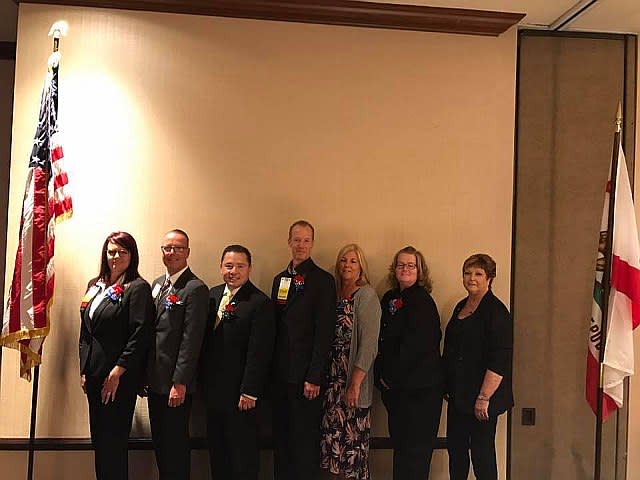
School transportation providers from across the state gathered on April 1 in Anaheim to kick off the annual California Association of School Transportation Officials conference. Shown here are the association's executive board members. Photo courtesy Mike Swayer, CASTO
School transportation providers from across the state gathered on April 1 in Anaheim to kick off the annual California Association of School Transportation Officials conference. Shown here are the association's executive board members. Photo courtesy Mike Swayer, CASTO
ANAHEIM, Calif. — School transportation providers were reminded of the profound difference they make in children's lives as they gathered here on April 1 to kick off the annual California Association of School Transportation Officials (CASTO) conference.
On the first day of the conference, seat belt enforcement responsibility and special-needs transportation were among the highlighted topics.
Jamie Swetalla, Miss California International 2016, gave the keynote speech, sharing the story of her years of struggle and triumph competing in pageants, how it helped her find her way to her philanthropy work for Children’s Miracle Network Hospitals, and her recent title win.
Growing up, Swetalla was inspired by her mother, a school bus driver. She saw how hard she worked, and the difference she made in so many students’ lives just by doing little things, like listening to them, handing out candy gift bags during the holidays, and helping raise money to pay for prom tickets for students on her bus who couldn’t afford them.
“You make a difference,” Swetalla told the audience.
Tony Peregrina, second vice president of CASTO, got the audience laughing with stories about his childhood, when he realized he loved buses, and how he found his calling in pupil transportation.
“Leaders are not born, but made,” he said. “And this is where I was made. I learned my leadership skills from everyone in this room.” He added that attendees have ample knowledge and experience to offer each other, and that they can make a positive or negative impact in a child’s life every day.
In California, where lap-shoulder belts have been required on new school buses for over 10 years, a policy is essential for consistent enforcement, Donna Anderson, a transportation consultant at the California Department of Education, told attendees.
Many attendees said they have drivers who think enforcement of wearing seat belts is not their responsibility. Anderson warned that that is a false assumption, and she noted that in California, home-to-school transportation is not mandated, so “when we provide it, we take on the responsibility of doing it right and safely.”
The attitude toward wearing seat belts has changed, she added. Now, 5-year-olds put them on without thinking anything of it, and the notion that kids are going to use the belts as weapons is not true.
“Actually, the belts tend to eliminate behavior problems,” she said.
Lap-shoulder belt safety is specifically mentioned in the portion of California educational code that instructs school bus safety trainers in emergency procedure and passenger safety. Students need to be told they must wear the seat belts and how to do it correctly, Anderson explained. She also recommended that every driver be instructed in what to include in their speech for consistency.
Anderson provided a policy template and went through with attendees what it should include, such as information on proper belt placement, fastening, and unfastening. Manufacturers include instructions on how to properly store the belts, so the driver should be familiar with that information and make sure all the belts work and are placed properly during pre-trip. The policy should also include consequences for students who repeatedly disobey the seat belt rules, because bus drivers need that support.
Anderson also suggested adding definitions of terms, such as latch plate and buckle, and conducting training when all students are already on the bus on the afternoon route home.

Jamie Swetalla, Miss California International 2016, gave the keynote speech, sharing how competing in pageants led to her philanthropy work for Children’s Miracle Network Hospitals. She also said that she drew inspiration from her mother, who is a longtime school bus driver.
Stephanie Oliver and Dano Rybar, transportation consultants at the California Department of Education, mixed entertainment and education with a bingo session and a quiz that tested attendees’ knowledge of special-needs transportation. Oliver shared facts and then quizzed attendees, and Rybar called the bingo numbers. Three lucky attendees won a prize gift basket.
Oliver reviewed the definition and history of the Individuals with Disabilities Education Act (IDEA); how students qualify to receive benefits under IDEA; the 13 identifiable disabilities; the definition of the individualized education program (IEP) and what it should include; when and who should attend IEP meetings; types of adaptive devices and assistive technologies; and rules on service animals and wheelchairs.
Dayle Cantrall, special-education program manager at San Juan Unified School District, shared tips and insights with attendees on how to deal with students who have difficult behavior due to emotional disturbance, and how to open the lines of communication between the special-education and transportation departments.
She pointed out that drivers don’t always understand what emotional disturbance is, and she explained that the condition includes an inexplicable inability to learn, build, or maintain interpersonal relationships with peers or teachers; inappropriate types of behavior in normal circumstances; and a pervasive mood of unhappiness or depression.
Often the complete opposite of a model student, the typical student with emotional disturbance uses inappropriate language, has no regard for the feelings of others, is in constant motion, and frequently talks without permission. They often display impulsivity and poor judgment, and they don’t understand the consequences of their behavior.
Cantrall also noted that it’s important to differentiate between dangerous and disrespectful behavior. Dangerous behavior includes fighting, threats made with intent, destroying property, or bringing illegal objects on the bus. Disrespectful behavior includes cursing, being rude, talking back, ignoring directions, bullying, and spitting.
Cantrall asked the audience how they feel when a student is disruptive, unsafe, or rude. Responses included frustrated, anxious, distracted, and out of control.
When dealing with these students is overwhelming, the special-education department can help, she said.
“If you’re feeling these things, it’s not OK, and we need to support you,” Cantrall said. “When your anger is up, your cognitive function is down. You don’t deserve to be treated badly, but this behavior is a reality of special education.”
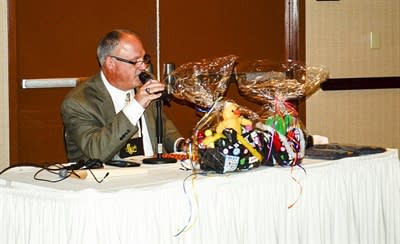
Dano Rybar, transportation consultant at the California Department of Education, calls out bingo numbers during a session that combined the game with quizzes on special-needs transportation information.
When a student acts out, how a bus driver responds can either set gas on the flame or calm it down, Cantrall said, and she recommended using assigned seats and posting bus rules where all students can see them.
For disrespectful behaviors such as swearing, Cantrall advised reminding the student every morning to only “use good language on the bus.”
She also suggested building rapport with students by finding something they like and connecting with them about it, and getting involved in classroom programs that reward students points for recess and other privileges.
For dangerous behavior, Cantrall said, drivers and aides should remain calm and practice de-escalation techniques (which drivers, substitute drivers, and attendants should be trained on every year). Speak firmly and with few words. Limit interaction with parents until the supervisor is consulted.
Special-education and transportation staff can work together, for example, on mapping routes and drop-offs, she added. They should also establish regular meetings and email communication.
More Management
Industry Moves: Companies Expand Fleet Service & EV Infrastructure Footprints
The new facilities and regional hubs could mean faster access to shop equipment, charging support, and transportation technology for fleet operators.
Read More →
Doing More With Less: How Transportation Directors Can Prioritize Safety Amid Budget Uncertainty
With diesel prices soaring and nearly one-third of transportation directors expecting budget cuts, maintaining student safety has never been more challenging. Download this guide to learn how leading districts are prioritizing risk, funding critical safety technology, and building stronger budget cases with data.
Read More →
Walton County Schools Adds Gatekeeper Stop-Arm Enforcement System
The Florida district will deploy Gatekeeper’s updated Student Protector technology, which now incorporates AI to improve video evidence.
Read More →
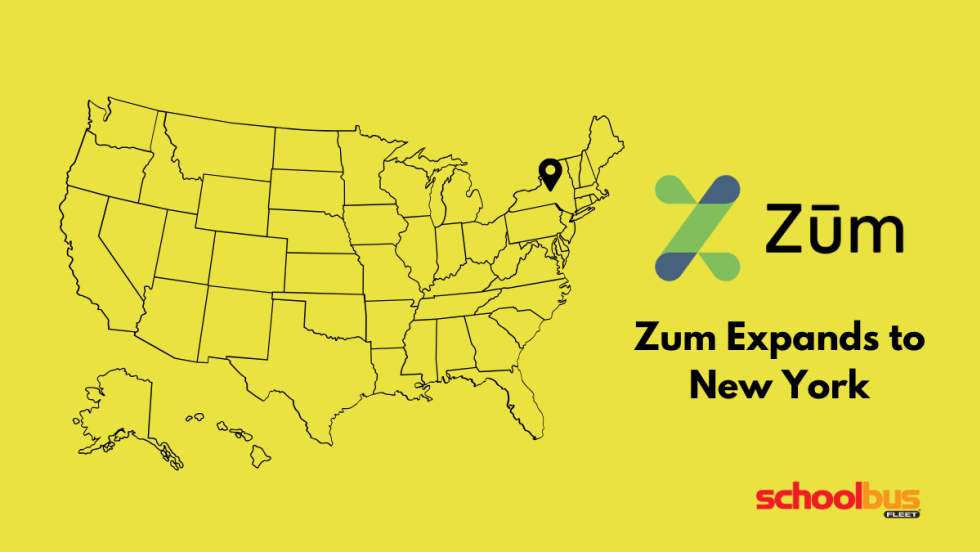
Zum Reaches 19 States With New York Expansion
The addition of the Empire State to the student transportation company's roster marks a growing expansion in the Northeast as it scales its tech and school bus services.
Read More →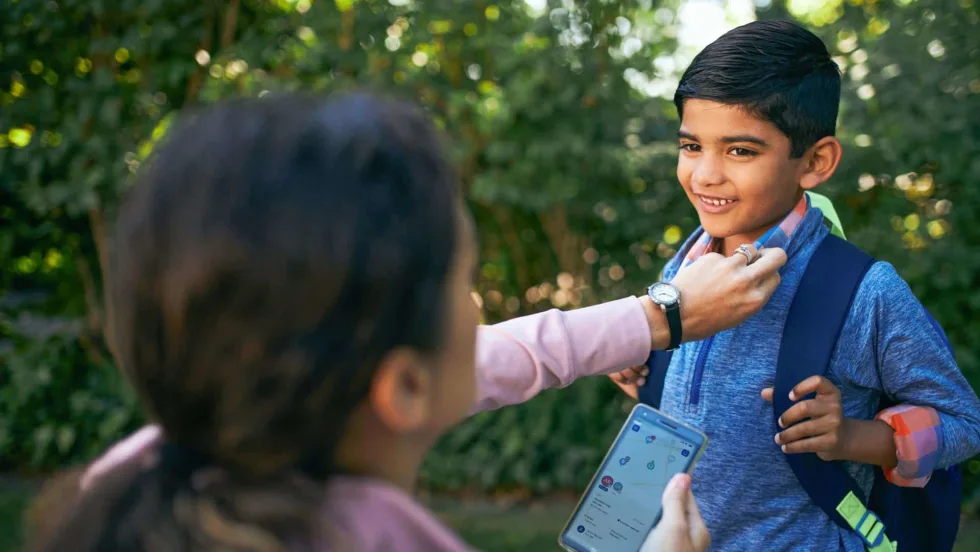
First Student Updates Its Parent App
First View connects both yellow bus and alternative transportation, giving families one platform to track student trips for the new school year, with 15 languages supported.
Read More →
The Back-to-School Checklist Every Director Should Complete Before the First Bell
Help your transportation team start the school year strong with these tips for contingency planning, communication, fleet visibility, technology, and trip management.
Read More →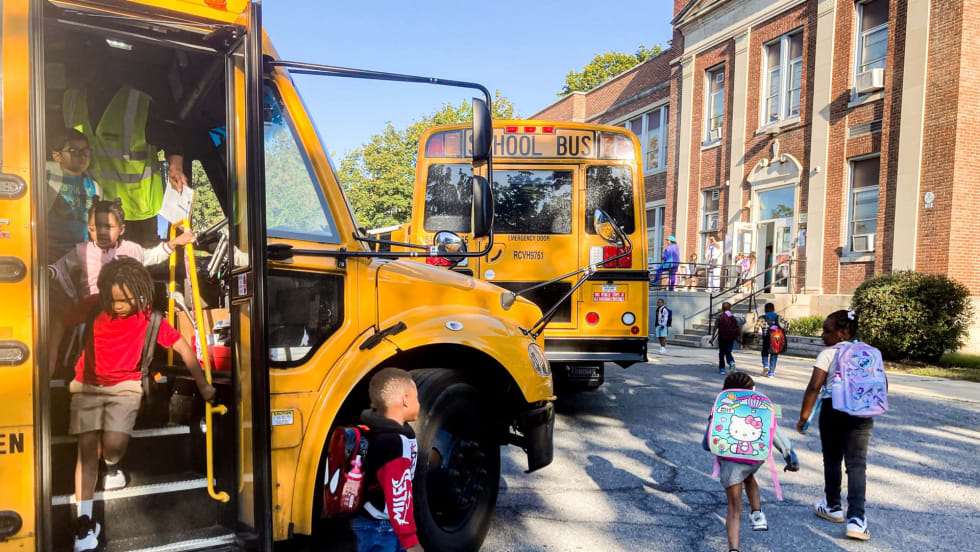
How a New York District Cut Nearly $1M in Transportation Costs While Expanding Bus Access
A data-driven overhaul with BusRight reduced Poughkeepsie City School District's planned routes from 26 to 17 while extending school bus service to about 1,200 additional students.
Read More →
Budgets Down, Enrollment Shifting: What the Data Says Districts Should Watch
School transportation departments face two converging challenges this year: tightening budgets and shifting enrollment. Most districts still address these issues separately, but the assumption that either trend will simplify operations is proving incorrect.
Read More →
These 8 School Transportation Companies Made the 2026 Inc. 5000 List
Find out which school transportation contractors, technology providers, and suppliers ranked among America’s fastest-growing private companies.
Read More →
The Link Between Emotional Intelligence and School Bus Safety
How can emotional intelligence help transportation pros navigate stress, manage change, and build stronger relationships? Listen to find out.
Read More →