




Pupil Transportation Associations Unite to Support School Bus Safety Bill
The presidents of the NSTA, NAPT, and NASDPTS send a joint letter to Congress expressing support for the Stop for School Buses Act of 2019 to address illegal passing.

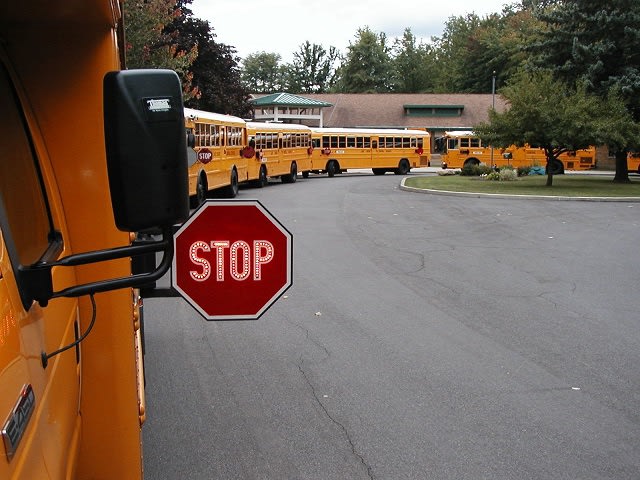
The presidents of the NSTA, NAPT, and NASDPTS sent a joint letter to members of Congress on Wednesday expressing support for the Stop for School Buses Act of 2019. Photo by Michael Dallessandro
The presidents of the NSTA, NAPT, and NASDPTS sent a joint letter to members of Congress on Wednesday expressing support for the Stop for School Buses Act of 2019. Photo by Michael Dallessandro
ALEXANDRIA, Va. — Three major national pupil transportation associations teamed up and sent a letter to members of Congress on Wednesday to support a federal bill addressing school bus safety.
The presidents of the National School Transportation Association (NSTA), the National Association for Pupil Transportation (NAPT), and the National Association of State Directors of Pupil Transportation Services (NASDPTS) requested in the letter co-sponsorship of the Stop for School Buses Act of 2019 (H.R. 2218/S. 1254) from lawmakers on Capitol Hill.
As SBF previously reported, the bill, which aims to address illegal passing of school buses, was introduced in the House by U.S. Representatives Jackie Walorski (R-Ind.) and Julia Brownley (D-Calif.), and in the Senate by Senators Todd Young (R-Ind.) and Gary Peters (D-Mich.). The bipartisan legislation calls upon the U.S. Department of Transportation to undertake a comprehensive review of all issues involved with illegal passing of school buses and make recommendations to Congress on best practices to deal with the national safety issue.
“I appreciate the support of my colleagues, Barry Sudduth, president of the NAPT, and Michael LaRocco, president of NASDPTS, in support of this important legislation," said Blake Krapf, president of the NSTA. "Standing together as an industry, we can bring this bill across the finish line and save the children we transport to and from school from these completely preventable tragedies.”
The associations expressed their appreciation for the ongoing efforts of the National Highway Traffic Safety Administration (NHTSA) to study illegal passing and develop safety countermeasures and added that the bill’s passage will enable NHTSA to broaden its efforts on all aspects of illegal passing and expedite best practice recommendations, according to a news release from the NSTA.
The letter also cites data from the eighth annual NASDPTS survey on the illegal passing of school buses, in which 108,623 school bus drivers in 38 states, plus the District of Columbia, reported that 83,944 vehicles illegally passed their stopped buses on a single day in 2018. Based on these observations, an estimated 15 million vehicles illegally pass stopped school buses in a 180-day school year, according to NASDPTS.
All three associations are urging members of Congress to support and enact the Stop for School Buses Act as soon as possible. The bill is currently in the Subcommittee on Highways and Transit, according to the U.S. Congress website.
More Safety

Geotab Expands Fleet Safety Tools With Video Coaching, Risk Insights
New safety and video capabilities aim to help fleet managers assess risk, support drivers, and take targeted action through video coaching, red-light violation detection, and more.
Read More →
How to Build a Better School Bus Driver Training Program
Is it time to strengthen your driver training? Here’s how to pick the right talent and improve recruitment, retention, and safety. This video is brought to you by IC Bus.
Read More →
Recent School Bus Accidents Leave 2 Dead, 2 Injured
Four school bus crashes in Florida, Illinois, and Georgia highlight risks in transportation lots, at bus stops, and during student loading and unloading.
Read More →

When Every Second Matters, Clarity Keeps Routes Moving
From routine delays to urgent incidents, strong communication practices help drivers, dispatchers, schools, and families respond with confidence.
Read More →
What Happens When a School Bus Catches Fire — and What Can Help
School bus fires are rare but can be devastating. Learn how advances in fire suppression and asset protection help fleets detect fires earlier, reduce damage, and improve safety.
Read More →
Geotab Launches Tool to Help Fleets Investigate Road Incidents
Geotab Investigations combines telematics data, video, documents, and other evidence to help fleets reconstruct incidents, resolve claims, and determine what happened.
Read More →
Texas Sixth Grader Wins 2026 National School Bus Safety Poster Contest
Sai Darshana Yekolu of Moseley Middle School in Prosper, Texas, was named the newest winner for her artwork, bringing the theme of “Safe Rides, Everyday Heroes” to life.
Read More →
Doing More With Less: How Transportation Directors Can Prioritize Safety Amid Budget Uncertainty
With diesel prices soaring and nearly one-third of transportation directors expecting budget cuts, maintaining student safety has never been more challenging. Download this guide to learn how leading districts are prioritizing risk, funding critical safety technology, and building stronger budget cases with data.
Read More →
Walton County Schools Adds Gatekeeper Stop-Arm Enforcement System
The Florida district will deploy Gatekeeper’s updated Student Protector technology, which now incorporates AI to improve video evidence.
Read More →
How To Build a More Secure School Bus Yard During and After Hours
As thefts and overnight security threats continue, school transportation leaders are combining stronger operational practices with AI-enabled surveillance to better protect buses, facilities, and staff.
Read More →