




Proterra Files for Chapter 11 Bankruptcy Protection
The move is an effort to strengthen its financial position through a recapitalization, or going-concern sale, according to the company.

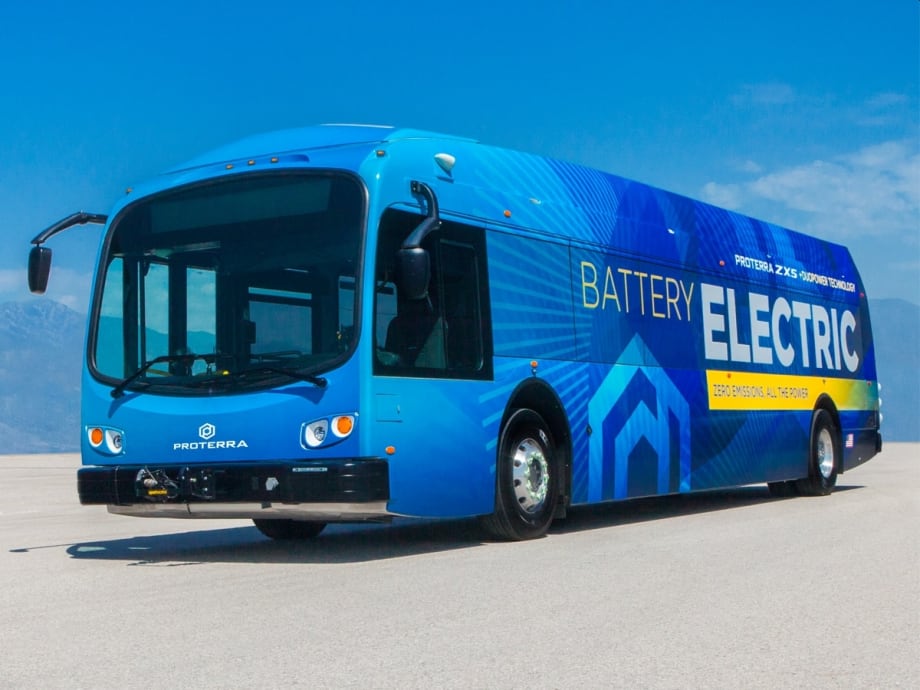
Proterra introduced zero-emission, electric transit buses to the North American market in 2010, which have now cumulatively amassed more than 40 million real-world service miles and displaced over 180 million pounds of CO2 emissions.
Photo: Proterra
Proterra Inc. announced it is taking action to maximize the value of its business and enhance the potential of each of its product lines by voluntarily filing for protection under Chapter 11 of the U.S. Bankruptcy Code in the District of Delaware.
The move is an effort to strengthen its financial position through a recapitalization, or going-concern sale, according to the company.
Moving Ahead
The company intends to continue to operate in the ordinary course of business as it moves through this process and plans to file the customary motions with the Bankruptcy Court to use existing capital to fund operations, including paying employee salaries and benefits, and compensating vendors and suppliers on a go-forward basis in accordance with Chapter 11 rules, all while ensuring business continuity for customers.
“Proterra is at the forefront of the innovations that are driving commercial vehicle electrification. We know we’re building industry-leading products that our customers want and need,” said Gareth Joyce, Proterra CEO. “The foundation we have built has set the stage for decarbonization across the commercial vehicle industry as a whole, and we recognize the great potential in all of our product offerings to enable this important transformation. This is why we are taking action to separate each product line through the Chapter 11 reorganization process to maximize their independent potential.”
Proterra introduced zero-emission, electric transit buses to the North American market in 2010, which have now cumulatively amassed more than 40 million real-world service miles and displaced over 180 million pounds of CO2 emissions.
Today, the company’s battery technology is powering more than 20 commercial vehicle applications, spanning Class 3 cargo vans through to Class 8 semi-trucks, as well as off-highway equipment in the construction and mining segments, in the U.S., European, and Asia-Pacific markets. The company has further installed more than 100 megawatts of heavy-duty EV charging infrastructure to support commercial vehicle fleets across North America.
“While our best-in-class EV and battery technologies have set an industry standard, we have faced various market and macroeconomic headwinds that have impacted our ability to efficiently scale all of our opportunities simultaneously. As commercial vehicles accelerate towards electrification, we look forward to sharpening our focus as a leading EV battery technology supplier for the benefit of our many stakeholders,” said Joyce.
Continuing its Plan to Charge Ahead
In January, the company said it would cut 300 jobs, shutter its California plant, and move the manufacture of its battery and bus manufacturing to its South Carolina facility as a cost savings move.
As a result of the announcement, Proterra said it will no longer be holding an earnings conference call that was scheduled for August 9.
Moelis & Company LLC is acting as the Company’s investment banker; FTI Consulting as financial advisor; and Paul, Weiss, Rifkind, Wharton, & Garrison LLP is acting as legal advisor.
Originally posted on Metro
More Alternative Fuels

CALSTART and Forth Combine to Form Catalyst Mobility
The new name represents a renewed vision for the nonprofit focused on advancing clean, equitable, and affordable transportation solutions that move people and goods.
Read More →
Alt-Fuel Moves: New Buses, Charging Hubs & Real-World EV Testing
Propane and electric school bus deployments continue to grow as districts add new vehicles, expand charging infrastructure, and gather more real-world operating data.
Read More →
Fewer Electric School Bus Models Reshape the U.S. Market
WRI’s latest buyer’s guide points to a consolidating electric school bus market, but fewer options may reflect a maturing industry rather than fewer meaningful choices for school bus operators.
Read More →
The Fuel Budget You Can Actually Predict: How Propane Autogas Keeps Money in the Classroom
Learn how propane autogas helps school districts manage fuel costs with predictable pricing, lower maintenance, and reduced emissions from former transportation director Joel Stutheit.
Read More →
Hendrickson, Driventic Introduce New Electric Powertrain for School Buses
ELECTRAAX, the electrified, lightweight drive axle offers integrated ePowertrain efficiency and modular flexibility for Class 6–7 school bus use.
Read More →
The Mobility House Joins PowerFlex in Fleet Electrification Deal
The acquisition combines intelligent charging software, bidirectional charging expertise, and fleet electrification services to support the growing adoption of electric school buses across North America.
Read More →
Alt-Fuel Moves: Electric School Bus Investments Hit the Road
See which districts across the U.S. are putting electric school buses into service, expanding charging infrastructure, and planning the next phase of fleet electrification.
Read More →
With Fuel Volatility Ahead, School Districts Turn to Propane
While diesel prices peaked above $5 this spring, districts with propane autogas-powered fleets paid under $2 per gallon, according to PERC.
Read More →
EPA Unveils Proposed Changes to 2027 Heavy-Duty Engine Rules
The federal agency has proposed changes to next year’s targets that would eliminate DEF derates, ease warranty requirements, and retain current NOx emissions standards.
Read More →
Alt-Fuel Moves: EV Charging & Infrastructure Projects Gain Momentum
The latest developments include new funding, charging infrastructure, utility investments, and fleet technologies designed to support the transition to electric school buses nationwide.
Read More →