




NTSB Releases 2019 Most Wanted List
The list of 10 items includes priorities such as distracted driving, strengthening occupant protection, and implementing collision avoidance systems.


The NTSB released its 2019-2020 Most Wanted List of Transportation Safety Improvements, prioritizing issues such as strengthening occupant protection and implementing collision avoidance systems. Shown here is a screen shot from video of the agency's meeting at the National Press Club.
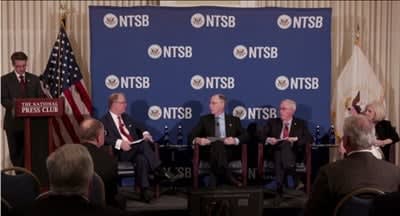
The NTSB released its 2019-2020 Most Wanted List of Transportation Safety Improvements, prioritizing issues such as strengthening occupant protection and implementing collision avoidance systems. Shown here is a screen shot from video of the agency's meeting at the National Press Club.
WASHINGTON, D.C. — The National Transportation Safety Board (NTSB) on Monday released its 2019-2020 Most Wanted List of Transportation Safety Improvements, prioritizing issues such as distracted driving, strengthening occupant protection, and implementing collision avoidance systems.
First issued in 1990, the NTSB Most Wanted List of Transportation Safety Improvements serves as the agency’s primary advocacy tool to help save lives, prevent injuries, and reduce property damage resulting from transportation accidents, according to a news release from the agency.
The 10 items on the NTSB’s 2019-2020 Most Wanted List of Transportation Safety Improvements are:
• Eliminate distractions.
• End alcohol and other drug impairment.
• Ensure the safe shipment of hazardous materials.
• Fully implement positive train control.
• Implement a comprehensive strategy to reduce speeding-related crashes.
• Improve the safety of part 135 aircraft flight operations.
• Increase implementation of collision avoidance systems in all new highway vehicles.
• Reduce fatigue-related accidents.
• Require medical fitness – screen for and treat obstructive sleep apnea.
• Strengthen occupant protection — including with seat belts and child safety restraint systems in highway vehicles.
“The 2019-2020 Most Wanted List advocates for 46 specific safety recommendations that can and should be implemented during these next two years,” said NTSB Chairman Robert Sumwalt. “It also features broad, longstanding safety issues that still threaten the traveling public.”
Sumwalt added that NTSB board members count on “industry, advocates, and government” to put their recommendations into action, and that they depend on “the help of the broader safety community to implement these recommendations” since they are unable to act on the recommendations themselves.
There are 267 open NTSB safety recommendations associated with the 10 Most Wanted List items and the NTSB is focused on seeing 46 of those implemented within the next two years. The majority of these recommendations, roughly two-thirds of the 267, seek critical safety improvements by means other than regulation. Of the 46 safety recommendations the NTSB wants implemented in the next two years, 20 seek regulatory action to improve transportation safety.
At any given time, the NTSB is managing approximately 1,200 open safety recommendations, and while all have the potential to save lives and reduce injuries by preventing accidents, the NTSB cannot effectively communicate about each of them, according to the agency. The NTSB’s Most Wanted List provides the NTSB’s advocacy team and other agency communicators a roadmap to focus on a select number of recommendations. In 2017, the NTSB went from an annual list to a biennial process to give its advocacy team, their partners, and its safety recommendation recipients more time to move toward implementation of the recommendations associated with the list.
An archive of the livestream of Monday’s event is available on the NTSB’s YouTube Channel here as is a video about the 2019-2020 Most Wanted List here.
To learn more about the items on the NTSB’s 2019-2020 Most Wanted List of Transportation Safety Improvements or the NTSB safety recommendations associated with the list, go here.
More Safety

How to Build a Better School Bus Driver Training Program
Is it time to strengthen your driver training? Here’s how to pick the right talent and improve recruitment, retention, and safety. This video is brought to you by IC Bus.
Read More →
Recent School Bus Accidents Leave 2 Dead, 2 Injured
Four school bus crashes in Florida, Illinois, and Georgia highlight risks in transportation lots, at bus stops, and during student loading and unloading.
Read More →
When Every Second Matters, Clarity Keeps Routes Moving
From routine delays to urgent incidents, strong communication practices help drivers, dispatchers, schools, and families respond with confidence.
Read More →

What Happens When a School Bus Catches Fire — and What Can Help
School bus fires are rare but can be devastating. Learn how advances in fire suppression and asset protection help fleets detect fires earlier, reduce damage, and improve safety.
Read More →
Geotab Launches Tool to Help Fleets Investigate Road Incidents
Geotab Investigations combines telematics data, video, documents, and other evidence to help fleets reconstruct incidents, resolve claims, and determine what happened.
Read More →
Texas Sixth Grader Wins 2026 National School Bus Safety Poster Contest
Sai Darshana Yekolu of Moseley Middle School in Prosper, Texas, was named the newest winner for her artwork, bringing the theme of “Safe Rides, Everyday Heroes” to life.
Read More →
Doing More With Less: How Transportation Directors Can Prioritize Safety Amid Budget Uncertainty
With diesel prices soaring and nearly one-third of transportation directors expecting budget cuts, maintaining student safety has never been more challenging. Download this guide to learn how leading districts are prioritizing risk, funding critical safety technology, and building stronger budget cases with data.
Read More →
Walton County Schools Adds Gatekeeper Stop-Arm Enforcement System
The Florida district will deploy Gatekeeper’s updated Student Protector technology, which now incorporates AI to improve video evidence.
Read More →
How To Build a More Secure School Bus Yard During and After Hours
As thefts and overnight security threats continue, school transportation leaders are combining stronger operational practices with AI-enabled surveillance to better protect buses, facilities, and staff.
Read More →
FMCSA Names New Chief Safety Officer: What School Bus Operators Should Know
Steve Dowling is set to lead the federal agency's efforts to advance commercial motor vehicle safety and reduce crashes, fatalities, and injuries on the nation's roadways.
Read More →