




NHTSA chief: Some ‘unintended consequences’ of school bus seat belts are positive
In an exclusive interview with School Bus Fleet, NHTSA Administrator Mark Rosekind discusses key points from the agency’s public meeting, and options for what NHTSA may propose this fall.

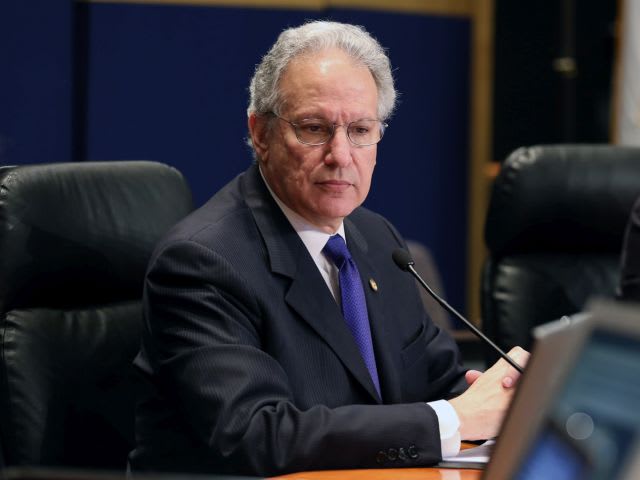
In an exclusive interview with SBF, NHTSA Administrator Mark Rosekind discusses key points from the agency’s public meeting, and options for what NHTSA may propose this fall.
WASHINGTON, D.C. — School bus safety has been on the front burner for Mark Rosekind since he took the reins at the National Highway Traffic Safety Administration (NHTSA) in January.
Within weeks of Rosekind’s swearing-in, an ABC News journalist asked him why seat belts aren’t federally mandated on large school buses. The new administrator said that NHTSA was going to take another look at the issue, and a task force was soon assembled.
Last week, NHTSA held a public meeting that focused on the seat belt issue but also touched on other school bus safety topics.
After the meeting, Rosekind discussed key points that were made, as well as what the agency will consider proposing this fall, in an exclusive interview with School Bus Fleet.
Rosekind told SBF that a particularly constructive finding was on the topic of “unintended consequences.”
One of the longstanding arguments against a mandate for lap-shoulder belts on large school buses is that the added cost — estimated to be in the range of $7,000 to $10,000 per bus — would force school districts to reduce school bus service, which would in turn force some students to use less-safe modes of transportation to school. In fact, before Rosekind came to the agency, NHTSA itself used that argument, in its 2011 denial of a petition to mandate lap-shoulder belts on large school buses.
Rosekind likened that reasoning to a “diversion” that is “used for not taking action in the first place.” On the other hand, he said that last week’s meeting identified some unintended consequences of seat belts on school buses that could enhance safety. As was noted in the meeting, some districts have seen significant reductions in disciplinary issues on school buses equipped with lap-shoulder belts.
“There are unintended consequences that are positive: reducing driver distraction, improved behavior,” Rosekind said. “People don’t talk about that very much.”
The administrator also told SBF that he was interested to hear some meeting attendees suggest that funding would not be a problem if there were a seat belt mandate for large school buses. A parallel was made to the Environmental Protection Agency’s 2007 and 2010 mandates for diesel engine emission reductions that each added about $6,000 to the cost of a school bus, with no federal funding provided to compensate for the increases.
“School districts found ways to fund that without any changes to school bus service,” Rosekind said. “The example was: This has already been done.”
At least one attendee of the meeting said that NHTSA should be clearer on its position about seat belts on school buses. Rosekind told SBF that he aims to address that.
“The agency has a historical stance in this area, and I’m not sure that's been communicated very well,” the administrator acknowledged. “Our last statement was the 2011 [denial of the petition for a mandate]. … It's time for something different. The task force will explore the full range of options.”
So what are the options? Is a seat belt mandate back on the table?
“At this point, what I can say is that we have opened up a whole new world of possibilities for student transportation,” Rosekind said. “In the fall, NHTSA will probably have a more comprehensive program that we are going to propose. We are going to go after the data. And there will be an education and communications component to that. There will be a rulemaking regulatory component to that. There could be a funding element to that — whether it’s [from] us or others. At the very least, it will be a programmatic, comprehensive approach, other than just seat belts on buses.”
More Safety

How to Build a Better School Bus Driver Training Program
Is it time to strengthen your driver training? Here’s how to pick the right talent and improve recruitment, retention, and safety. This video is brought to you by IC Bus.
Read More →
Recent School Bus Accidents Leave 2 Dead, 2 Injured
Four school bus crashes in Florida, Illinois, and Georgia highlight risks in transportation lots, at bus stops, and during student loading and unloading.
Read More →
When Every Second Matters, Clarity Keeps Routes Moving
From routine delays to urgent incidents, strong communication practices help drivers, dispatchers, schools, and families respond with confidence.
Read More →

What Happens When a School Bus Catches Fire — and What Can Help
School bus fires are rare but can be devastating. Learn how advances in fire suppression and asset protection help fleets detect fires earlier, reduce damage, and improve safety.
Read More →
Geotab Launches Tool to Help Fleets Investigate Road Incidents
Geotab Investigations combines telematics data, video, documents, and other evidence to help fleets reconstruct incidents, resolve claims, and determine what happened.
Read More →
Texas Sixth Grader Wins 2026 National School Bus Safety Poster Contest
Sai Darshana Yekolu of Moseley Middle School in Prosper, Texas, was named the newest winner for her artwork, bringing the theme of “Safe Rides, Everyday Heroes” to life.
Read More →
Doing More With Less: How Transportation Directors Can Prioritize Safety Amid Budget Uncertainty
With diesel prices soaring and nearly one-third of transportation directors expecting budget cuts, maintaining student safety has never been more challenging. Download this guide to learn how leading districts are prioritizing risk, funding critical safety technology, and building stronger budget cases with data.
Read More →
Walton County Schools Adds Gatekeeper Stop-Arm Enforcement System
The Florida district will deploy Gatekeeper’s updated Student Protector technology, which now incorporates AI to improve video evidence.
Read More →
How To Build a More Secure School Bus Yard During and After Hours
As thefts and overnight security threats continue, school transportation leaders are combining stronger operational practices with AI-enabled surveillance to better protect buses, facilities, and staff.
Read More →
FMCSA Names New Chief Safety Officer: What School Bus Operators Should Know
Steve Dowling is set to lead the federal agency's efforts to advance commercial motor vehicle safety and reduce crashes, fatalities, and injuries on the nation's roadways.
Read More →