




New York Governor Calls for Steeper Stop-Arm Fines, VW Funds for School Buses
Cuomo’s 2018 agenda includes initiatives to address illegal passing, replacement of old buses, and bullying.

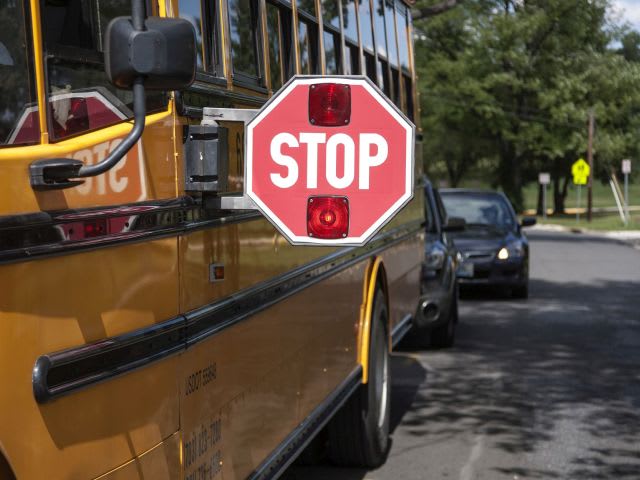
New York Gov. Andrew Cuomo’s 2018 agenda includes initiatives to address illegal passing of school buses, replacement of old buses, and bullying. Photo courtesy NHTSA
New York Gov. Andrew Cuomo’s 2018 agenda includes initiatives to address illegal passing of school buses, replacement of old buses, and bullying. Photo courtesy NHTSA
ALBANY, N.Y. — Tougher penalties for stop-arm runners and funding for school bus replacement are among the many issues on the 2018 agenda for New York’s governor.
On Wednesday, Gov. Andrew Cuomo presented his annual State of the State address, which covered a broad sweep of economic, educational, and environmental priorities.
Cuomo’s more detailed State of the State policy book includes several school bus-related initiatives that are “good for children and good for New York,” according to New York Association for Pupil Transportation (NYAPT) Executive Director Peter Mannella.
Cuomo’s policy book notes that more than 1,000 people were cited for illegally passing stopped school buses during New York’s Operation Safe Stop Day in April 2017. To enhance student safety, Cuomo said that this year he will work to increase the state's fines for stop-arm running.
NYAPT, which has been conducting monthly surveys of school bus passing, voiced its support for Cuomo’s call for steeper fines as well as two of his other initiatives.
One is to include school buses in New York’s plan for replacing old diesel vehicles with its $127.7 million share of the Volkswagen settlement mitigation funding. According to Cuomo’s policy book, the plan “will prioritize replacement of diesel vehicles with emission-free electric vehicles, stimulating the transformation to a low-carbon transportation system.”
Still, NYAPT said in a statement that it would work with state agencies “to allow flexibility for districts and operators to employ clean technologies that meet their needs.”
NYAPT also expressed its support for Cuomo’s push for increased engagement on bullying and harassment of students in schools and on school buses. On that front, the association and its Cyr Foundation recently began offering an educational program designed to increase awareness and sensitivity of school bus personnel to gender-related issues on the bus.
“We are so pleased that the governor has called attention to the importance of school bus safety for all our children by advancing these proposals for action in our state,” NYAPT President Lori-Ann Savino said. “We look forward to being an active part of their development and enactment.”
The New York School Bus Contractors Association (NYSBCA) voiced its approval for Cuomo's proposal to raise stop-arm violation fines.
“Unfortunately, with estimates showing as many as 40,000 drivers in New York illegally passing a stopped school bus every day school is in session, it is clear that current penalties are not enough to act as a deterrent," NYSBCA President Bree Allen said. "We continue to strongly support the passage of complementary bills, sponsored by New York state senators Rich Funke and John Bonacic, to increase the penalties on drivers who continue to break the law and put our children in danger.”
Under current New York law, drivers convicted of a first stop-arm offense face up to 30 days in jail, a fine of $250 to $400, and a five-point penalty on their license. Cuomo's State of the State policy book does not indicate how much he would seek to raise the penalties.
More Safety
School's Back. Here's What Happened to Traffic, Speeding & Distraction
What happens to traffic when school resumes? New data analysis examines changes in distracted driving, congestion, and speeding around schools.
Read More →
Geotab Expands Fleet Safety Tools With Video Coaching, Risk Insights
New safety and video capabilities aim to help fleet managers assess risk, support drivers, and take targeted action through video coaching, red-light violation detection, and more.
Read More →
How to Build a Better School Bus Driver Training Program
Is it time to strengthen your driver training? Here’s how to pick the right talent and improve recruitment, retention, and safety. This video is brought to you by IC Bus.
Read More →

Recent School Bus Accidents Leave 2 Dead, 2 Injured
Four school bus crashes in Florida, Illinois, and Georgia highlight risks in transportation lots, at bus stops, and during student loading and unloading.
Read More →
When Every Second Matters, Clarity Keeps Routes Moving
From routine delays to urgent incidents, strong communication practices help drivers, dispatchers, schools, and families respond with confidence.
Read More →
What Happens When a School Bus Catches Fire — and What Can Help
School bus fires are rare but can be devastating. Learn how advances in fire suppression and asset protection help fleets detect fires earlier, reduce damage, and improve safety.
Read More →
Geotab Launches Tool to Help Fleets Investigate Road Incidents
Geotab Investigations combines telematics data, video, documents, and other evidence to help fleets reconstruct incidents, resolve claims, and determine what happened.
Read More →
Texas Sixth Grader Wins 2026 National School Bus Safety Poster Contest
Sai Darshana Yekolu of Moseley Middle School in Prosper, Texas, was named the newest winner for her artwork, bringing the theme of “Safe Rides, Everyday Heroes” to life.
Read More →
Doing More With Less: How Transportation Directors Can Prioritize Safety Amid Budget Uncertainty
With diesel prices soaring and nearly one-third of transportation directors expecting budget cuts, maintaining student safety has never been more challenging. Download this guide to learn how leading districts are prioritizing risk, funding critical safety technology, and building stronger budget cases with data.
Read More →
Walton County Schools Adds Gatekeeper Stop-Arm Enforcement System
The Florida district will deploy Gatekeeper’s updated Student Protector technology, which now incorporates AI to improve video evidence.
Read More →