




Navistar to develop hybrid with engine-off mode
WARRENVILLE, Ill. — The IC Bus plug-in hybrid school bus will be further developed into a vehicle capable of all-electric drive for extended periods,...

WARRENVILLE, Ill. — The IC Bus plug-in hybrid school bus will be further developed into a vehicle capable of all-electric drive for extended periods, under a federally supported projected announced Friday.
The U.S. Department of Energy (DOE) selected IC Bus parent Navistar for a cost-shared award of up to $10 million — which would be half the total projected cost — as part of the DOE’s Plug-In Hybrid Electric Vehicle Technology Acceleration and Deployment Activity program.
During the three-year project, Navistar will develop and deploy 60 of the proposed vehicles to fleets across the nation. The bus will have engine-off driving capability, which is not available on the current IC Bus hybrids.
The DOE said in a statement that the project will help meet President Obama’s goal of putting 1 million plug-in hybrid vehicles on the road by 2015.
“By investing in the vehicles of the future, we will create new jobs while reducing our dependence on foreign oil and improving our environment,” Energy Secretary Steven Chu said.
Daniel Ustian, Navistar chairman, president and CEO, said that, “By using plug-in electric vehicle technology in school buses, we have the privilege and opportunity to allow a generation of U.S. children to grow up with the expectation that, as part of their everyday commute to school, electric transportation is a reality.”
Development will include examining hybrid architectures to achieve a 40-mile electric range, evaluating advanced energy storage devices and operating on an emissions-compliant diesel engine capable of running on renewable fuels.
More Alternative Fuels
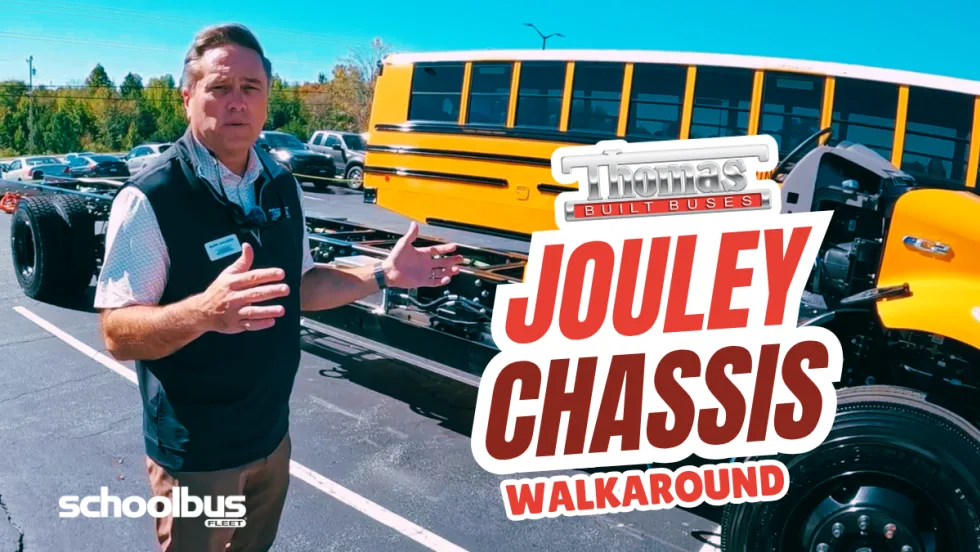
What's Underneath the Jouley Electric School Bus? Take a Look at This Chassis!
Get an inside, up-close look at Thomas Built Buses’ C2 electric bus chassis in this walkaround video on location at Freightliner Custom Chassis.
Read More →
Bipartisan Bill Seeks to Extend Clean School Bus Program Through 2031
The proposed legislation would renew federal support for cleaner school buses as districts navigate funding uncertainty, rising fuel and infrastructure costs, and fleet replacement needs.
Read More →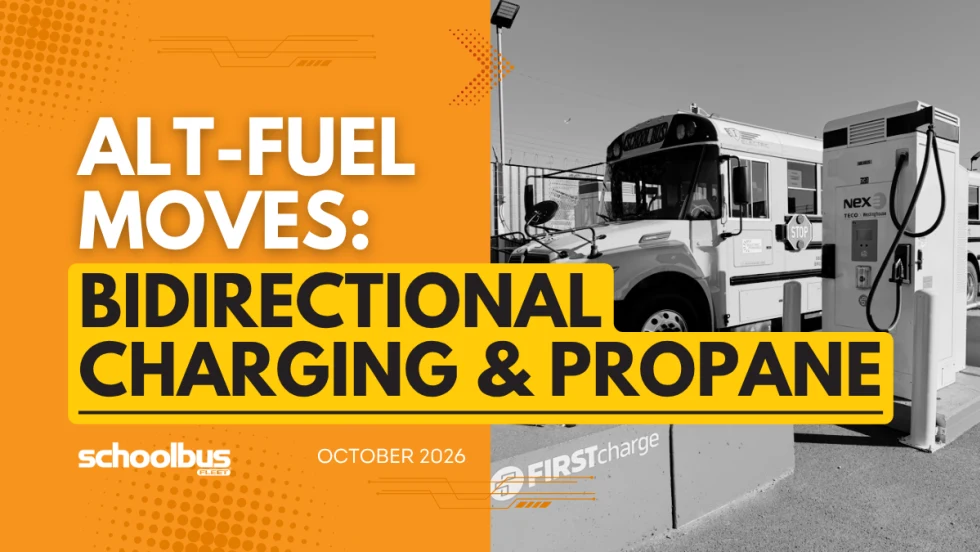
Alt-Fuel Moves: Electric Bus Rollouts, Bidirectional Charging & Propane Growth
See which fleets are adding electric and propane school buses as districts and operators invest in charging infrastructure, bidirectional technology, and alternative-fuel expansion.
Read More →
Nobody Told Diesel Prices They Were Supposed to Come Down
With diesel prices surging, school bus fleets have new reason to stress-test fuel costs, consider diversification, and calculate what each route really costs to operate.
Read More →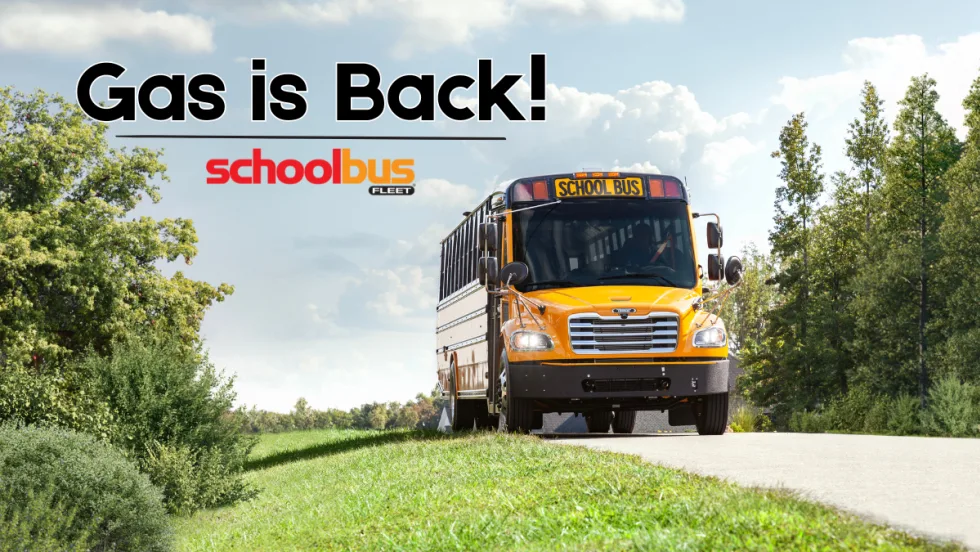
Why Gasoline School Buses Are Making a Comeback
Gasoline is gaining ground in full-size school buses. See how today’s options stack up against diesel on cost, maintenance, emissions, performance, and more.
Read More →
EPA Opens $180M DERA Funding Round for Diesel Upgrades
The 2026 Diesel Emissions Reduction Act program seeks applications from eligible organizations to accelerate the retirement of legacy diesel vehicles.
Read More →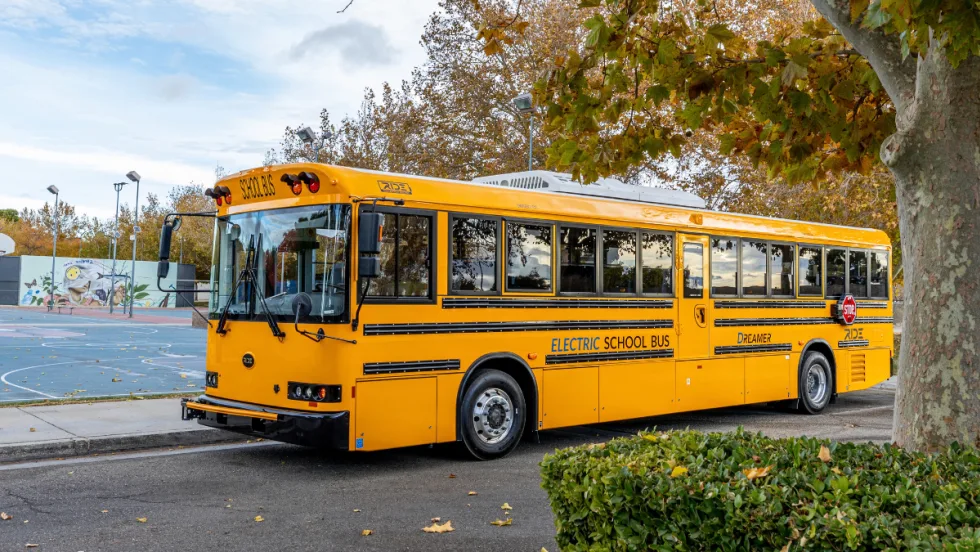
The Secret Life of an Electric School Bus Battery
Batteries change throughout years of daily routes, but degradation doesn’t necessarily mean the end. Here’s what operators should know about performance, safety, and second life.
Read More →
CALSTART and Forth Combine to Form Catalyst Mobility
The new name represents a renewed vision for the nonprofit focused on advancing clean, equitable, and affordable transportation solutions that move people and goods.
Read More →
Alt-Fuel Moves: New Buses, Charging Hubs & Real-World EV Testing
Propane and electric school bus deployments continue to grow as districts add new vehicles, expand charging infrastructure, and gather more real-world operating data.
Read More →
Fewer Electric School Bus Models Reshape the U.S. Market
WRI’s latest buyer’s guide points to a consolidating electric school bus market, but fewer options may reflect a maturing industry rather than fewer meaningful choices for school bus operators.
Read More →