




Navajo Nation Names October School Bus Safety Month
The Navajo president and VP sign an official proclamation that was advocated by Ganado USD school bus drivers and staff.

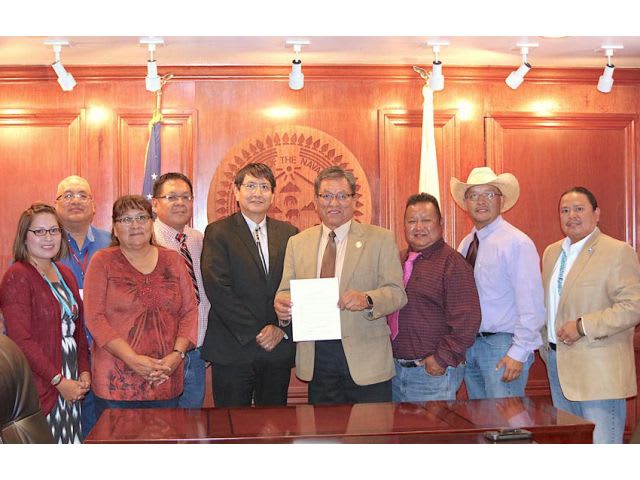
Navajo Nation President Russell Begaye (middle right) and VP Jonathan Nez (middle left) signed a proclamation of "National School Bus Safety Month," which was advocated by Ganado USD drivers and staff.
WINDOW ROCK, Ariz. — October will officially be a month to promote school bus safety in the Navajo Nation, thanks to the efforts of a group of pupil transporters.
On Aug. 23, Navajo Nation President Russell Begaye and Vice President Jonathan Nez signed a proclamation that designates October 2017 as “National School Bus Safety Month.”
“Parents place their kids in the hands of the bus drivers, to make sure that they get picked up safely, delivered to the school safely, and then returned home,” Begaye said. “So I know, as a parent, I would really say, ‘Let’s praise the bus drivers,’ because they are one of the most important employees at the school.”
The Navajo Nation territory covers about 27,000 square miles in northeastern Arizona, southeastern Utah, and northwestern New Mexico.
School bus drivers and staff from Ganado (Ariz.) Unified School District (USD) worked with Navajo Nation Council Delegate Alton Joe Shepherd on the School Bus Safety Month initiative.
Freddie Yazzie, a driver for Ganado USD, told SBF that this was the first time School Bus Safety Month has been declared in the Navajo Nation. It coincides with National School Bus Safety Week, which is held annually across the U.S. in the third full week of October.
The Navajo presidential proclamation last week followed a meeting in which Shepherd and the Ganado USD transportation team discussed the importance of school bus safety with Begaye and Nez.
“When we proclaim a month for school bus safety, I think that gives other school boards across the Navajo Nation a chance to interact with their local communities, and Ganado has been doing that for several years now,” Shepherd said.
The Ganado USD school bus drivers and staff have spearheaded other efforts to advocate for safe transportation in their community. That has included taking to the airwaves.
"We've been doing bus safety messages through our Navajo Nation radio station in English and in Navajo," Yazzie told SBF.
The GUSD drivers and staff who were present for the signing of the School Bus Safety Month proclamation included Jackson Curtis, Yazzie, Frederick Shirley, Davis Begay, Lynette Looking-Back, and Norma Noble.
Yazzie, a longtime school bus driver on the Navajo reservation, has also encouraged his passengers to go further in their education with his "Legacy of Excellence Bus."
Shepherd, the Navajo Nation Council delegate, said that he would establish a similar School Bus Safety Month proclamation for Apache County, for which he serves as a supervisor. He added that he would also advocate for infrastructure improvements that would contribute to safe pupil transportation, such as road widening, paving, and maintenance.
More Safety
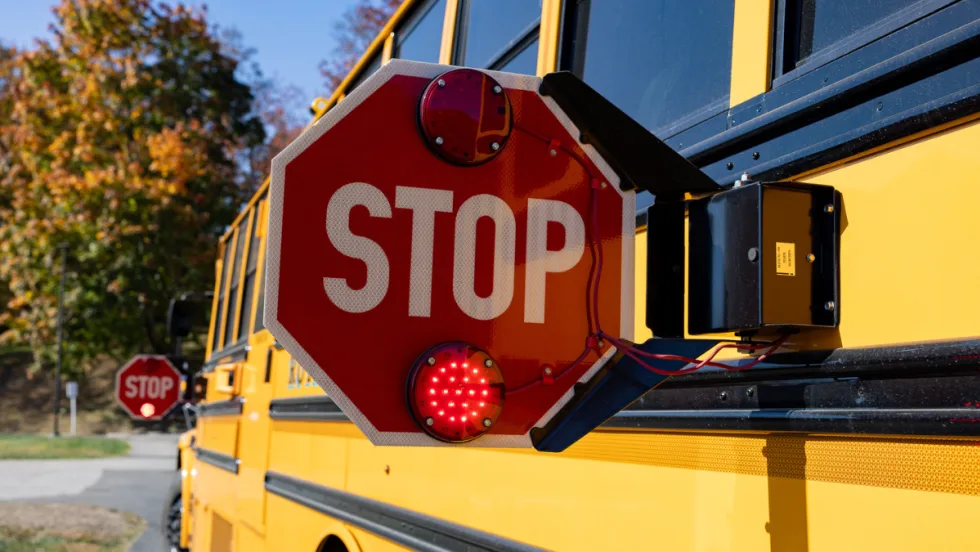
Illegal School Bus Passing Drops 24% in New York Districts
With fewer than 5% of citations involving repeat offenders, Westchester County officials said enforcement, education, and community partnerships are helping change driver behavior.
Read More →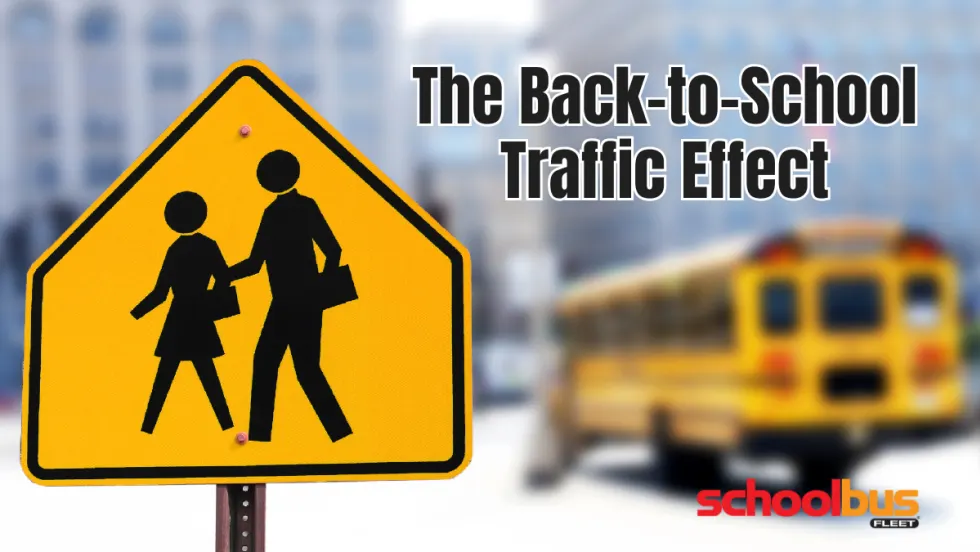
School's Back. Here's What Happened to Traffic, Speeding & Distraction
What happens to traffic when school resumes? New data analysis examines changes in distracted driving, congestion, and speeding around schools.
Read More →
Geotab Expands Fleet Safety Tools With Video Coaching, Risk Insights
New safety and video capabilities aim to help fleet managers assess risk, support drivers, and take targeted action through video coaching, red-light violation detection, and more.
Read More →

How to Build a Better School Bus Driver Training Program
Is it time to strengthen your driver training? Here’s how to pick the right talent and improve recruitment, retention, and safety. This video is brought to you by IC Bus.
Read More →
Recent School Bus Accidents Leave 2 Dead, 2 Injured
Four school bus crashes in Florida, Illinois, and Georgia highlight risks in transportation lots, at bus stops, and during student loading and unloading.
Read More →
When Every Second Matters, Clarity Keeps Routes Moving
From routine delays to urgent incidents, strong communication practices help drivers, dispatchers, schools, and families respond with confidence.
Read More →
What Happens When a School Bus Catches Fire — and What Can Help
School bus fires are rare but can be devastating. Learn how advances in fire suppression and asset protection help fleets detect fires earlier, reduce damage, and improve safety.
Read More →
Geotab Launches Tool to Help Fleets Investigate Road Incidents
Geotab Investigations combines telematics data, video, documents, and other evidence to help fleets reconstruct incidents, resolve claims, and determine what happened.
Read More →
Texas Sixth Grader Wins 2026 National School Bus Safety Poster Contest
Sai Darshana Yekolu of Moseley Middle School in Prosper, Texas, was named the newest winner for her artwork, bringing the theme of “Safe Rides, Everyday Heroes” to life.
Read More →
Doing More With Less: How Transportation Directors Can Prioritize Safety Amid Budget Uncertainty
With diesel prices soaring and nearly one-third of transportation directors expecting budget cuts, maintaining student safety has never been more challenging. Download this guide to learn how leading districts are prioritizing risk, funding critical safety technology, and building stronger budget cases with data.
Read More →