




Missouri School Districts Receive EPA Diesel Reduction Grants
Five Missouri districts and a school bus company received $672,540 in grants they can use for newer, cleaner alt-fuel buses.
The U.S. Environmental Protection Agency (EPA) has awarded five Missouri school districts and a school bus company $672,540 in grants to replace 18 older, dirtier buses with newer, cleaner buses, including 10 propane-powered buses.
The grants were part of more than $77 million awarded to projects that reduce diesel emissions from the nation’s existing fleet of older, dirtier engines and vehicles.
Award recipients and grant amounts for new cleaner diesel buses include:
Community R-VI School District, $25,875
Winona R-III School District, $29,183
Wheatland R-II Schools, $38,608
Platte County R3 School District, $47,500
Sikeston R-6 Schools, $81,667
In addition, sustainable-services nonprofit Leonardo Academy Inc., serving Independence School District, will receive $449,707 for propane powered vehicles.
“Cleaner trucks, buses, boats, and heavy equipment keep local economies thriving while better protecting the health of the people living and working near ports, schools, and along delivery routes,” said EPA Administrator Michael S. Regan. “Combined with $5 billion from the Bipartisan Infrastructure Law going to electric and alternative fuel school buses over the coming months and years, EPA is leading an unprecedented investment in cleaner air for communities across the country.”
“It is important that we continue to retire older, dirtier buses from school fleets,” said Acting EPA Region 7 Administrator Edward H. Chu. “Protecting children’s health continues to be one of our highest priorities at our schools and within our communities.”
EPA awarded 55 Diesel Emission Reduction Act (DERA) National Grants covering a wide range of projects to reduce diesel emissions, including upgrades to school buses, port equipment, and construction equipment. Nineteen of these awards will support replacing older diesel equipment with zero-emission technologies, such as transportation refrigeration units, terminal tractors, drayage trucks, refuse trucks, a locomotive, and a port ship-to-shore gantry crane. All 55 projects will reduce diesel pollution and benefit local communities, many of which are facing environmental justice concerns.
Award selection prioritized projects that:
Are in areas designated as having poor air quality
Reduce emissions from ports and other goods movement facilities
Benefit local communities
Incorporate local communities in project planning
Demonstrate an ability to continue efforts to reduce emissions after the project has ended
EPA also awarded $24 million under its 2021 DERA State Grants program to 49 states and three territories to implement their own diesel emissions reduction programs locally. This program allows states to target funds toward the diesel emissions reduction projects that best align with local priorities. MoDNR was awarded $524,064 to operate a diesel emissions reduction program in the state.
In addition to DERA, following the recent passage of the Bipartisan Infrastructure Law (BIL), EPA will offer a total of $5 billion between fiscal years 2022 and 2026 to fund replacement of dirtier school buses with low- or no-carbon school buses. Each year, $500 million will be available exclusively for electric school buses and $500 million will be available for electric buses and multiple types of cleaner, alternative fuel school buses. EPA is actively working to ensure that DERA funding, including BIL funding, maximizes benefits directed to underserved communities.
More Alternative Fuels

CALSTART and Forth Combine to Form Catalyst Mobility
The new name represents a renewed vision for the nonprofit focused on advancing clean, equitable, and affordable transportation solutions that move people and goods.
Read More →
Alt-Fuel Moves: New Buses, Charging Hubs & Real-World EV Testing
Propane and electric school bus deployments continue to grow as districts add new vehicles, expand charging infrastructure, and gather more real-world operating data.
Read More →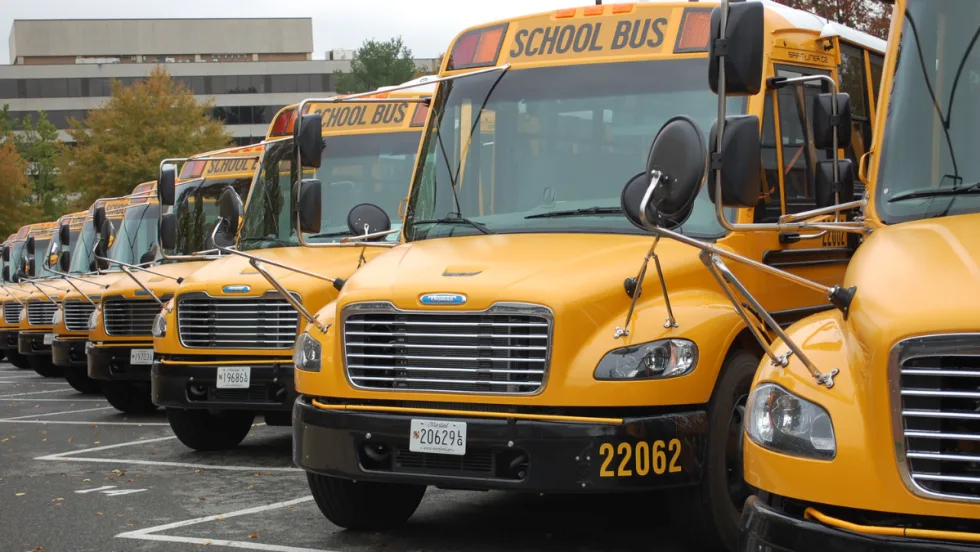
Fewer Electric School Bus Models Reshape the U.S. Market
WRI’s latest buyer’s guide points to a consolidating electric school bus market, but fewer options may reflect a maturing industry rather than fewer meaningful choices for school bus operators.
Read More →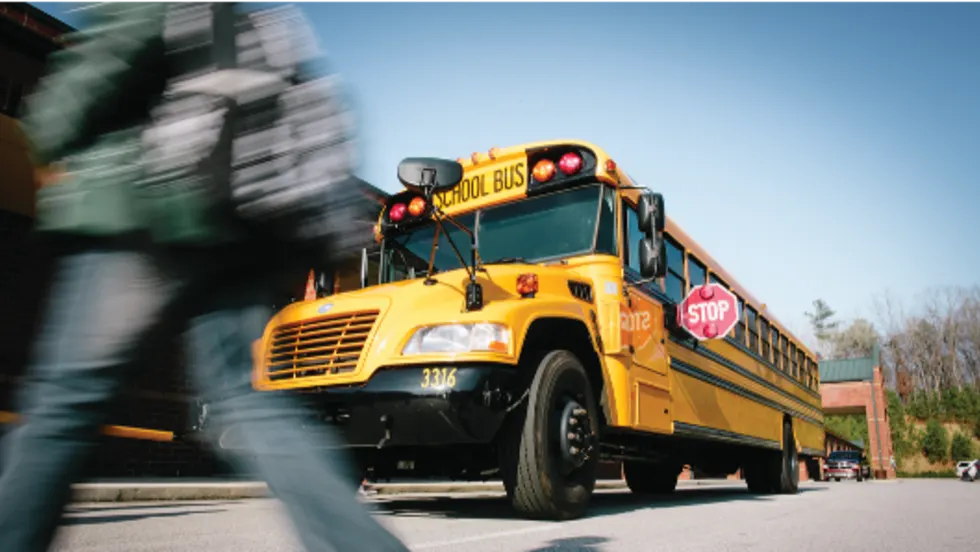
The Fuel Budget You Can Actually Predict: How Propane Autogas Keeps Money in the Classroom
Learn how propane autogas helps school districts manage fuel costs with predictable pricing, lower maintenance, and reduced emissions from former transportation director Joel Stutheit.
Read More →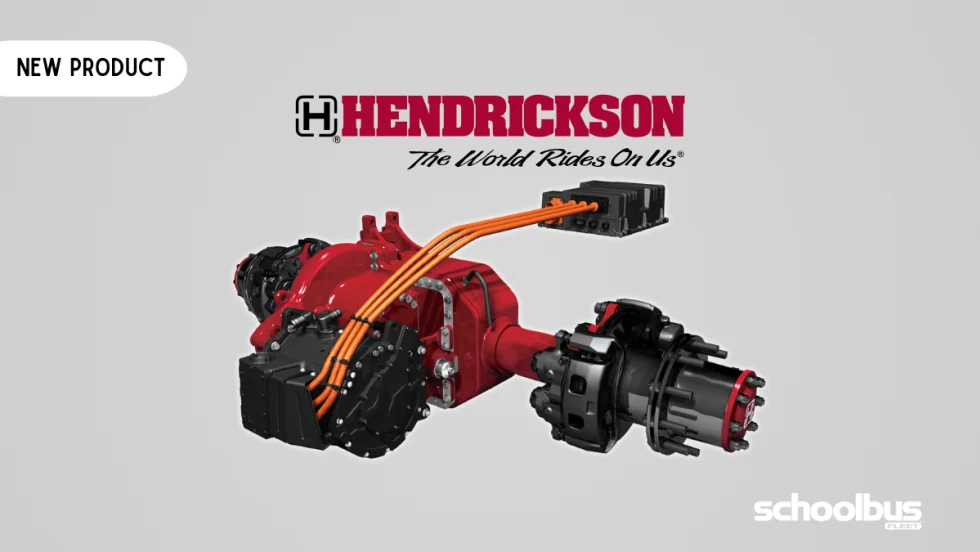
Hendrickson, Driventic Introduce New Electric Powertrain for School Buses
ELECTRAAX, the electrified, lightweight drive axle offers integrated ePowertrain efficiency and modular flexibility for Class 6–7 school bus use.
Read More →
The Mobility House Joins PowerFlex in Fleet Electrification Deal
The acquisition combines intelligent charging software, bidirectional charging expertise, and fleet electrification services to support the growing adoption of electric school buses across North America.
Read More →
Alt-Fuel Moves: Electric School Bus Investments Hit the Road
See which districts across the U.S. are putting electric school buses into service, expanding charging infrastructure, and planning the next phase of fleet electrification.
Read More →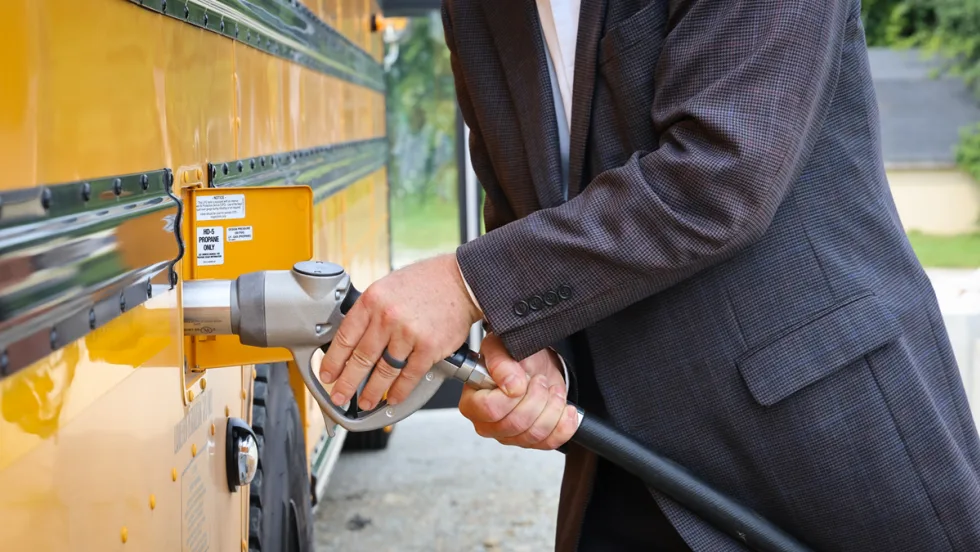
With Fuel Volatility Ahead, School Districts Turn to Propane
While diesel prices peaked above $5 this spring, districts with propane autogas-powered fleets paid under $2 per gallon, according to PERC.
Read More →
EPA Unveils Proposed Changes to 2027 Heavy-Duty Engine Rules
The federal agency has proposed changes to next year’s targets that would eliminate DEF derates, ease warranty requirements, and retain current NOx emissions standards.
Read More →
Alt-Fuel Moves: EV Charging & Infrastructure Projects Gain Momentum
The latest developments include new funding, charging infrastructure, utility investments, and fleet technologies designed to support the transition to electric school buses nationwide.
Read More →