





Moving to Full Fleet Electrification: A Look at 3 Districts' Plans
President Biden Signs Infrastructure Bill into Law
School transportation advocates praised the bipartisan legislation, which includes efforts against illegal bus passing, and provides $5 billion for electric and low-emission school buses.
November 15, 2021

President Biden signed into law legislation that includes $5 billion for electric school buses, extended vehicle safety programs, and public awareness campaigns for illegal passing.
Photo by René DeAnda on Unsplash
3 min to read
President Joe Biden on Monday signed into law the Infrastructure and Investment and Jobs Act (IIJA), including the “Stop for School Buses Act” and $5 billion for electric and other low-emission school buses.
"We're taking a monumental step forward to build back better as a nation," said Biden during remarks ahead of the signing.
The National School Transportation Association (NSTA) praised the legislation, which reauthorizes federal highway, transit, motor carrier, and vehicle safety programs until fiscal year 2026. The law also requires the U.S. Department of Transportation to review illegal passing laws, penalties, and levels of enforcement in all 50 states, and to develop a public safety messaging campaign.
In a news release, NSTA noted that nearly 15 million illegal passing incidents occur during every 180-day school year.
“Riding in a yellow school bus remains the safest mode of transportation to and from school for students,” said NSTA President Carina Noble. “Unfortunately, illegal school bus passings by motorists continue to plague the nation, and the comprehensive USDOT program to address illegal passing contained in IIJA will implement a national campaign to raise local awareness of this most concerning issue with the shared goal of making student commutes even safer.”
Curt Macysyn, NSTA executive director, credited U.S. senators Todd Young (R-Ind.) and Gary Peters (D-Mich.) and U.S. representatives Jacki Walorski (R-Ind.) and Julia Brownley (D-Calif.) with championing the safety-focused “STOP for School Buses Act.”
“On behalf of the nearly 26 million students who rely on the school bus for transportation from home to school, we thank these members for their stewardship of this legislation through this arduous process, and appreciate their efforts to ensure the enactment of these important measures,” Macysyn said.
The National Association of State Directors of Pupil Transportation Services (NASDPTS) urged districts considering new technology to find help from programs created by this new legislation.
"The infrastructure bill being signed into law today by President Biden contains many opportunities for school transportation," said Patrick McManamon, NASDPTS president. "NASDPTS is pleased to see the inclusion of electric school bus funding in this bill and we hope communities interested in this technology will look to these programs for assistance."
The president on Monday also issued an executive order establishing a task force to implement the new law, co-chaired by National Economic Council Director Brian Deese and Mitch Landrieu, White House infrastructure implementation coordinator.
Priorities laid out in the order include:
Investing public dollars efficiently with measurable outcomes for Americans
Buying American to increase competitiveness of the U.S. economy
Creating good-paying jobs
Making sure 40 percent of the overall benefits of federal investments in climate and clean energy flow to disadvantaged communities
Building resilient infrastructure that withstands the impacts of climate change and helps fight the climate crisis
Coordinating with state, local, tribal, and territorial governments to implement the law
"For too long," Biden said, "we've talked about having the best economy in the world and we've talked about asserting American leadership around the world. Here in Washington, we've heard countless speeches and promises .... Today, we're finally getting this done.
"America's moving again, and your life is going to change for the better."
Georgia-based Blue Bird Corporation stands to benefit from the new law's ambitions when it comes to electric and low-emission school buses.
"The bipartisan infrastructure deal is the type of legislation that will advance the deployment of alternative-power buses, allowing school districts to easily replace aging diesel models with ones that have zero and low emissions,” said Matthew Stevenson, Blue Bird's president and CEO. “Blue Bird is encouraged that the deal supports climate friendly student transportation and supporting, nationwide infrastructure that will benefit the health of our children and the environment.”
More Alternative Fuels
Bipartisan Bill Seeks to Extend Clean School Bus Program Through 2031
The proposed legislation would renew federal support for cleaner school buses as districts navigate funding uncertainty, rising fuel and infrastructure costs, and fleet replacement needs.
Read More →
Alt-Fuel Moves: Electric Bus Rollouts, Bidirectional Charging & Propane Growth
See which fleets are adding electric and propane school buses as districts and operators invest in charging infrastructure, bidirectional technology, and alternative-fuel expansion.
Read More →
Nobody Told Diesel Prices They Were Supposed to Come Down
With diesel prices surging, school bus fleets have new reason to stress-test fuel costs, consider diversification, and calculate what each route really costs to operate.
Read More →
Why Gasoline School Buses Are Making a Comeback
Gasoline is gaining ground in full-size school buses. See how today’s options stack up against diesel on cost, maintenance, emissions, performance, and more.
Read More →
EPA Opens $180M DERA Funding Round for Diesel Upgrades
The 2026 Diesel Emissions Reduction Act program seeks applications from eligible organizations to accelerate the retirement of legacy diesel vehicles.
Read More →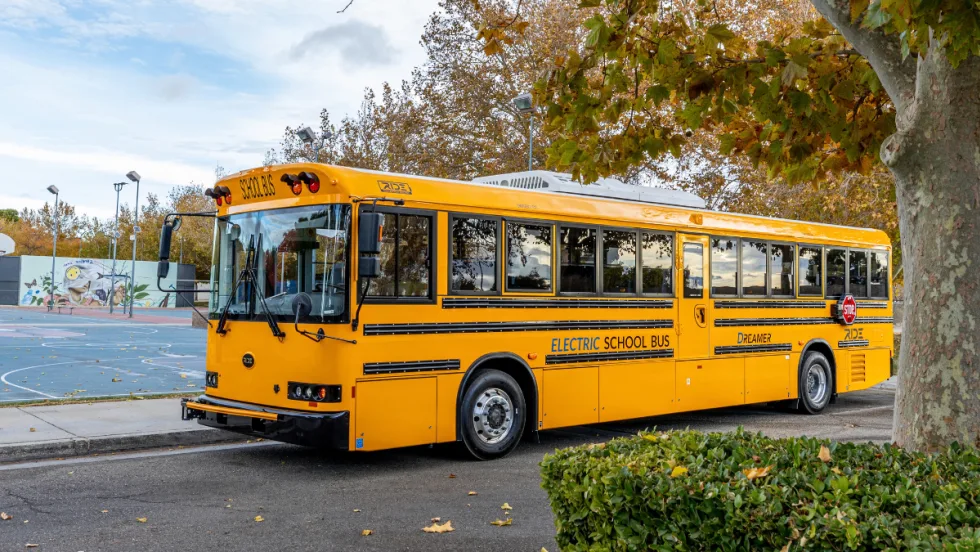
The Secret Life of an Electric School Bus Battery
Batteries change throughout years of daily routes, but degradation doesn’t necessarily mean the end. Here’s what operators should know about performance, safety, and second life.
Read More →
CALSTART and Forth Combine to Form Catalyst Mobility
The new name represents a renewed vision for the nonprofit focused on advancing clean, equitable, and affordable transportation solutions that move people and goods.
Read More →
Alt-Fuel Moves: New Buses, Charging Hubs & Real-World EV Testing
Propane and electric school bus deployments continue to grow as districts add new vehicles, expand charging infrastructure, and gather more real-world operating data.
Read More →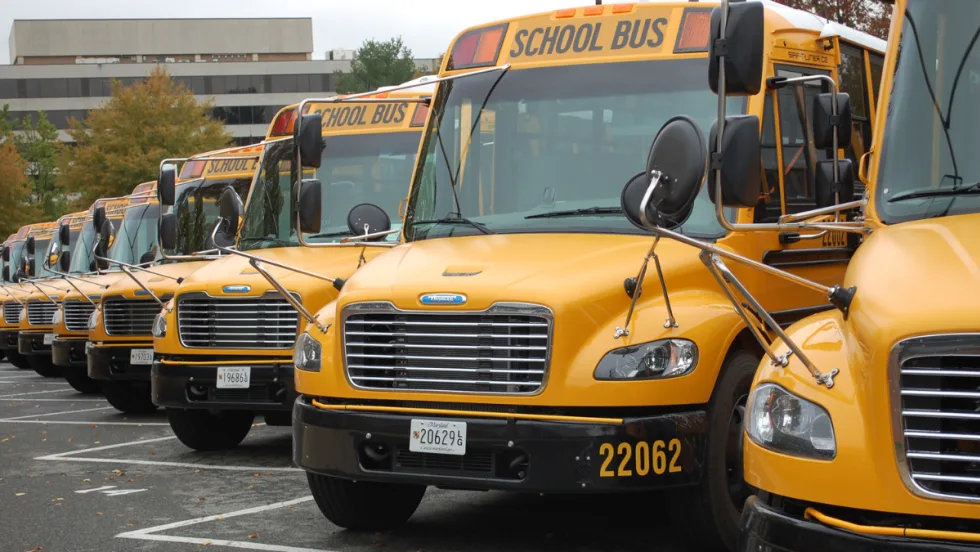
Fewer Electric School Bus Models Reshape the U.S. Market
WRI’s latest buyer’s guide points to a consolidating electric school bus market, but fewer options may reflect a maturing industry rather than fewer meaningful choices for school bus operators.
Read More →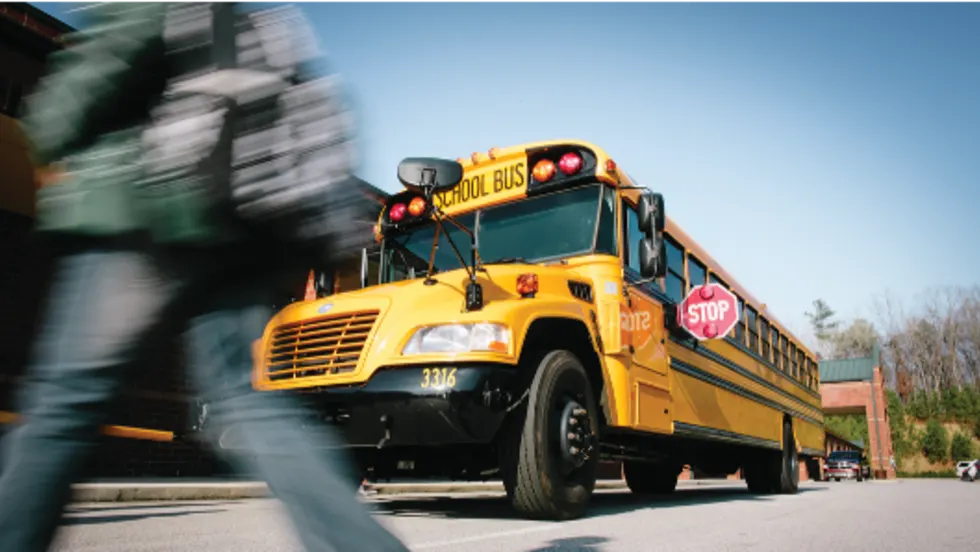
The Fuel Budget You Can Actually Predict: How Propane Autogas Keeps Money in the Classroom
Learn how propane autogas helps school districts manage fuel costs with predictable pricing, lower maintenance, and reduced emissions from former transportation director Joel Stutheit.
Read More →