




Missouri, Georgia Districts Receive New Blue Bird School Buses
Kansas City Public Schools adds 155 propane buses and Harris County School District received 11 new diesel school buses.

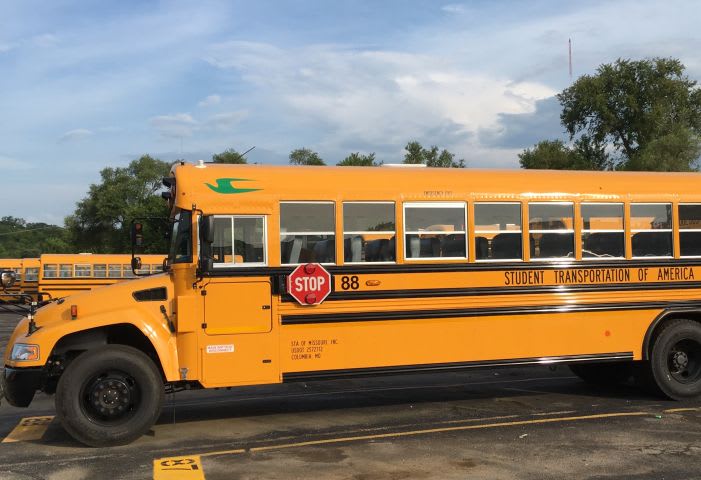
Kansas City (Mo.) Public Schools added 155 propane school buses to its fleet. Photo courtesy Blue Bird
Kansas City (Mo.) Public Schools added 155 propane school buses to its fleet. Photo courtesy Blue Bird
School districts in Missouri and Georgia have added Blue Bird school buses to their fleets in time for the new school year.
In Missouri, students returning to Kansas City Public Schools are riding in new propane buses. The majority of the district’s school bus fleet now operates on this alternative fuel.
The quiet ride and low emissions prompted the district to add the 155 Blue Bird school buses to its fleet, according to a news release from Blue Bird.
“Kansas City is a progressive, tech-focused city, and we are always looking to provide outstanding service for our students,” said Chris Walls, the director of transportation for the district. “In addition to reducing emissions, the propane school buses are much quieter. That means the driver can hear and communicate better with the students on board. Plus, the local neighborhood will no longer have to deal with our former noisy diesel bus warm-ups at 4 a.m.”
A recent study has shown that propane school buses are a proven way to reduce nitrogen oxide (NOx) emissions. Kansas City Public Schools’ propane buses will reduce NOx emissions by over 55,000 pounds and particulate matter by almost 500 pounds each year compared with the diesel buses they replaced, according to Blue Bird.
The district contracted with Student Transportation of America (STA) to acquire the Type C propane buses.
“Domestically produced, clean-burning propane is a perfect fit for Kansas City’s school bus fleet,” said Doug Gallagher, senior vice president of fleet and maintenance for STA, which has invested millions of dollars in more than 2,000 propane buses across the U.S. “We convey to school districts that there are economic, safety, and environmental benefits to propane-powered school buses.”
The school district pays 50% less per gallon for propane compared with diesel, for an expected savings of about $500,000 annually, according to Blue Bird. It also anticipates another $55,000 savings each year in maintenance costs.
“The fuel system technology on these buses offers reliable performance in cold weather all the way down to negative 40 degrees,” said Ryan Zic, vice president of school bus sales at Roush CleanTech, which manufactures the propane fuel system. “Operating propane buses provide peace of mind to the district because the fuel can handle extreme conditions without impacting the driver.”
The district also recently installed a propane station on school grounds that can fuel four buses at a time.
Kansas City Public Schools joins over 900 school districts running propane school buses, according to Blue Bird.
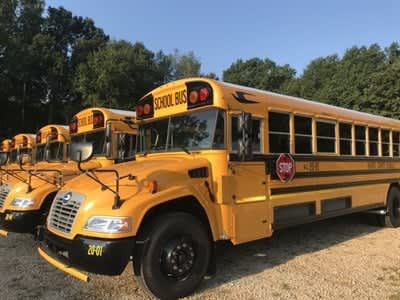
Harris County (Ga.) School District received 11 new diesel-powered Blue Bird school buses, some of which are shown here. Photo courtesy Rachel Crumbley
Meanwhile, in Georgia, Harris County School District’s 11 new diesel buses are taking to the road for the new school year.
The 2020 Blue Bird Type C school buses feature air-conditioning systems and additional LED lighting both to the interior and exterior of each bus, Cheryl Johnson, the district’s transportation director, said in a news release.
“Adding 11 buses with air-conditioning is particularly exciting as we have strived through the years to achieve a 100% fleet of buses with air conditioning," Johnson added. "Now, every student of Harris County can enjoy a cooler ride.”
With the addition of these new buses, all 81 buses in the district's fleet are now equipped with air conditioning.
Yancey Bus Sales and Service of Macon, Ga., completed the initial installation of the transportation department’s standard equipment, including the four-point camera system. Since the buses arrived in mid-July, the transportation department team installed final touches, such as the two-way radios.
With these additional buses replacing some that were in use for 25 years, there are now 81 buses used daily for bus routes. Although each bus runs on a morning route, in the afternoon 20 of the buses pull double duty to accommodate Creekside School’s different release time for a total of 101 afternoon routes.
The new buses were acquired through $1,015,685 of SPLOST (Special Purpose Local Option Sales Tax) funds. (Each bus cost $92,335.)
In November 2018, the district purchased five 2020 72-passenger buses with SPLOST funds for a total of $435,000. Earlier in 2018, Harris County School District bought two 2020 gasoline Blue Bird buses designed specifically for students with special needs with nearly $185,000 in SPLOST funds.
More Alternative Fuels

CALSTART and Forth Combine to Form Catalyst Mobility
The new name represents a renewed vision for the nonprofit focused on advancing clean, equitable, and affordable transportation solutions that move people and goods.
Read More →
Alt-Fuel Moves: New Buses, Charging Hubs & Real-World EV Testing
Propane and electric school bus deployments continue to grow as districts add new vehicles, expand charging infrastructure, and gather more real-world operating data.
Read More →
Fewer Electric School Bus Models Reshape the U.S. Market
WRI’s latest buyer’s guide points to a consolidating electric school bus market, but fewer options may reflect a maturing industry rather than fewer meaningful choices for school bus operators.
Read More →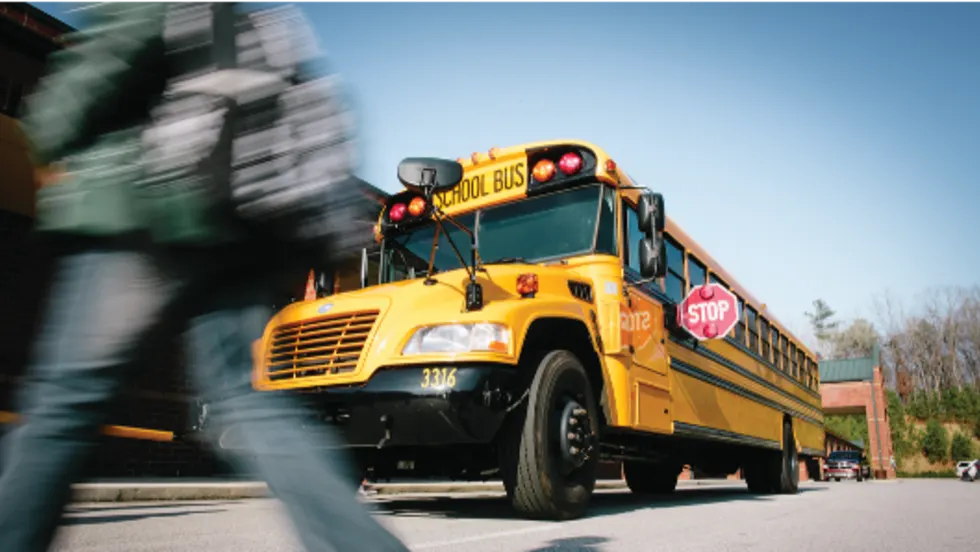
The Fuel Budget You Can Actually Predict: How Propane Autogas Keeps Money in the Classroom
Learn how propane autogas helps school districts manage fuel costs with predictable pricing, lower maintenance, and reduced emissions from former transportation director Joel Stutheit.
Read More →
Hendrickson, Driventic Introduce New Electric Powertrain for School Buses
ELECTRAAX, the electrified, lightweight drive axle offers integrated ePowertrain efficiency and modular flexibility for Class 6–7 school bus use.
Read More →
The Mobility House Joins PowerFlex in Fleet Electrification Deal
The acquisition combines intelligent charging software, bidirectional charging expertise, and fleet electrification services to support the growing adoption of electric school buses across North America.
Read More →
Alt-Fuel Moves: Electric School Bus Investments Hit the Road
See which districts across the U.S. are putting electric school buses into service, expanding charging infrastructure, and planning the next phase of fleet electrification.
Read More →
With Fuel Volatility Ahead, School Districts Turn to Propane
While diesel prices peaked above $5 this spring, districts with propane autogas-powered fleets paid under $2 per gallon, according to PERC.
Read More →
EPA Unveils Proposed Changes to 2027 Heavy-Duty Engine Rules
The federal agency has proposed changes to next year’s targets that would eliminate DEF derates, ease warranty requirements, and retain current NOx emissions standards.
Read More →
Alt-Fuel Moves: EV Charging & Infrastructure Projects Gain Momentum
The latest developments include new funding, charging infrastructure, utility investments, and fleet technologies designed to support the transition to electric school buses nationwide.
Read More →