




Maryland County Issues Over 50,000 Stop-Arm Camera Tickets in 2 Years
AAA Mid-Atlantic estimates that the stop-arm camera fines in Montgomery County in the past two years carry a total face value of $10.7 million.

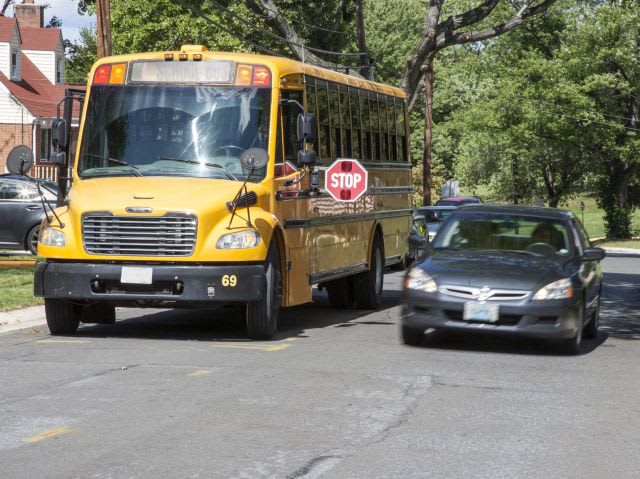
From the 2016-17 school year through 2017-18, Montgomery County issued 50,993 stop-arm camera tickets to motorists who illegally passed stopped school buses. File photo courtesy NHTSA
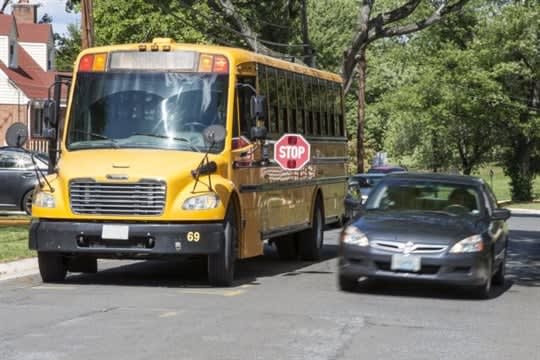
From the 2016-17 school year through 2017-18, Montgomery County issued 50,993 stop-arm camera tickets to motorists who illegally passed stopped school buses. File photo courtesy NHTSA
MONTGOMERY COUNTY, Md. — Nearly 51,000 tickets were issued to drivers who were caught on camera illegally passing stopped school buses in Montgomery County over the past two school years, AAA reported on Tuesday.
High-resolution images and video clips of these violations were recorded by stop-arm cameras mounted on a growing number of school buses in Montgomery County, according to AAA Mid-Atlantic.
From the 2016-17 school year through 2017-18, Montgomery County issued 50,993 stop-arm camera tickets to motorists who illegally passed stopped school buses. Cumulatively, these tickets carried a face value of $10,721,375 in fine revenue, AAA Mid-Atlantic estimates. Current fines in Maryland are $250 per infraction, up from $125, as of July 1, 2017.
When schools in Montgomery County opened a year ago, 500 public school buses in the county’s fleet were equipped with school bus stop-arm cameras. The Montgomery County Police Department hopes to have the cameras installed on 1,200 county school buses by January 2019.
Capt. Thomas Didone of the Montgomery County Police Department said that the county mandates 182 days of student instruction, and an average of about 190 motorists per day were caught by stop-arm cameras.
“We continue to capture scofflaws, including 1,991 repeat violators, in enforcement photos either stopping for a moment, and then proceeding, or totally ignoring the red lights and stop arm, and driving right by the signalized stopped school bus,” Didone said.
John Townsend II, AAA Mid-Atlantic’s manager of public and government affairs, added, “These drivers are brazenly endangering the lives of schoolchildren as they are exiting or entering their buses. It involves an inexcusable violation of state laws requiring drivers to stop at least 20 feet from the front or rear of a stopped school bus.”
AAA Mid-Atlantic reported that school bus stop-arm cameras have also been deployed by numerous other school districts and law enforcement agencies in the region. That includes cameras installed on 20 school buses in Prince George’s County.
“During the past three school years, nearly 800 motorists were ticketed in the county after being caught on camera for violating school bus stop laws,” said Jennifer Donelan, director of the media relations division for the Prince George’s County Police Department. “For thousands of students, the greatest risk they face is not riding the bus, but approaching and leaving it.”
More Safety
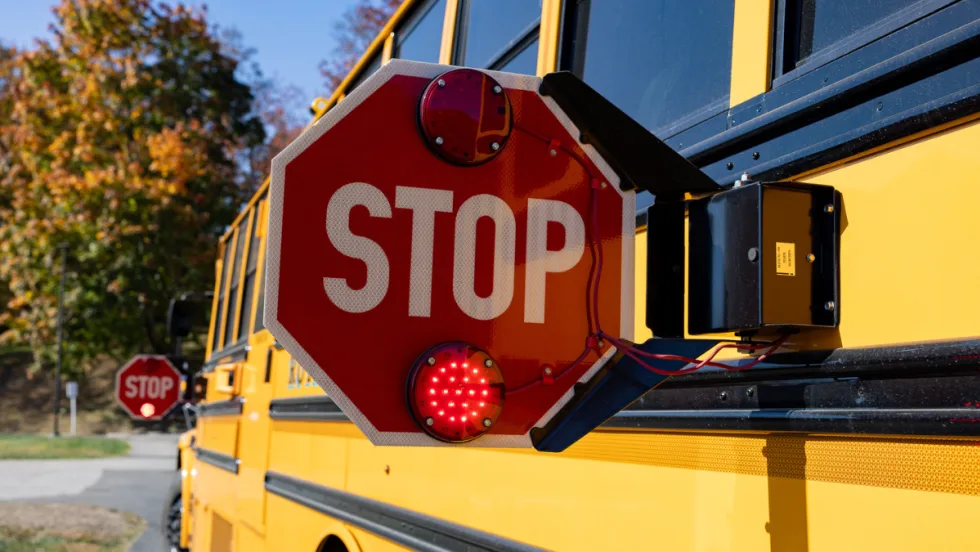
Illegal School Bus Passing Drops 24% in New York Districts
With fewer than 5% of citations involving repeat offenders, Westchester County officials said enforcement, education, and community partnerships are helping change driver behavior.
Read More →
School's Back. Here's What Happened to Traffic, Speeding & Distraction
What happens to traffic when school resumes? New data analysis examines changes in distracted driving, congestion, and speeding around schools.
Read More →
Geotab Expands Fleet Safety Tools With Video Coaching, Risk Insights
New safety and video capabilities aim to help fleet managers assess risk, support drivers, and take targeted action through video coaching, red-light violation detection, and more.
Read More →
How to Build a Better School Bus Driver Training Program
Is it time to strengthen your driver training? Here’s how to pick the right talent and improve recruitment, retention, and safety. This video is brought to you by IC Bus.
Read More →
Recent School Bus Accidents Leave 2 Dead, 2 Injured
Four school bus crashes in Florida, Illinois, and Georgia highlight risks in transportation lots, at bus stops, and during student loading and unloading.
Read More →
When Every Second Matters, Clarity Keeps Routes Moving
From routine delays to urgent incidents, strong communication practices help drivers, dispatchers, schools, and families respond with confidence.
Read More →
What Happens When a School Bus Catches Fire — and What Can Help
School bus fires are rare but can be devastating. Learn how advances in fire suppression and asset protection help fleets detect fires earlier, reduce damage, and improve safety.
Read More →
Geotab Launches Tool to Help Fleets Investigate Road Incidents
Geotab Investigations combines telematics data, video, documents, and other evidence to help fleets reconstruct incidents, resolve claims, and determine what happened.
Read More →
Texas Sixth Grader Wins 2026 National School Bus Safety Poster Contest
Sai Darshana Yekolu of Moseley Middle School in Prosper, Texas, was named the newest winner for her artwork, bringing the theme of “Safe Rides, Everyday Heroes” to life.
Read More →
Doing More With Less: How Transportation Directors Can Prioritize Safety Amid Budget Uncertainty
With diesel prices soaring and nearly one-third of transportation directors expecting budget cuts, maintaining student safety has never been more challenging. Download this guide to learn how leading districts are prioritizing risk, funding critical safety technology, and building stronger budget cases with data.
Read More →