




Loophole in bus passing law targeted
One missing word in Virginia’s regulation on stopping for school buses allowed a motorist to avoid being convicted. A state legislator introduces a bill that would add “at” to fix the law.

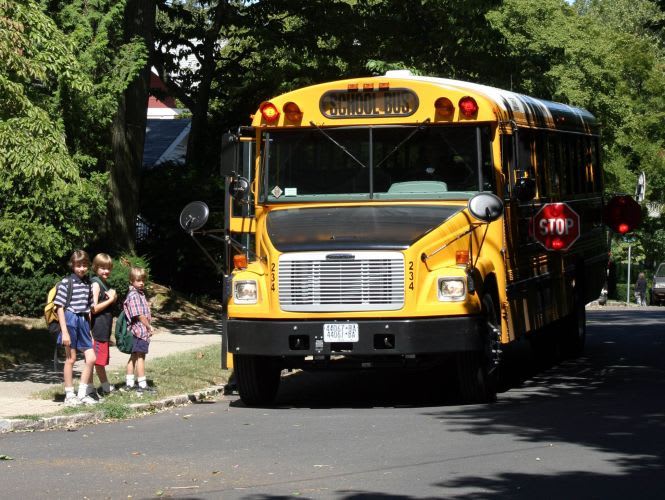
A Virginia legislator has introduced a bill that would add a missing word to the state's regulation on stopping for school buses.
RICHMOND, Va. — One missing word in Virginia’s regulation on stopping for school buses allowed a motorist to recently avoid being convicted.
Now a state legislator has introduced a bill that would add “at” to fix the law.
As first reported by the Washington Post, the trial of 45-year-old John Mendez, who drove past a stopped school bus, ended with a judge acquitting him after Mendez’s lawyer pointed out the error in state law. It reads:
“A person is guilty of reckless driving who fails to stop, when approaching from any direction, any school bus which is stopped on any highway, private road or school driveway for the purpose of taking on or discharging children.”
As the Post reported, an “at” was deleted when the law was amended in 1970. So, technically, it says that you have to stop a stopped school bus rather than stop at a stopped school bus.
“He can only be guilty if he failed to stop any school bus, and there’s no evidence he did,” Judge Marcus Williams said in Mendez’s trial.
On Dec. 7, Virginia Delegate Scott Surovell pre-filed a bill that aims to eliminate the loophole by plugging in the missing “at.”
“The now corrected phrase ‘at any school bus’ … gives the sentence, and the law, its intended meaning,” the bill summary says.
Surovell told the Ford Hunt Patch that "the entire episode demonstrates why it is very important for all of us to be very careful in how we write our laws and do our jobs. Two letters can put children's lives in danger."
At press time, committee referral for the legislation was pending. The Virginia General Assembly's 2011 regular session is set to convene on Jan. 12.
More Safety
What the 2026 National School Bus Safety Month Resolution Means for Student Transportation
The bipartisan resolution highlights illegal school bus passing, student safety during loading and unloading, and the need for driver training and public education.
Read More →
School Bus Stop-Arm Violations Decline 53% Across Verra Mobility Programs
Verra Mobility shares how school bus stop-arm cameras and school zone safety programs are changing driver behavior, reducing violations, and protecting students.
Read More →
Most Bus Crashes Aren’t Your Fault. Here’s How to Prove It.
A guide for what to do in between a school bus crash and a claim: what to preserve, who to notify, and how to keep the facts available when they matter.
Read More →
National School Bus Safety Week 2026: Tips, Toolkits & Resources to Keep Students Safe
School bus safety takes more than awareness. Explore expert tips, enforcement strategies, and free resources to help protect students on every ride.
Read More →
2 Killed, Dozens Injured in Florida School Bus Crash
A multi-vehicle collision caused a Polk County school bus carrying 37 students to overturn on its way to Winter Haven High School.
Read More →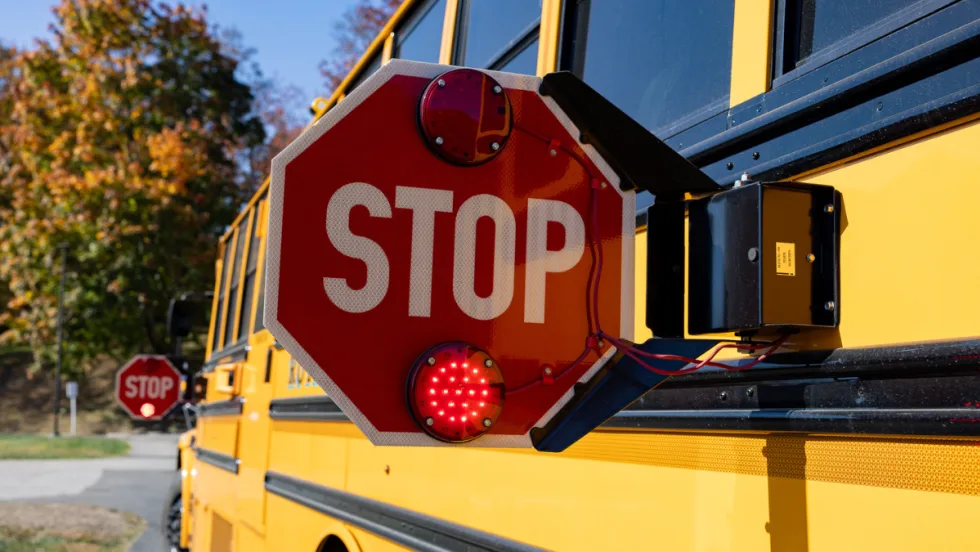
Illegal School Bus Passing Drops 24% in New York Districts
With fewer than 5% of citations involving repeat offenders, Westchester County officials said enforcement, education, and community partnerships are helping change driver behavior.
Read More →
School's Back. Here's What Happened to Traffic, Speeding & Distraction
What happens to traffic when school resumes? New data analysis examines changes in distracted driving, congestion, and speeding around schools.
Read More →
Geotab Expands Fleet Safety Tools With Video Coaching, Risk Insights
New safety and video capabilities aim to help fleet managers assess risk, support drivers, and take targeted action through video coaching, red-light violation detection, and more.
Read More →
How to Build a Better School Bus Driver Training Program
Is it time to strengthen your driver training? Here’s how to pick the right talent and improve recruitment, retention, and safety. This video is brought to you by IC Bus.
Read More →
Recent School Bus Accidents Leave 2 Dead, 2 Injured
Four school bus crashes in Florida, Illinois, and Georgia highlight risks in transportation lots, at bus stops, and during student loading and unloading.
Read More →