




Related: Districts Put a Dent in Bus Passing With Stop-Arm Cameras
Logging Truck Pass-By Becomes Safety Lesson
After a loaded logging truck failed to stop for a school bus in Alberta, the local transportation director took a powerful message to the mill’s contracted drivers.

Thomas McMahon・Executive Editor
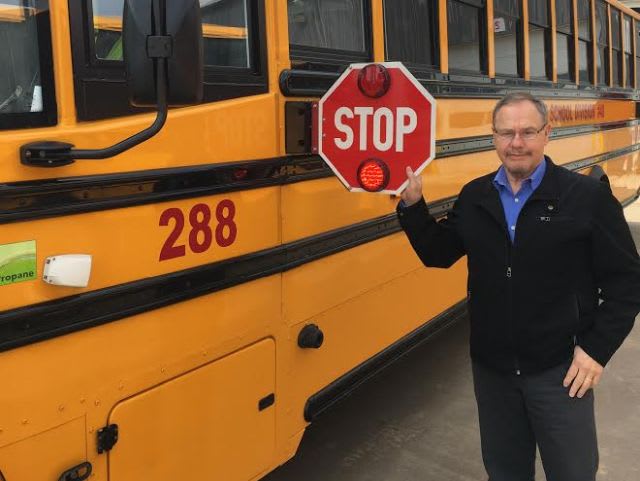
After a loaded logging truck failed to stop for one of his district’s buses, Harry Davis of High Prairie School Division took a powerful safety message to the mill’s contracted drivers.
4 min to read
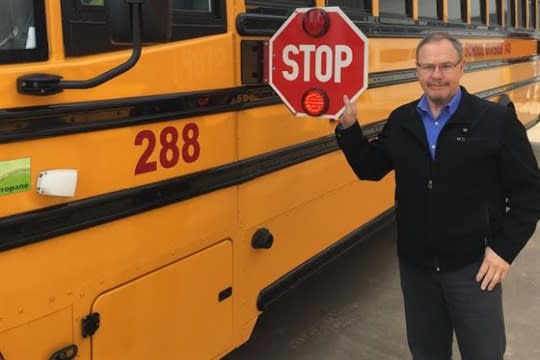
After a loaded logging truck failed to stop for one of his district’s buses, Harry Davis of High Prairie School Division took a powerful safety message to the mill’s contracted drivers.
HIGH PRAIRIE, Alberta — Red lights flashed and the stop arm swung out as the school bus stopped to unload students, and an SUV braked as it approached the front of the bus.
It was a winter’s day in northern Alberta, with a layer of snow lining the sides of the rural road near the small town of Wagner on the banks of Lesser Slave Lake.
“See you guys tomorrow. Have a good evening,” said the High Prairie School Division bus driver as a few passengers began to disembark.
Suddenly a horn blared on the road ahead. A fully loaded logging truck was hurtling toward the SUV that had stopped for the bus.
“Watch out! Stay here! Stay here! Stay here!” the school bus driver implored as she held out her arm to block a student from descending the steps.
As the horn grew louder, the SUV moved to the shoulder opposite the bus — barely escaping the logging truck as it barreled by.
“If the SUV hadn’t moved out of the way, there would have been tragic consequences as a result,” said Harry Davis, director of transportation for the High Prairie School Division. He noted that the truck could have deflected off of the SUV and into the bus, and the logs could have become projectiles. “I hate to imagine what would have happened.”
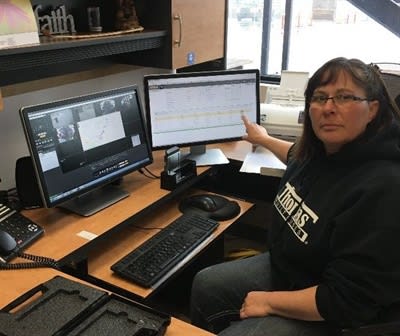
Diane Elliott, transportation supervisor for High Prairie School Division, reviews a driver-reported violation downloaded from the bus to the terminal.
No students were crossing the road at the bus stop, and no one was injured. But the alarming incident served as a reminder of the ongoing need to educate all drivers about stopping for school buses.
The Jan. 26 logging truck pass-by was captured by exterior video cameras on the High Prairie School Division bus. The district has equipped all 50 of its route buses and some of its spares with exterior cameras, violation sensors, and interior cameras supplied by British Columbia-based Seon.
Davis said that the High Prairie School Division has seen a reduction in illegal passing since the stop-arm cameras were installed about a year ago. The video evidence has helped convict offenders, and awareness of the cameras on High Prairie buses has spread by word of mouth and the local media. Even so, as Davis put it, “one [violation] is too many.”
After the logging truck pass-by, the Royal Canadian Mounted Police (RCMP) “wanted that evidence right away,” Davis said, and “the offending operator was severely charged.” In Alberta, penalties for illegal passing of school buses include a $543 fine and six license demerit points.
The lumber mill told Davis that the truck owner-operator who passed the High Prairie bus will be reviewed for appropriate follow-up action. But the response to the incident didn’t end there: The company's management team invited Davis to give a safety presentation to its other contracted drivers.
On March 9, Davis and Constable Rachael Glendenning of the RCMP attended one of the mill’s driver safety meetings and gave a presentation that covered such topics as what the amber and red lights on school buses mean, how far away from the bus to stop (6 meters/20 feet), and the penalties for illegally passing.
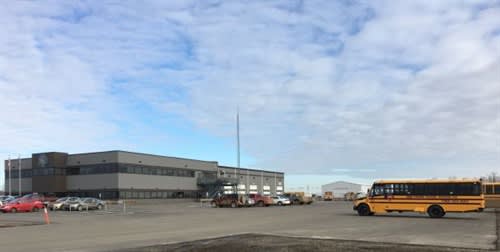
The district has equipped all 50 of its route buses and some of its spares with exterior cameras, violation sensors, and interior cameras.
Davis also explained the camera systems on High Prairie’s buses, and he highlighted visibility features like conspicuity tape and strobe lights. But the biggest attention-getter in the presentation to the truck owner-operators was the video footage of the offending operator passing the school bus.
“They were passionate in what they saw, that it was very unacceptable,” Davis said, noting that he was careful to not characterize all commercial drivers with one bad example. “They were true professionals. You can see that they were passionate in wanting to ensure we have safe roads out there.”
Beyond talking with the company management and the truck owner-operators, High Prairie School Division makes other efforts to promote school bus safety awareness, such as partnerships with law enforcement, involvement in a traffic safety coalition, annual radio messages, and submissions to the local newspaper.
The district’s school buses cover a large rural area, transporting about 2,100 students daily to 16 schools in the towns around Big Lake County and Lesser Slave Lake. The High Prairie drivers log a total of about 8,900 km (about 5,500 miles) per day.
As for the school bus driver whose bus was passed, Davis said that the district reviewed the recorded data — the driver’s speed approaching the stop, her braking, when she activated the amber lights, and the operation of the red lights and stop arm — and they found that she did everything right.

Davis (left) also shared the story of the truck pass-by at School Bus eXchange in April, seen here.
“She was a true professional,” Davis said of the school bus driver.
Davis noted that the addition of stop-arm cameras with violation sensors has relieved his drivers of the task of trying to jot down details on vehicles that pass while they are stopped.
“They can focus much more on loading and unloading their students,” he said. “That allows for increased safety and comfort levels for the drivers.”
More Safety

How to Build a Better School Bus Driver Training Program
Is it time to strengthen your driver training? Here’s how to pick the right talent and improve recruitment, retention, and safety. This video is brought to you by IC Bus.
Read More →
Recent School Bus Accidents Leave 2 Dead, 2 Injured
Four school bus crashes in Florida, Illinois, and Georgia highlight risks in transportation lots, at bus stops, and during student loading and unloading.
Read More →
Sponsored•September 8, 2026
When Every Second Matters, Clarity Keeps Routes Moving
From routine delays to urgent incidents, strong communication practices help drivers, dispatchers, schools, and families respond with confidence.
Read More →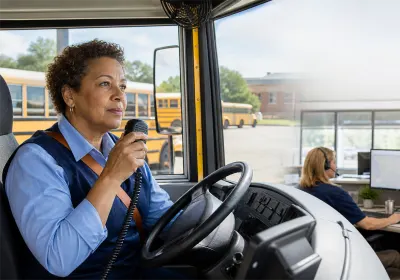

What Happens When a School Bus Catches Fire — and What Can Help
School bus fires are rare but can be devastating. Learn how advances in fire suppression and asset protection help fleets detect fires earlier, reduce damage, and improve safety.
Read More →
Geotab Launches Tool to Help Fleets Investigate Road Incidents
Geotab Investigations combines telematics data, video, documents, and other evidence to help fleets reconstruct incidents, resolve claims, and determine what happened.
Read More →
Texas Sixth Grader Wins 2026 National School Bus Safety Poster Contest
Sai Darshana Yekolu of Moseley Middle School in Prosper, Texas, was named the newest winner for her artwork, bringing the theme of “Safe Rides, Everyday Heroes” to life.
Read More →
Sponsored•August 27, 2026
Doing More With Less: How Transportation Directors Can Prioritize Safety Amid Budget Uncertainty
With diesel prices soaring and nearly one-third of transportation directors expecting budget cuts, maintaining student safety has never been more challenging. Download this guide to learn how leading districts are prioritizing risk, funding critical safety technology, and building stronger budget cases with data.
Read More →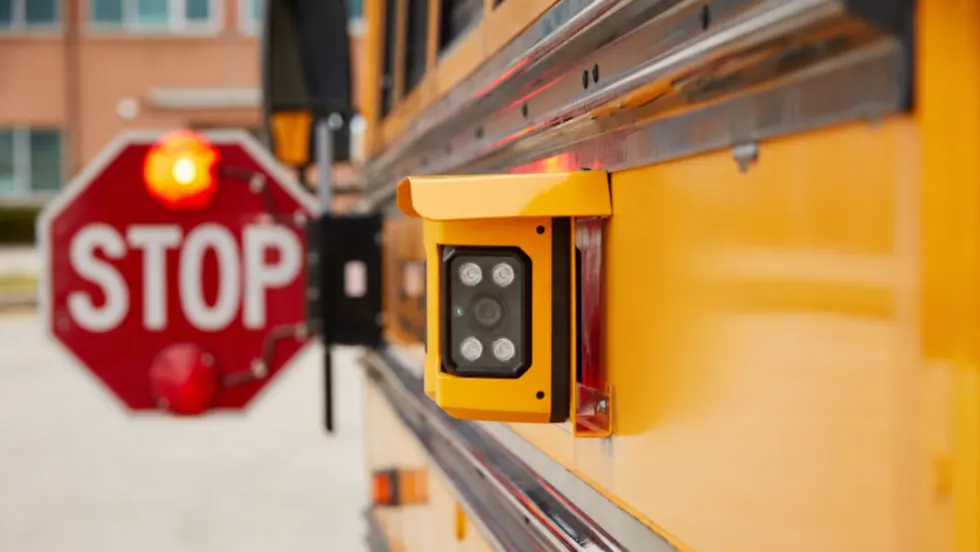
Walton County Schools Adds Gatekeeper Stop-Arm Enforcement System
The Florida district will deploy Gatekeeper’s updated Student Protector technology, which now incorporates AI to improve video evidence.
Read More →
How To Build a More Secure School Bus Yard During and After Hours
As thefts and overnight security threats continue, school transportation leaders are combining stronger operational practices with AI-enabled surveillance to better protect buses, facilities, and staff.
Read More →
FMCSA Names New Chief Safety Officer: What School Bus Operators Should Know
Steve Dowling is set to lead the federal agency's efforts to advance commercial motor vehicle safety and reduce crashes, fatalities, and injuries on the nation's roadways.
Read More →