




Lighted Warning Signs Approved for Use on Michigan School Buses
The newly passed legislation allows school buses to be equipped with an electronic sign that alerts other drivers when the bus stops.

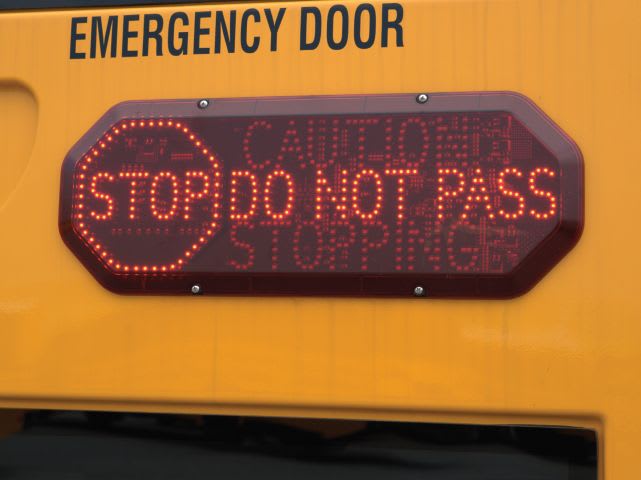
Michigan now allows school buses to be equipped with an electronic sign that alerts other drivers when the bus stops. Seen here is Safe Fleet’s Driver Alert Lighting System.

LANSING, Mich. — School buses in Michigan can now display an electronic sign to warn other drivers when the bus stops to pick up or drop off students.
Gov. Rick Snyder signed the legislation, House Bill 4054, into law on Dec. 21. It allows school buses to be equipped with a sign that alternately flashes the words “caution” and “stopping” when the amber lights are activated, and then “stop” or “do not pass” when the red lights are activated.
Snyder said in a press release that the new measure will “help ensure that drivers will be better able to see stopped school buses, potentially preventing accidents that put both drivers and students boarding the bus at risk.”
The legislation was named the “Privacky Law” for Bruce and Antonia “Toni” Privacky of Ravenna, Michigan. The teenage siblings were killed when their car rear-ended a stopped school bus in 2011.
The tragedy prompted state Rep. Holly Hughes to pursue legislation aimed at enhancing the visibility of stopped school buses, ultimately leading to the passage of House Bill 4054.
“Losing the Privacky siblings hit the West Michigan community hard, so I want to do what I can to prevent this from happening again,” Hughes said in 2015 after introducing a previous bill.
The newly approved measure, which went into effect immediately, allows the installation of a lighted warning sign on the rear of school buses. The legislation stipulates that the sign must be sealed and weathertight, and its size has to be 23.5 by 8.75 by 1.5 inches. An additional sign can be mounted on the front of a bus that has one on the rear.
In recent years, a number of Michigan school districts have piloted Safe Fleet’s LED Driver Alert Lighting System, with the goal of reducing illegal passing of school buses.
In Michigan’s 2017 stop-arm survey, 1,474 participating school bus drivers reported a total of 839 illegal passes in one day.
More Safety
NHTSA Releases 10-Year Review of Fatal School Bus Crashes
The latest federal analysis reinforces the safety of school buses while identifying where school-age pedestrians and other motorists remain most at risk.
Read More →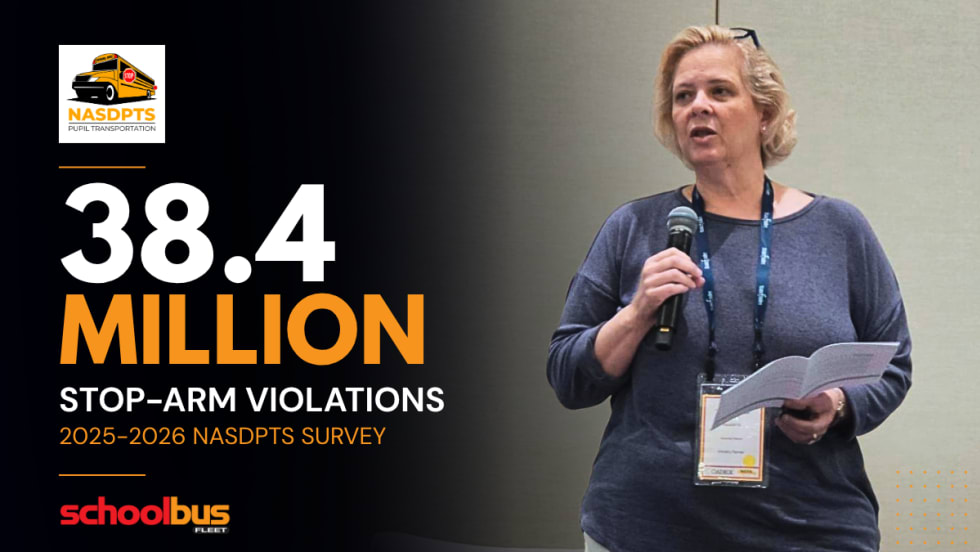
2026 NASDPTS Survey: Data Shows Further Reduction of Illegal Passing
New data is in! School bus stop-arm passings are down to 38.4 million violations per year, about a 2.3% decrease from last school year — but passings on the right side of the bus are higher than ever.
Read More →
Another School Bus Fatality Reported in Monsey, New York
A 7-year-old girl died after being struck by a school bus in Rockland County, New York while crossing the street. Here's what we know.
Read More →
NSTA Announces 2026 School Bus Driver International Safety Competition Winners
Drivers from across the U.S. and Canada showcased their safety and driving skills, with two defending champions successfully retaining their titles.
Read More →
The Driver Shortage Playbook
Driver shortages are still a major challenge for student transportation fleets, but the real issue has shifted. It’s no longer just about filling seats quickly. It’s about finding safe, reliable drivers who meet performance expectations and want to stay. The Driver Shortage Playbook covers why traditional recruitment tactics are falling short and how school fleets are adapting with smarter hiring, stronger retention strategies and a greater focus on driver quality.
Read More →
Pro-Vision Launches AI-Powered 360° Camera System
The new Birdseye camera delivers real-time AI-based pedestrian and vehicle detections, full visibility around the bus, and telematics integrations.
Read More →
N.Y. & N.J. Coalitions Call for Modernized Transportation for Vulnerable Students
New statewide coalitions in New York and New Jersey are urging lawmakers to expand student transportation options for vulnerable students amid ongoing driver shortages.
Read More →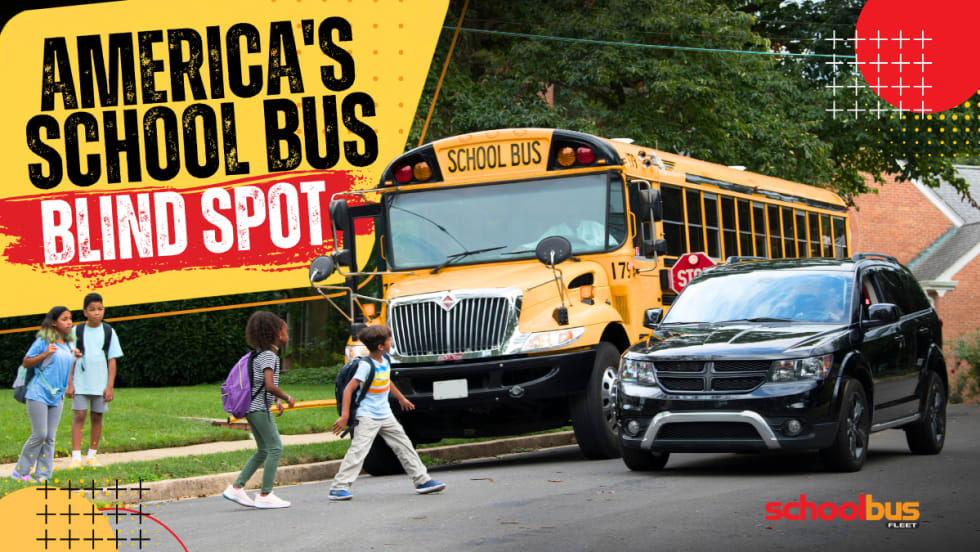
America Has a School Bus Passing Problem — and Distraction Is Making It Worse
Illegal school bus passing remains a major safety threat as distracted driving rises. This op-ed explores why awareness, enforcement, and stop-arm cameras matter more than ever.
Read More →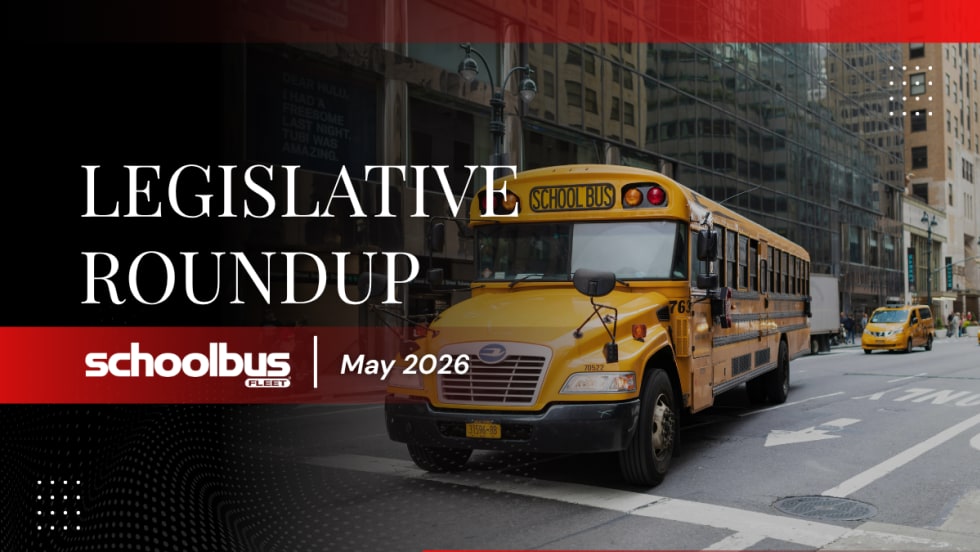
School Bus Laws to Watch: New York Delays EV Mandate
Plus, federal lawmakers seek new funding for school bus safety as states weigh stop-arm enforcement, disability protections, and education spending.
Read More →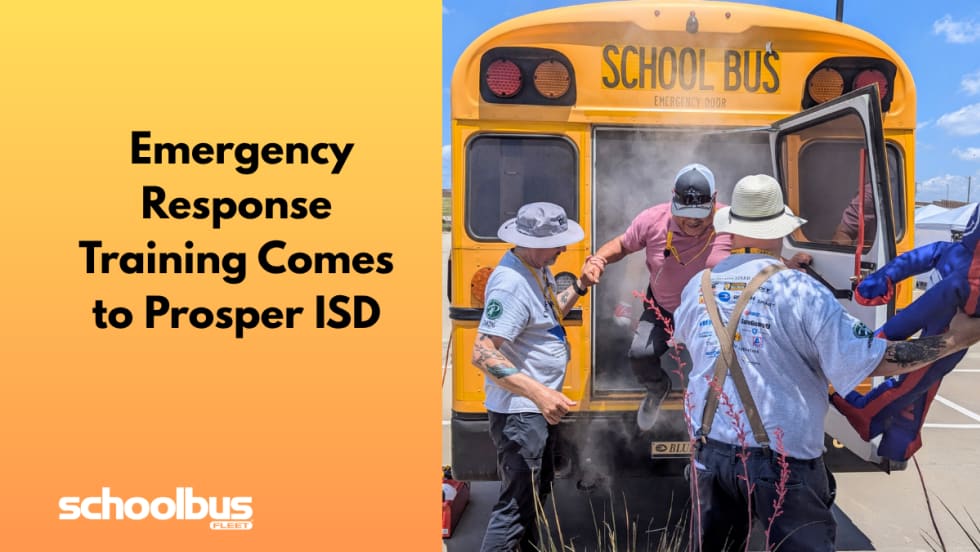
Operation STEER Brings Emergency Response Training to North Texas
Prosper ISD hosted the third annual training for transportation professionals across 67 districts to learn how to respond to emergencies, such as rollovers and evacuations, and proper use of safety equipment.
Read More →