





More News: Evolving Driver Comfort and Safety
JohnDow Launches New Safety Product Line
This new line was designed to increase EV and hybrid servicing safety and was introduced at AAPEX in Las Vegas.
November 8, 2023
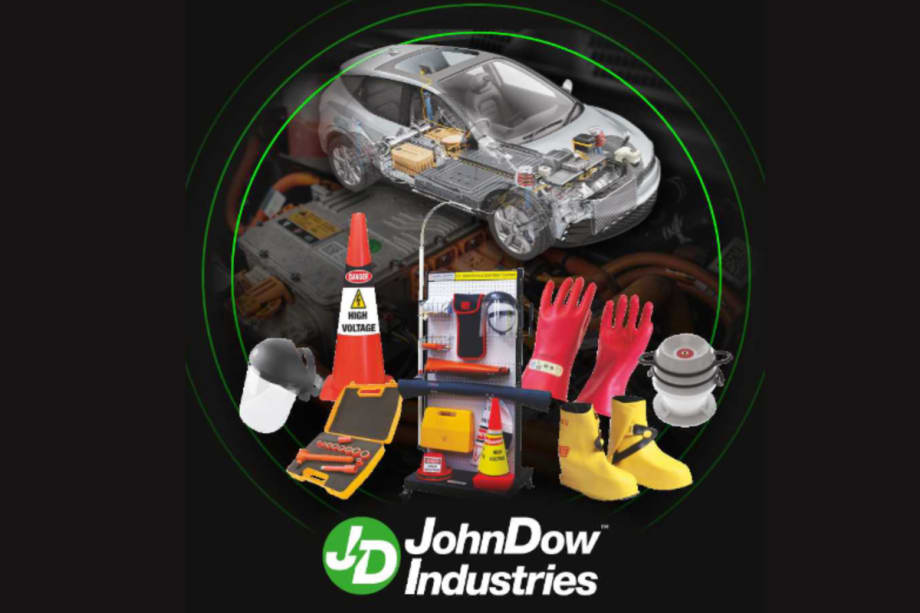
This new line offers 30 innovative safety products including gloves, face shields, aprons, blankets, insulated tools, jackets, and boots among other products.
Photo: JohnDow
2 min to read
JohnDow Industries (JDI), supplier and distributor of automotive aftermarket equipment and products, introduced a new line of EV and hybrid service and safety products at AAPEX 2023 in Las Vegas, Nevada.
This new line offers 30 safety products including gloves, face shields, aprons, blankets, insulated tools, jackets, and boots among other products, all designed to increase safety while servicing electric and hybrid vehicles.
Vehicle Fire Blanket
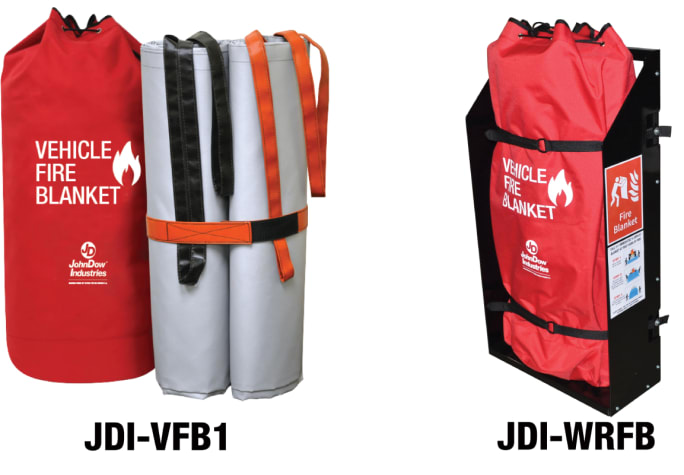
The fire blanket suppresses vehicle fires and prevents fire from spreading and damaging nearby property while preventing toxic fumes and smoke from releasing into surrounding areas.
Photo: JohnDow
A notable product in this new safety equipment line is the Vehicle Fire Blanket. Lithium-ion battery fires are extremely dangerous and cannot be extinguished using traditional fire extinguishing methods. As electric and hybrid vehicles gain popularity, service technicians must be prepared for these potentially devastating disasters during a repair.
The fire blanket suppresses vehicle fires and prevents fire from spreading and damaging nearby property while preventing toxic fumes and smoke from releasing into surrounding areas. The size also makes storage convenient for auto repair shops, firefighters, service stations, charging stations, etc. Reported product benefits include:
Contains vehicle fire and debris to protect property, staff, and customers.
Limits damage and spread of fire to nearby areas.
For use on any passenger vehicle including internal combustion and EVs.
Keeps toxic smoke derived from combustion contained.
Two people can deploy the 6x9M blanket in seconds.
Easy deploy from storage rack with oversized straps.
“JDI listened to the market and grew our product lines to offer high quality, reliable, and safe equipment service repairers needed," said Robert Christy, President of JDI, in a recent news release. "Understanding where the automotive industry is going, we are not shying away from living this principle and expanding our offering to include service and safety equipment for electric and hybrid vehicle repairs.”
More Safety

How to Build a Better School Bus Driver Training Program
Is it time to strengthen your driver training? Here’s how to pick the right talent and improve recruitment, retention, and safety. This video is brought to you by IC Bus.
Read More →
Recent School Bus Accidents Leave 2 Dead, 2 Injured
Four school bus crashes in Florida, Illinois, and Georgia highlight risks in transportation lots, at bus stops, and during student loading and unloading.
Read More →
Sponsored•September 8, 2026
When Every Second Matters, Clarity Keeps Routes Moving
From routine delays to urgent incidents, strong communication practices help drivers, dispatchers, schools, and families respond with confidence.
Read More →

What Happens When a School Bus Catches Fire — and What Can Help
School bus fires are rare but can be devastating. Learn how advances in fire suppression and asset protection help fleets detect fires earlier, reduce damage, and improve safety.
Read More →
Geotab Launches Tool to Help Fleets Investigate Road Incidents
Geotab Investigations combines telematics data, video, documents, and other evidence to help fleets reconstruct incidents, resolve claims, and determine what happened.
Read More →
Texas Sixth Grader Wins 2026 National School Bus Safety Poster Contest
Sai Darshana Yekolu of Moseley Middle School in Prosper, Texas, was named the newest winner for her artwork, bringing the theme of “Safe Rides, Everyday Heroes” to life.
Read More →
Sponsored•August 27, 2026
Doing More With Less: How Transportation Directors Can Prioritize Safety Amid Budget Uncertainty
With diesel prices soaring and nearly one-third of transportation directors expecting budget cuts, maintaining student safety has never been more challenging. Download this guide to learn how leading districts are prioritizing risk, funding critical safety technology, and building stronger budget cases with data.
Read More →
Walton County Schools Adds Gatekeeper Stop-Arm Enforcement System
The Florida district will deploy Gatekeeper’s updated Student Protector technology, which now incorporates AI to improve video evidence.
Read More →
How To Build a More Secure School Bus Yard During and After Hours
As thefts and overnight security threats continue, school transportation leaders are combining stronger operational practices with AI-enabled surveillance to better protect buses, facilities, and staff.
Read More →
FMCSA Names New Chief Safety Officer: What School Bus Operators Should Know
Steve Dowling is set to lead the federal agency's efforts to advance commercial motor vehicle safety and reduce crashes, fatalities, and injuries on the nation's roadways.
Read More →