




How to Accelerate Adoption of Zero-Emission School Buses
Voltera exec shares results from a Harvard University study on the benefits of school bus electrification, and insights into overcoming charging infrastructure challenges.

Matt Curwood of Voltera writes about how school districts can plan for electric vehicle infrastructure needs.
Photo: School Bus Fleet
A new study by researchers at Harvard T.H. Chan School of Public Health quantifies the climate and health benefits of converting school bus fleets to electric vehicles.
Replacing an average diesel school bus in the U.S. fleet in 2017 with an electric would yield $84,200 in total benefits per individual bus, the study found. That includes $40,400 worth of climate benefits from the elimination of 181 metric tons of carbon dioxide emissions and $43,800 in health savings from less air pollution and reduced rates of mortality and childhood asthma.
In large cities and among fleets of pre-2005 buses, the benefits are $247,600.
The significant climate and health benefits are just two reasons why school bus fleets are among the best targets for electrification.
Speaking on a CEO roundtable on scaling vehicle electrification at Advanced Clean Transportation Expo 2024 in April, John O'Leary, president and CEO of Daimler Truck North America, said school buses represent an ideal use case for electrification. “By the end of this year 10% of new large school buses will be battery electric. We’re seeing a nice upward slope of adoption. It’s an example of a great application meeting great products and great incentives that drives strong adoption.”
As my colleague Paul Hernandez, senior policy manager of government & utility relations at Voltera, said while moderating a panel on accelerating the electrification of transportation at the EV Charging Summit earlier this year, there are significant opportunities to leverage EV buses to benefit school districts more widely.
“An electric bus has the potential to be used as mobile energy storage for backup power, demand response, vehicle-to-grid (V2G) integration, and other pathways to leverage energy from bus itself,” Hernandez said.
Speaking on a panel about finding innovative solutions to power constraints at ACT Expo 2024, Linnea McChesney, business development manager, EV + Microgrid Infrastructure at Mortenson Construction, said: “There is an opportunity for additional revenue via V2G.” Certain use cases are particularly enticing, like school buses, because “they’re sitting idle during peak demand hours.”
Some school bus fleet operators are pursuing such opportunities. Speaking on a panel about navigating the new fuel frontier at ACT Expo 2024, John Kenning, CEO and president at First Student, described a microgrid project being developed in partnership with the local utility: “We’ll be supplying energy back to the grid.”
Incentives and Regulations Driving School Bus Electrification
Given the health and climate costs of running internal combustion engine school buses, and that few school districts can pay more for a battery electric buses, incentives are essential. In 2023, the EPA distributed nearly $1.5 billion to electrify 3,000 school buses.
In addition to incentives, regulation is another reason school bus electrification is accelerating. According to the 2024 State of Sustainable Fleets report by TRC Companies, “Research suggests that demand [for BEVs] is growing outside of California, and regulations are a strong motivator.” California and New York have passed statewide BEV mandates. Connecticut, Maryland, and Maine require BEVs for certain types of bus purchases or in priority neighborhoods. “BEV demand from these states is expected to grow significantly during the next 10 years,” the report concludes.
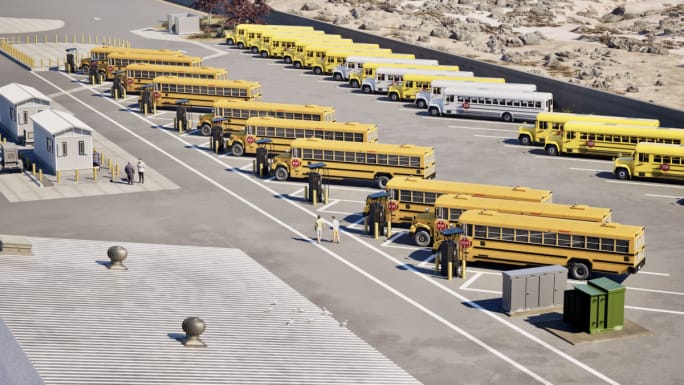
Despite the variety of benefits, incentives and regulations driving decarbonization, electrifying a school bus fleet is no easy task, and often development of charging infrastructure lags vehicle.
Photo: Voltera
Getting the Bus is the Easy Part
Despite the variety of benefits, incentives and regulations driving decarbonization, electrifying a school bus fleet is no easy task, and often development of charging infrastructure lags behind vehicles. At the EV Charging Summit this year, I moderated a panel titled Electric Buses: Lessons Learned from Diverse Adoption Cases. Panelists shared the sentiment that “the easiest part of the process is getting the bus” and “you have to think about infrastructure.”
Fleets must balance timing between vehicle orders and working with utilities and building out infrastructure. The easiest part of the process is getting the bus. When it comes to infrastructure, the further in advance you can plan this out, the better.
One of the significant challenges associated with school bus electrification is that school districts need to understand what’s involved.
Kevin King, First Student senior principal EV consultant, said during my panel, that a significant challenge is education. “There’s a lot of misinformation. Cost is a significant hurdle to adoption and public perception is not always strong. So, a lot of my time is spent helping people understand the benefits of school bus electrification and what’s involved.”
School districts and bus fleet operators will gain confidence in electric buses through careful planning. “We do a very stringent route analysis considering 27 factors including weather, topography, and duty cycle,” said First Student’s Kevin King. “For now, electric is not right for every route.” He said First Student has 311 electric buses on the road and about 800 more on order, with a goal of 30,000 by 2035.
Humberto Marazzi, national training manager at MV Transportation, a provider of paratransit services, said: “The challenge I see is a lack of education. People are unaware of what it really takes to run a fleet of EVs – to convert facilities, to train drivers and mechanics. Transit agencies don’t always fully understand what they’re getting into.”
There is a lot of emphasis on vehicle rollout, he added, and less on operating the fleet of EV buses. “You need a team that’s 100% dedicated to electrification, to provide continuous education and communication,” Marazzi said
Start on Infrastructure Now to be Ready for EV Rollout at Scale
Some states have instituted mandates that by a certain date all new school buses must be electric.
King said planning infrastructure to accommodate EVs in 2027 needs to have begun six months ago. “If you need to increase power at your site you’re looking at two years before the utility will even begin to look at the project.”
Timelines for switchgear are as long as for the buses themselves, King said, and utility interconnection takes much longer.
Having the right partner is one way to accelerate the adoption of zero-emission school buses, panelists agreed.
Julia Gessner, director of performance at transportation provider Transdev said: “You have to think about the infrastructure and make sure you’re educating yourself and leaning on partners as you’re doing it. This is a new technology that will change every aspect of operations. That can create decision fatigue. But don’t get decision paralysis because you’re afraid of making a mistake. You will make mistakes. With the right partner you can correct them and by the time your buses are on the road you won’t even remember the mistakes.”
About the Author: Matt Curwood is senior director of bus operations at Voltera, an EV charging infrastructure company developing and operating charging depots for fleets nationwide. He can be reached at mcurwood@volterapower.com.
More Alternative Fuels

CALSTART and Forth Combine to Form Catalyst Mobility
The new name represents a renewed vision for the nonprofit focused on advancing clean, equitable, and affordable transportation solutions that move people and goods.
Read More →
Alt-Fuel Moves: New Buses, Charging Hubs & Real-World EV Testing
Propane and electric school bus deployments continue to grow as districts add new vehicles, expand charging infrastructure, and gather more real-world operating data.
Read More →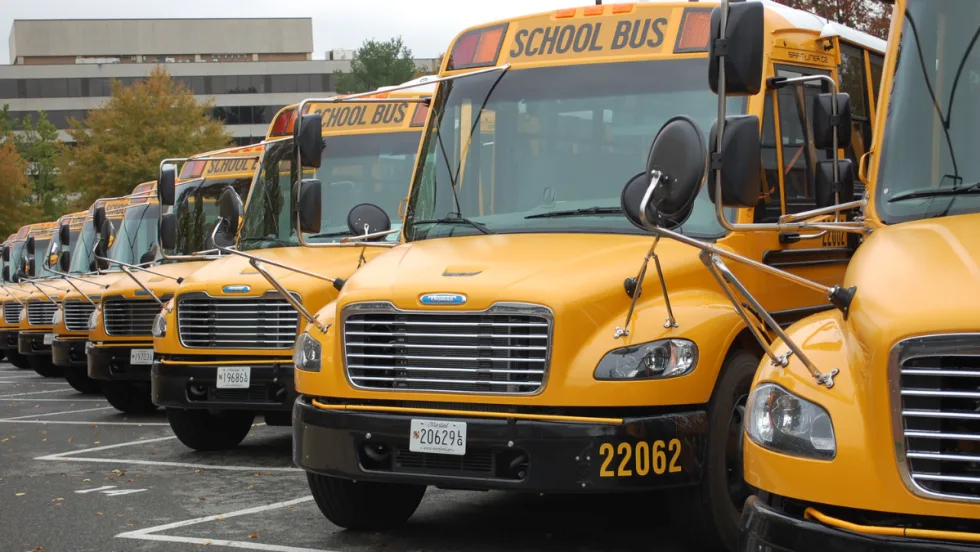
Fewer Electric School Bus Models Reshape the U.S. Market
WRI’s latest buyer’s guide points to a consolidating electric school bus market, but fewer options may reflect a maturing industry rather than fewer meaningful choices for school bus operators.
Read More →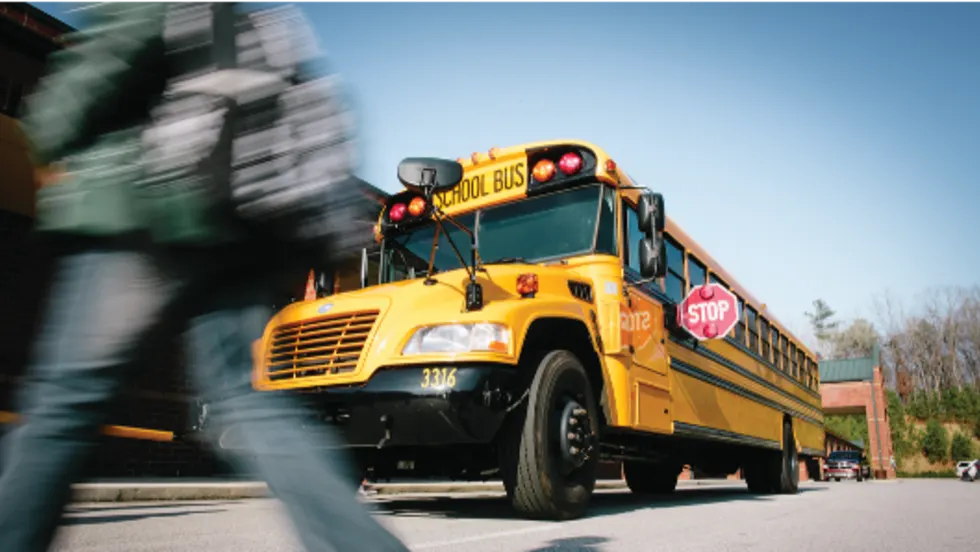
The Fuel Budget You Can Actually Predict: How Propane Autogas Keeps Money in the Classroom
Learn how propane autogas helps school districts manage fuel costs with predictable pricing, lower maintenance, and reduced emissions from former transportation director Joel Stutheit.
Read More →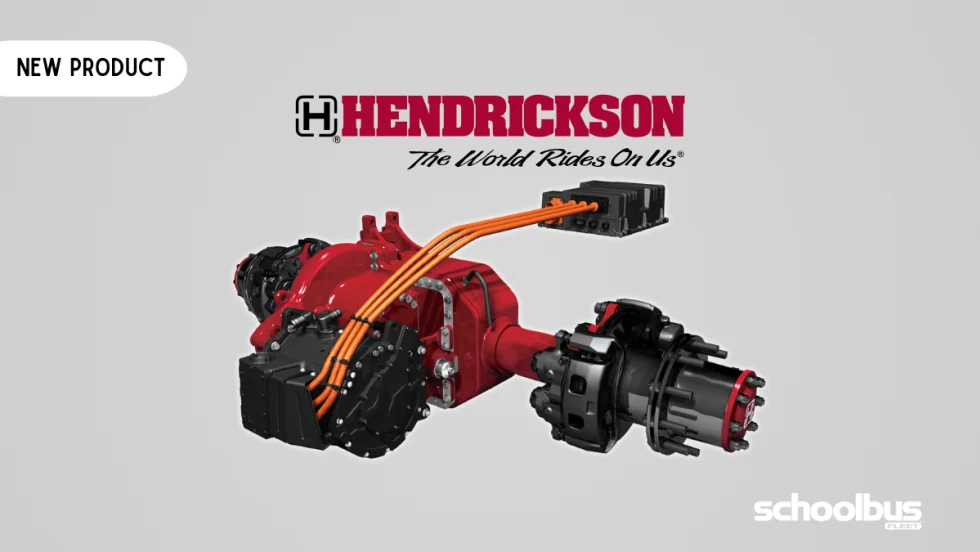
Hendrickson, Driventic Introduce New Electric Powertrain for School Buses
ELECTRAAX, the electrified, lightweight drive axle offers integrated ePowertrain efficiency and modular flexibility for Class 6–7 school bus use.
Read More →
The Mobility House Joins PowerFlex in Fleet Electrification Deal
The acquisition combines intelligent charging software, bidirectional charging expertise, and fleet electrification services to support the growing adoption of electric school buses across North America.
Read More →
Alt-Fuel Moves: Electric School Bus Investments Hit the Road
See which districts across the U.S. are putting electric school buses into service, expanding charging infrastructure, and planning the next phase of fleet electrification.
Read More →
With Fuel Volatility Ahead, School Districts Turn to Propane
While diesel prices peaked above $5 this spring, districts with propane autogas-powered fleets paid under $2 per gallon, according to PERC.
Read More →
EPA Unveils Proposed Changes to 2027 Heavy-Duty Engine Rules
The federal agency has proposed changes to next year’s targets that would eliminate DEF derates, ease warranty requirements, and retain current NOx emissions standards.
Read More →
Alt-Fuel Moves: EV Charging & Infrastructure Projects Gain Momentum
The latest developments include new funding, charging infrastructure, utility investments, and fleet technologies designed to support the transition to electric school buses nationwide.
Read More →