




FTA issues final policy statement on tripper service
The Federal Transit Administration (FTA) issued a final policy statement on school bus operations regulations, clarifying its policy on “tripper service” in light of recent cases involving federally funded transit agencies transporting students to school.

WASHINGTON — Last week, the Federal Transit Administration (FTA) issued a final policy statement on school bus operations regulations, clarifying its policy on “tripper service” in light of recent cases involving federally funded transit agencies transporting students to school.
The proposal to revise its policy was issued in May after a federal judge struck down an earlier FTA decision, paving the way for the Rochester-Genesee (N.Y.) Regional Transportation Authority to create new bus routes for the purpose of transporting students.
At issue in that decision was the judge’s interpretation of FTA’s definitions of “school bus operations” and “tripper service,” with the FTA arguing that the court’s interpretation could lead a transit agency to “conclude that it would be permitted to restructure its public transportation operation dramatically to accommodate the needs of a local school district and its students, thereby displacing private school bus operators and their employees.”
In the policy statement, the FTA interprets the definition of “tripper service,” as it has historically, as “to allow a grantee to utilize various fare collections or subsidy systems, modify the frequency of service, and make de minimis route alterations from route paths in the immediate vicinity of schools to stops located at or in close proximity to the schools.”
Additionally, the agency states that it will interpret the term “exclusively” in the definition of “school bus operations” to “encompass any service that a reasonable person would conclude was primarily designed to accommodate students and school personnel, and only incidentally to serve the non-student general public. Additionally, grantees may create new routes to serve school students and personnel if a reasonable person would conclude that the grantees designed the routes to serve some segment of the non-student general public.”
The FTA said that it believes this clarification will allow the agency to implement the express intent of Congress to prevent unfair competition between federally funded grantees and private school bus operators.
In the statement, the FTA also responded to the 510 comments from the public collected after the Notice of Proposed Rulemaking was issued in May 2008, addressing safety, environmental, regional and other concerns.
The FTA still plans to also issue a Notice of Proposed Rulemaking to provide clearer definitions of “tripper service” and “school bus operations” as well as to generally update its existing school bus regulations.
To read the full statement, visit http://edocket.access.gpo.gov/2008/E8-21601.htm.
More Safety

How to Build a Better School Bus Driver Training Program
Is it time to strengthen your driver training? Here’s how to pick the right talent and improve recruitment, retention, and safety. This video is brought to you by IC Bus.
Read More →
Recent School Bus Accidents Leave 2 Dead, 2 Injured
Four school bus crashes in Florida, Illinois, and Georgia highlight risks in transportation lots, at bus stops, and during student loading and unloading.
Read More →
When Every Second Matters, Clarity Keeps Routes Moving
From routine delays to urgent incidents, strong communication practices help drivers, dispatchers, schools, and families respond with confidence.
Read More →

What Happens When a School Bus Catches Fire — and What Can Help
School bus fires are rare but can be devastating. Learn how advances in fire suppression and asset protection help fleets detect fires earlier, reduce damage, and improve safety.
Read More →
Geotab Launches Tool to Help Fleets Investigate Road Incidents
Geotab Investigations combines telematics data, video, documents, and other evidence to help fleets reconstruct incidents, resolve claims, and determine what happened.
Read More →
Texas Sixth Grader Wins 2026 National School Bus Safety Poster Contest
Sai Darshana Yekolu of Moseley Middle School in Prosper, Texas, was named the newest winner for her artwork, bringing the theme of “Safe Rides, Everyday Heroes” to life.
Read More →
Doing More With Less: How Transportation Directors Can Prioritize Safety Amid Budget Uncertainty
With diesel prices soaring and nearly one-third of transportation directors expecting budget cuts, maintaining student safety has never been more challenging. Download this guide to learn how leading districts are prioritizing risk, funding critical safety technology, and building stronger budget cases with data.
Read More →
Walton County Schools Adds Gatekeeper Stop-Arm Enforcement System
The Florida district will deploy Gatekeeper’s updated Student Protector technology, which now incorporates AI to improve video evidence.
Read More →
How To Build a More Secure School Bus Yard During and After Hours
As thefts and overnight security threats continue, school transportation leaders are combining stronger operational practices with AI-enabled surveillance to better protect buses, facilities, and staff.
Read More →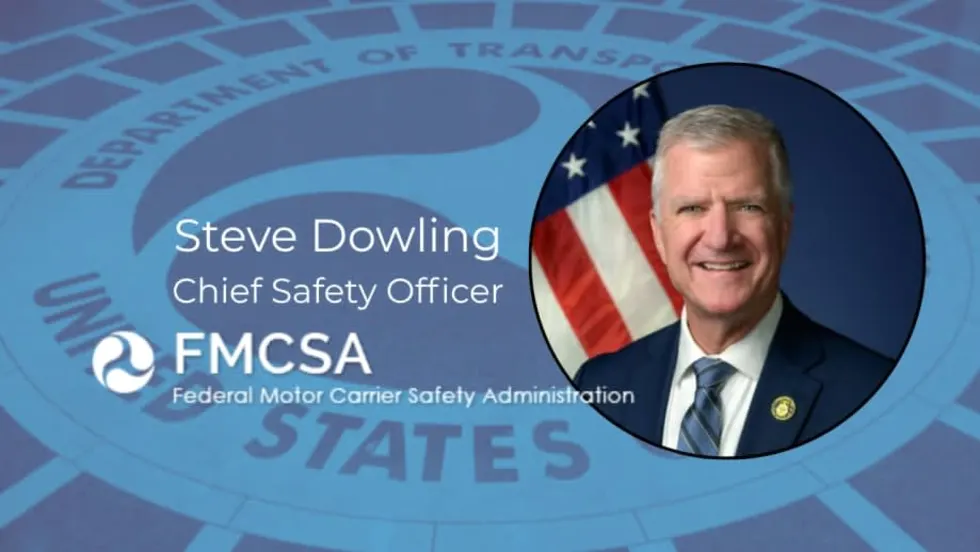
FMCSA Names New Chief Safety Officer: What School Bus Operators Should Know
Steve Dowling is set to lead the federal agency's efforts to advance commercial motor vehicle safety and reduce crashes, fatalities, and injuries on the nation's roadways.
Read More →