




Former teacher invents bus noise alarm
Stephen Dawson develops the alarm to control the noise level in his classroom, and he then realizes it could help solve safety problems in a school bus environment. He discusses with SBF how the device works.


Former school teacher Stephen Dawson said his noise alarm prototype could be integrated into a bus security camera, mobile two-way radio or GPS system to help control the noise level on a bus.
VANCOUVER, Wash. — Former school teacher Stephen Dawson is well acquainted with the challenges of supervising rowdy students. While working as a teacher, Dawson found that the noise in his classroom rose to unmanageable levels, especially when students were working together in large groups.
"[The students] usually start out quiet, but then become louder and louder until they are oblivious to their noise level. Often, they are not even aware of how loud they are," Dawson explained in an interview with SBF.
Dawson came up with a plan. He approached an Oregon State University faculty member in the electrical engineering department about creating a noise level alarm. Once a prototype had been created, Dawson introduced it to his classroom.
"After the alarm went off quite a few times, the students developed an intuitive sense about their noise level so that the alarm rarely sounded," Dawson said. "Sometimes I used incentives — rewards — for their complying, but most of the time I didn't need to, as most students ... encouraged the others to be quieter. They could talk, but the alarm reminded them when their noise level became excessive."
It wasn't until later that Dawson realized his device could be equally applicable in a school bus environment.
Dawson, who has done extensive research on the subject, said that many incidents have occurred because bus drivers do not have an effective means of quieting students. Not only is noise distracting to the bus driver, it also can conceal issues such as bullying or assault because the driver cannot hear what is happening in his or her bus over the din.
Dawson pointed out that "there's a lot of research that shows that noise level causes aggression. And these bus drivers — who are just normal people — when they get around this loud sound every day ... it causes stress and it affects how they act with the kids."
Dawson's device allows the user to set a threshold level — the noise level that should not be exceeded — as well as adjust the sound or volume of the alarm itself.
"When the ambient noise level on the bus reaches the set alarm threshold, an alarm goes off to indicate to the students that their noise is too loud — as determined by the driver or school district," he said. "The alarm will continue to sound until either the driver manually turns it off or the noise level in the bus goes below the preset noise level threshold."
Dawson has submitted a patent application for the device and is currently approaching companies about developing the alarm for the school bus market. His finished prototype, he said, could be integrated into the video survelliance on a bus, a mobile two-way radio or GPS system.
"Now it's about trying to get people to see that this is an age-old problem and it's never really been addressed," he added. "There hasn't been something that will really work that I know of, and I really believe that this [alarm] will be effective."
More Safety

School's Back. Here's What Happened to Traffic, Speeding & Distraction
What happens to traffic when school resumes? New data analysis examines changes in distracted driving, congestion, and speeding around schools.
Read More →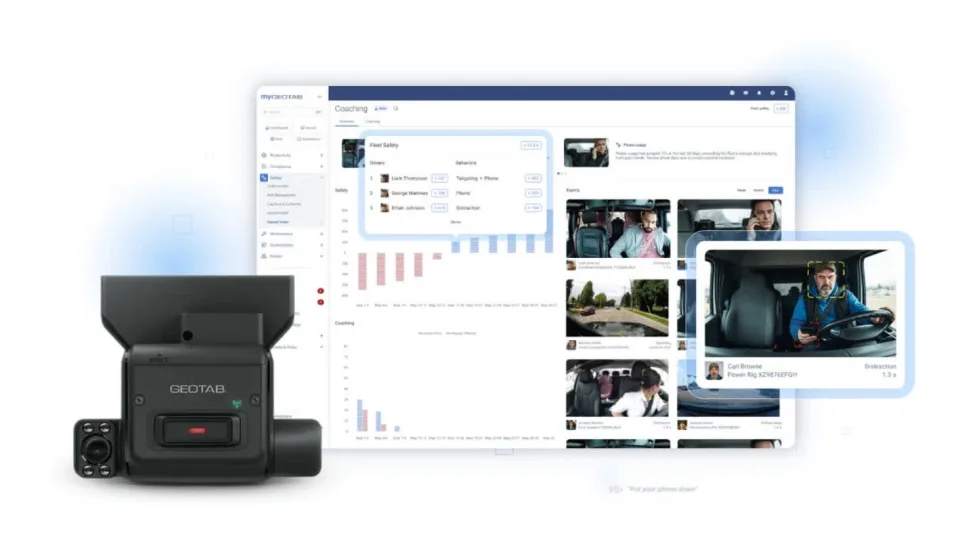
Geotab Expands Fleet Safety Tools With Video Coaching, Risk Insights
New safety and video capabilities aim to help fleet managers assess risk, support drivers, and take targeted action through video coaching, red-light violation detection, and more.
Read More →
How to Build a Better School Bus Driver Training Program
Is it time to strengthen your driver training? Here’s how to pick the right talent and improve recruitment, retention, and safety. This video is brought to you by IC Bus.
Read More →

Recent School Bus Accidents Leave 2 Dead, 2 Injured
Four school bus crashes in Florida, Illinois, and Georgia highlight risks in transportation lots, at bus stops, and during student loading and unloading.
Read More →
When Every Second Matters, Clarity Keeps Routes Moving
From routine delays to urgent incidents, strong communication practices help drivers, dispatchers, schools, and families respond with confidence.
Read More →
What Happens When a School Bus Catches Fire — and What Can Help
School bus fires are rare but can be devastating. Learn how advances in fire suppression and asset protection help fleets detect fires earlier, reduce damage, and improve safety.
Read More →
Geotab Launches Tool to Help Fleets Investigate Road Incidents
Geotab Investigations combines telematics data, video, documents, and other evidence to help fleets reconstruct incidents, resolve claims, and determine what happened.
Read More →
Texas Sixth Grader Wins 2026 National School Bus Safety Poster Contest
Sai Darshana Yekolu of Moseley Middle School in Prosper, Texas, was named the newest winner for her artwork, bringing the theme of “Safe Rides, Everyday Heroes” to life.
Read More →
Doing More With Less: How Transportation Directors Can Prioritize Safety Amid Budget Uncertainty
With diesel prices soaring and nearly one-third of transportation directors expecting budget cuts, maintaining student safety has never been more challenging. Download this guide to learn how leading districts are prioritizing risk, funding critical safety technology, and building stronger budget cases with data.
Read More →
Walton County Schools Adds Gatekeeper Stop-Arm Enforcement System
The Florida district will deploy Gatekeeper’s updated Student Protector technology, which now incorporates AI to improve video evidence.
Read More →