




Ford, Georgia Tech partner on hydraulic hybrid bus conversion
The Ford Motor Co. Fund and the Georgia Institute of Technology partner for the “Green Eco School Bus,” a project focused on converting an existing school bus into a hydraulic hybrid that runs on recycled biofuel. Atlanta Public Schools donated the 16-passenger unit, and officials say installation is nearly complete.

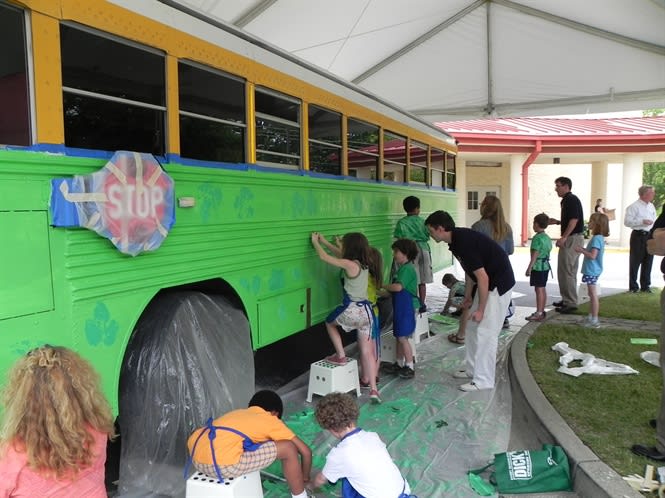
Students at Mary Lin Elementary School in Atlanta paint the "Green Eco School Bus,” which is being converted to a hydraulic hybrid vehicle that runs on recycled biofuel.
ATLANTA — The Ford Motor Co. Fund and the Georgia Institute of Technology are partnering on the nation's first conversion of a traditional school bus to a hydraulic hybrid vehicle that runs on recycled biofuel.
Conducted by Georgia Tech, the project is financed by a $50,000 Ford College Community Challenge Grant — one of five given annually for a student-led project that matches university resources with an urgent community need related to sustainability.
Michael Leamy, Georgia Tech assistant professor of mechanical engineering, and his students have designed and developed the hydraulic hybrid system for the 16-passenger school bus — which was provided by Atlanta Public Schools (APS) — and its installation is nearly complete.
Students at Mary Lin Elementary School are painting the "Green Eco School Bus" green and organizing a drive to collect used cooking oil for processing into biodiesel.
"Together with Georgia Tech and Atlanta Public Schools, we are taking innovation from the classroom to the community," said Jim Vella, president of Ford Motor Co. Fund and Community Services. "This is a noteworthy example of the types of programs we are bringing to Atlanta as part of our new Operation Goodwill partnership with local Ford and Lincoln dealers with the goal of expanding our engagement with this community."
The project includes a cost-benefit analysis of a large-scale conversion of a school bus fleet to hydraulic hybrid powertrains designed to recover lost braking energy. Hydraulic hybrids use pressurized fluid, rather than electric power, as a power source in addition to the engine.
"We expect our research will lead to cleaner, more efficient school buses that will help school districts like APS significantly reduce fuel costs and greenhouse gas emissions," Leamy said.
Atlanta Public Schools officials are using the project to educate the next generation of students about green energy.
"Our students are eager to learn about new ways to care for the environment," said Brian Mitchell, principal of Mary Lin Elementary. "The Green Eco School Bus turns a theoretical concept into a fun and exciting reality that stimulates their learning."
More Alternative Fuels

CALSTART and Forth Combine to Form Catalyst Mobility
The new name represents a renewed vision for the nonprofit focused on advancing clean, equitable, and affordable transportation solutions that move people and goods.
Read More →
Alt-Fuel Moves: New Buses, Charging Hubs & Real-World EV Testing
Propane and electric school bus deployments continue to grow as districts add new vehicles, expand charging infrastructure, and gather more real-world operating data.
Read More →
Fewer Electric School Bus Models Reshape the U.S. Market
WRI’s latest buyer’s guide points to a consolidating electric school bus market, but fewer options may reflect a maturing industry rather than fewer meaningful choices for school bus operators.
Read More →
The Fuel Budget You Can Actually Predict: How Propane Autogas Keeps Money in the Classroom
Learn how propane autogas helps school districts manage fuel costs with predictable pricing, lower maintenance, and reduced emissions from former transportation director Joel Stutheit.
Read More →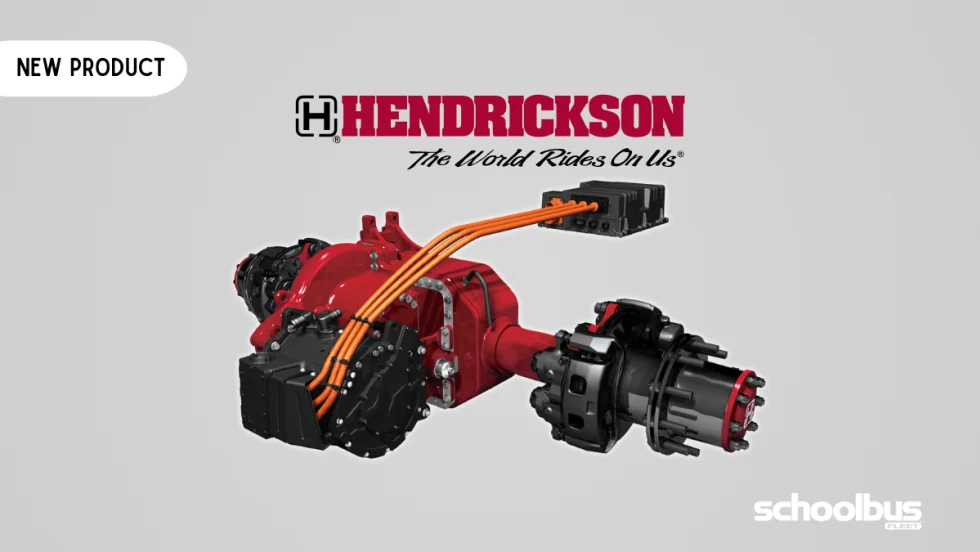
Hendrickson, Driventic Introduce New Electric Powertrain for School Buses
ELECTRAAX, the electrified, lightweight drive axle offers integrated ePowertrain efficiency and modular flexibility for Class 6–7 school bus use.
Read More →
The Mobility House Joins PowerFlex in Fleet Electrification Deal
The acquisition combines intelligent charging software, bidirectional charging expertise, and fleet electrification services to support the growing adoption of electric school buses across North America.
Read More →
Alt-Fuel Moves: Electric School Bus Investments Hit the Road
See which districts across the U.S. are putting electric school buses into service, expanding charging infrastructure, and planning the next phase of fleet electrification.
Read More →
With Fuel Volatility Ahead, School Districts Turn to Propane
While diesel prices peaked above $5 this spring, districts with propane autogas-powered fleets paid under $2 per gallon, according to PERC.
Read More →
EPA Unveils Proposed Changes to 2027 Heavy-Duty Engine Rules
The federal agency has proposed changes to next year’s targets that would eliminate DEF derates, ease warranty requirements, and retain current NOx emissions standards.
Read More →
Alt-Fuel Moves: EV Charging & Infrastructure Projects Gain Momentum
The latest developments include new funding, charging infrastructure, utility investments, and fleet technologies designed to support the transition to electric school buses nationwide.
Read More →