




Florida Bill Would Boost School Bus Passing Penalties
The Cameron Mayhew Act, named for a 16-year-old who was killed last year, targets drivers who cause serious injury or death while committing a school bus stop-arm violation.

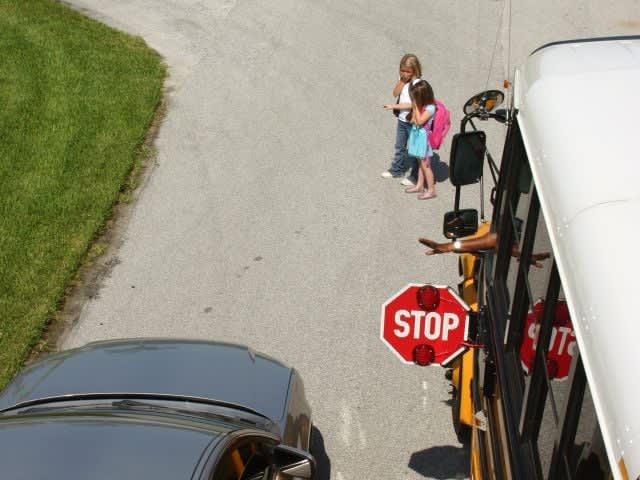
Legislation filed in Florida targets motorists who cause serious injury or death while committing a school bus stop-arm violation. Staged photo by Brevard Public Schools
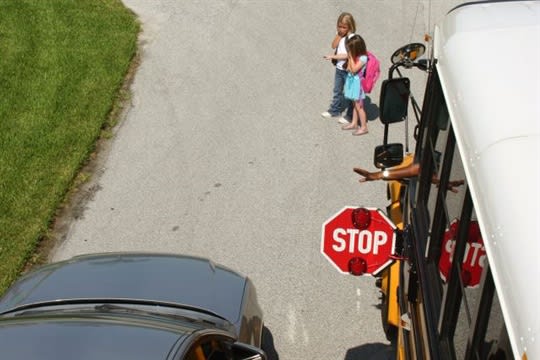
Legislation filed in Florida targets motorists who cause serious injury or death while committing a school bus stop-arm violation. Staged photo by Brevard Public Schools
TALLAHASSEE, Fla. — Motorists who illegally pass a school bus and strike a student in Florida could soon face stiffer penalties.
Two companion bills filed in the state Legislature in early March target drivers who cause serious injury or death while committing a school bus stop-arm violation.
The legislation is called the Cameron Mayhew Act, named for a 16-year-old student in Fort Myers, Florida, who was struck and killed by a car while crossing the street to board his school bus in June 2016.
The driver whose vehicle hit Mayhew received a $1,000 fine and had his license suspended for six months, which Mayhew’s parents considered a light sentence, according to The News-Press.
The new legislation, introduced by Florida Sen. Kathleen Passidomo and Rep. Dane Eagle, would impose a $1,500 fine and a one-year license suspension for motorists who seriously injure or kill a person while illegally passing a school bus. The penalties for those violators would also include:
• Serving 120 community service hours in a trauma center or hospital that regularly receives victims of vehicle accidents.
• Participating in a victim’s impact panel session in a judicial circuit or attend a driver improvement course relating to the rights of vulnerable road users.
If the legislation passes, the Cameron Mayhew Act would take effect on July 1.
More Safety
Geotab Expands Fleet Safety Tools With Video Coaching, Risk Insights
New safety and video capabilities aim to help fleet managers assess risk, support drivers, and take targeted action through video coaching, red-light violation detection, and more.
Read More →
How to Build a Better School Bus Driver Training Program
Is it time to strengthen your driver training? Here’s how to pick the right talent and improve recruitment, retention, and safety. This video is brought to you by IC Bus.
Read More →
Recent School Bus Accidents Leave 2 Dead, 2 Injured
Four school bus crashes in Florida, Illinois, and Georgia highlight risks in transportation lots, at bus stops, and during student loading and unloading.
Read More →

When Every Second Matters, Clarity Keeps Routes Moving
From routine delays to urgent incidents, strong communication practices help drivers, dispatchers, schools, and families respond with confidence.
Read More →
What Happens When a School Bus Catches Fire — and What Can Help
School bus fires are rare but can be devastating. Learn how advances in fire suppression and asset protection help fleets detect fires earlier, reduce damage, and improve safety.
Read More →
Geotab Launches Tool to Help Fleets Investigate Road Incidents
Geotab Investigations combines telematics data, video, documents, and other evidence to help fleets reconstruct incidents, resolve claims, and determine what happened.
Read More →
Texas Sixth Grader Wins 2026 National School Bus Safety Poster Contest
Sai Darshana Yekolu of Moseley Middle School in Prosper, Texas, was named the newest winner for her artwork, bringing the theme of “Safe Rides, Everyday Heroes” to life.
Read More →
Doing More With Less: How Transportation Directors Can Prioritize Safety Amid Budget Uncertainty
With diesel prices soaring and nearly one-third of transportation directors expecting budget cuts, maintaining student safety has never been more challenging. Download this guide to learn how leading districts are prioritizing risk, funding critical safety technology, and building stronger budget cases with data.
Read More →
Walton County Schools Adds Gatekeeper Stop-Arm Enforcement System
The Florida district will deploy Gatekeeper’s updated Student Protector technology, which now incorporates AI to improve video evidence.
Read More →
How To Build a More Secure School Bus Yard During and After Hours
As thefts and overnight security threats continue, school transportation leaders are combining stronger operational practices with AI-enabled surveillance to better protect buses, facilities, and staff.
Read More →