




EPA Provides Funding Updates at NASDPTS Conference
What opportunities exist for school bus rebates and grants from the EPA? Get the latest on the Diesel Emissions Reduction Act, American Rescue Plan, and the Bipartisan Infrastructure Law’s Clean School Bus Program.

The EPA hopes to notify 2021 DERA and ARP grant applicants of award status this February.
Logo courtesy of EPA
It’s time to clean up, according to the Environmental Protection Agency (EPA)! Within the school transportation industry, the federal agency is focused on reducing emissions and offers several ways schools can receive monetary assistance to update their fleets, go green, and promote safer environments for students and staff.
This was the topic of one session at the National Association of State Directors of Pupil Transportation Services (NASDPTS) Annual Conference, held virtually on Jan. 12. Jason Wilcox, an EPA physical scientist, shared insight into current and upcoming EPA funding opportunities.
“I want to get everybody thinking about, what’s the age of our fleets, what kind of emission controls do they have on them, and what can we do to clean up,” he said, adding that clean school buses are important because it’s not just students at risk; it’s the drivers and school staff who are also exposed to diesel dust.
DERA & Diesel Reductions
The Diesel Emissions Reduction Act (DERA) offers rebates and grants to reduce emissions from older diesel vehicles. The program has funded vehicle replacements or retrofits for over 2,000 vehicles so far. The last funding round of about $10 million saw applications close in November 2021. That round saw 314 applications from 42 states and 1,174 bus replacements requested.
“If it’s a heavy-duty diesel engine, there’s a high chance we can fund it,” Wilcox said.
About 30% of funds are awarded to state agencies and 70% to national programs. The latter bucket is divided into national grants, tribal and insular grants, and school bus rebates.

Jason Wilcox, EPA physical scientist, presents at the 2022 virtual NASDPTS annual conference.
Photo via NASDPTS conference
Wilcox made the distinction between DERA grants and rebates, noting the following for rebates:
Can fund exhaust retrofits at a 100% EPA cost share
Can fund bus replacements at a higher cost for certain technologies
All-electric bus replacements at a 45% cost share
Including funding for some charging infrastructure
California low-NOx standard replacements at 35% cost share
Can cover some admin costs and fund more buses with awards that exceed $1 million
Requires more complicated applications and reporting
To date, the program has funded about 32,000 school buses since 2008, covering both replacements and retrofits.
The 2022 national grant is planned for summer 2022, and the EPA is awaiting final funding numbers in the meantime.
American Rescue Plan
A more recent program, the American Rescue Plan (ARP) was launched in June 2021 as a result of the pandemic. It provided the EPA a total of $100 million to address disproportionate health risks in minority and low-income populations based on Census data.
The 2021 ARP School Bus Rebates saw $7 million go to eligible school districts and private fleets to replace old diesel buses with new electric ones. Tribal schools with 30% or more students living in poverty were eligible to apply for $300,000 per bus for up to four electric replacements.
The EPA received 64 applications from 25 states, with 162 bus replacements requested.
“We went into this not too sure about how much interest we’d see, but we’re happy to get the amount of applications we did,” Wilcox comments.
Selected applicants for both DERA and ARP will be notified this February, then fleets can begin ordering new buses.
Clean School Bus Program
The newest program on the block, the Bipartisan Infrastructure Law brought about the Clean School Bus (CSB) Program, signed into law Dec. 15. This will provide $5 billion total over five years for underserved areas to replace existing school buses with low- or zero-emission buses.
Eligible recipients will be chosen from four groups: state or local governmental entities responsible for school bus service or purchasing; eligible contractors; non-profit school transportation associations; and tribes or tribal organizations.
There is a CSB limitation that no state shall receive more than 10% of a fiscal year’s available funds.
Wilcox notes that he doesn’t have much new news yet, as “We’re not there yet for implementation,” but recommends checking out the EPA’s listening session materials for information on the program.
Lastly, Wilcox asked for feedback as the EPA develops the CSB program implementation plan, specifically mentioning NASDPTS members’ biggest hurdles in the electric transition, lessons learned that already have transitioned, what resources would be helpful, and how the agency can better engage with school districts. To provide feedback, email comments and suggestions to cleanschoolbus@epa.gov. He also noted the DERA helpline email: dera@epa.gov.
More Management
How to Build a Better Driver Training Program
Ready to boost up your school bus instructor training? Here’s how to pick the right talent and improve recruitment, retention, and safety.
Read More →
CALSTART and Forth Combine to Form Catalyst Mobility
The new name represents a renewed vision for the nonprofit focused on advancing clean, equitable, and affordable transportation solutions that move people and goods.
Read More →
What Makes a Great School Bus Driver Trainer?
Choosing the right school bus driver trainer takes more than experience. Learn six keys to selecting and developing trainers and evaluating program effectiveness.
Read More →


School Bus Contractors Expand Through New Deals, Acquisitions & Partnerships
STA's Canadian division acquires Ontario-based G&L Stevenson Transport while Durham School Services adds a new district contract in California, First Student adds a New Jersey contract, and Minnesota Coaches acquires Halo Transportation.
Read More →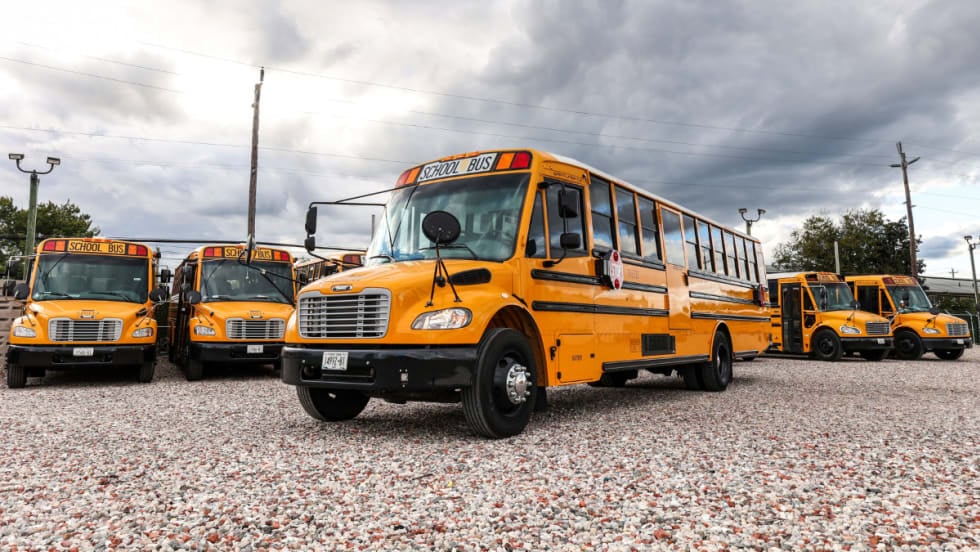
Logan Bus Company Rolls Out AI Phone System for NYC School Bus Families
A summer pilot found that AI agents could handle most routine calls, freeing up time for customer service staff to focus on emergencies and complex family concerns.
Read More →
From Intent to Impact: What I Learned About Leadership from TAPT
A Texas transportation supervisor shares lessons on self-awareness, accountability, managing stress and building trust — and why investing in leadership development matters at every stage of your career.
Read More →
NAPT Names 2026 Award Recipients, Hall of Fame Inductee
Who earned national recognition for their work in student transportation? This year, NAPT named five recipients of its 2026 awards for service, safety, and leadership, plus its newest Hall of Famer.
Read More →
2026 State of Student Transportation Report
Driver shortages. Rising costs. Growing safety expectations. More data, but not enough time to act on it. The 2026 State of Student Transportation Report reveals what transportation leaders say is putting the most pressure on their operations—and where they’re investing next. See how your priorities compare.
Read More →
How to De-Escalate an Angry Person: 5 Steps for Handling Workplace Conflict
What makes emotions run high, and how should you handle an angry colleague or parent? Follow these steps for staying calm, listening, showing empathy, and resolving conflict.
Read More →
What Readiness Looks Like This School Year
Learn about the challenges shaping the 2026–2027 school year, from persistent driver shortages and budget pressure to technology and readiness gaps. See how school districts are responding and adapting in Zonar’s 2026 Back-to-School Readiness Report.
Read More →