





Get Informed: Breaking Down Alternative Fuel Infrastructure Costs
EPA Finalizes Emissions Standards for School Buses, Other Heavy Vehicles
The U.S. EPA finalized Phase 3 Greenhouse Gas Emissions Standards for Heavy-Duty Vehicles, targeting model years 2027-2032. Expected to cut 1 billion tons of emissions, yielding $13 billion in annualized benefits. Flexible standards accommodate various technologies. Reaction mixed: praised for environmental benefits but criticized for potential economic impact on small businesses, notably independent truckers.
March 29, 2024
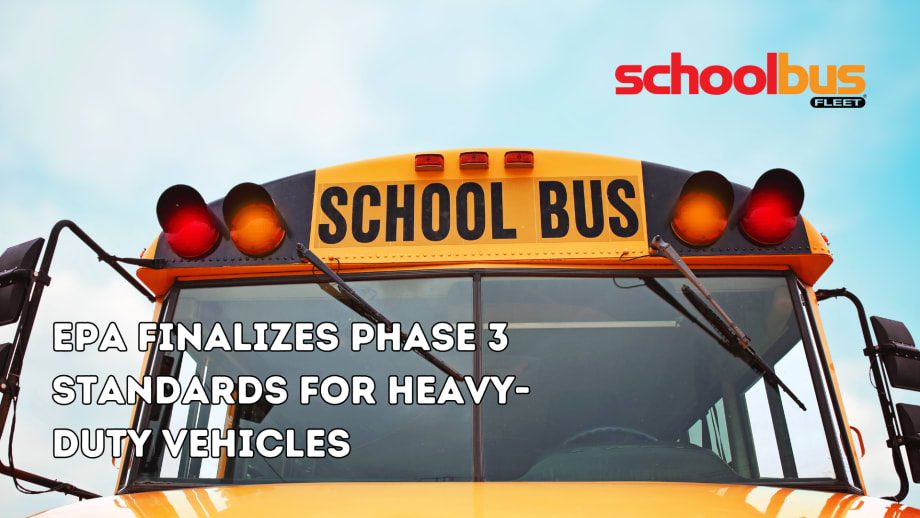
EPA's Phase 3 standards for heavy-duty vehicles build on the flexible structure of the Phase 2 program, allowing manufacturers to choose emissions control technologies. The standards cover vocational vehicles and tractors, with provisions for technology development and infrastructure. The decision is informed by extensive feedback and rigorous technical assessments.
Source: Canva
4 min to read
The U.S. Environmental Protection Agency has finalized greenhouse gas pollution standards for heavy-duty vehicles, including school buses, for model years 2027 through 2032.
The Greenhouse Gas Emissions Standards for Heavy-Duty Vehicles – Phase 3 are expected to avoid 1 billion tons of greenhouse gas emissions and provide $13 billion in annualized net benefits related to public health, climate, and savings for vehicle owners and operators.
“In finalizing these emissions standards for heavy-duty vehicles like trucks and buses, EPA is significantly cutting pollution from the hardest working vehicles on the road,” said Michael S. Regan, EPA administrator.
What’s in the Phase 3 Emissions Rule?
The "Phase 3" standards announced by the EPA build upon the Heavy-Duty Phase 2 program introduced in 2016, maintaining its flexible structure to accommodate the diverse heavy-duty vehicle industry.
The standards are technology-neutral and performance-based, allowing manufacturers to choose emissions control technologies that suit their needs and those of their customers, including internal combustion engines, hybrids, plug-in hybrids, battery electric vehicles, and hydrogen fuel cells. The standards apply to heavy-duty vocational vehicles (like delivery trucks, refuse haulers, and buses) and tractors (such as tractor-trailer trucks).
Compared to the proposal, the final rule provides more time in the early model years for technology development and infrastructure deployment. It also provides flexibility to assist manufacturers in meeting standards initially while preserving incentives for adopting advanced technologies.
EPA's decision was informed by extensive feedback, including over 175,000 public comments, public hearings, and engagement with stakeholder groups. The final standards were based on rigorous technical assessments and consideration of public input received during the rulemaking process.
The EPA expects fleet operators to realize savings on fuel and maintenance costs because of this new rule, after accounting for vehicle purchase tax credits provided under President Joe Biden’s Inflation Reduction Act. The agency estimated that someone buying a heavy-duty vehicle in 2032, once the standards are fully phased in, could save as much as $10,500 each year, depending on vehicle type.
Reaction to the Finalized Rule
According to the EPA, diesel school buses and other heavy-duty vehicles account for 25% of all greenhouse gas emissions from the transportation sector. Those emissions are considered a primary driver of climate change and its impacts, including heat waves, drought, rising sea levels, and extreme climate events.
“Today’s announcement demonstrates that a zero-emission heavy-duty vehicle future is not only achievable, but more essential than ever given the disproportionate rate of greenhouse gas emissions from buses and trucks,” said Sen. Alex Padilla of California.
The American Lung Association also praised the standards. That organization’s national senior vice president for public policy, Paul G. Billings, said: “Today’s rule will improve the air we breathe and curb the pollution that is driving climate change.”
Sean Waters, vice president for product integrity at Daimler Truck North America (parent company of Thomas Built Buses), said: “We thank the agency for addressing industry concern about the challenges of the early years of the rule and we remain committed to upholding the spirit of this regulation. At Daimler Truck North America, it is our aspiration to offer only carbon-neutral new vehicles in the U.S. by 2039 and our comprehensive product portfolio of state-of-the-art trucks will ensure our customers can transition to greener transportation on the road ahead. Ultimately, the successful transition of the commercial vehicle industry is dependent on the availability of reliable zero emission charging and refueling infrastructure and the ability to conduct business at a reasonable cost of ownership. We appreciate the regulation’s recognition of this fact and look forward to working with the EPA as well as federal and state governments to deliver both.”
Not everyone’s a fan, of course.
The Consumer Energy Alliance slammed the EPA standards as “unworkable” and a threat to small businesses, especially independent truckers.
“This rule is the latest Biden Administration attempt to impose unworkable climate promises that will deliver next to no environmental improvement while imposing permanent price inflation on Americans,” said Kaitlin Hammons, vice president of the CEA. “The EPA continues to drive regulations that are unaffordable for small businesses, unattainable with current technology, and unachievable without a wholesale transformation of our electric distribution system.”
More Alternative Fuels

CALSTART and Forth Combine to Form Catalyst Mobility
The new name represents a renewed vision for the nonprofit focused on advancing clean, equitable, and affordable transportation solutions that move people and goods.
Read More →
Alt-Fuel Moves: New Buses, Charging Hubs & Real-World EV Testing
Propane and electric school bus deployments continue to grow as districts add new vehicles, expand charging infrastructure, and gather more real-world operating data.
Read More →
Fewer Electric School Bus Models Reshape the U.S. Market
WRI’s latest buyer’s guide points to a consolidating electric school bus market, but fewer options may reflect a maturing industry rather than fewer meaningful choices for school bus operators.
Read More →
The Fuel Budget You Can Actually Predict: How Propane Autogas Keeps Money in the Classroom
Learn how propane autogas helps school districts manage fuel costs with predictable pricing, lower maintenance, and reduced emissions from former transportation director Joel Stutheit.
Read More →
Hendrickson, Driventic Introduce New Electric Powertrain for School Buses
ELECTRAAX, the electrified, lightweight drive axle offers integrated ePowertrain efficiency and modular flexibility for Class 6–7 school bus use.
Read More →
The Mobility House Joins PowerFlex in Fleet Electrification Deal
The acquisition combines intelligent charging software, bidirectional charging expertise, and fleet electrification services to support the growing adoption of electric school buses across North America.
Read More →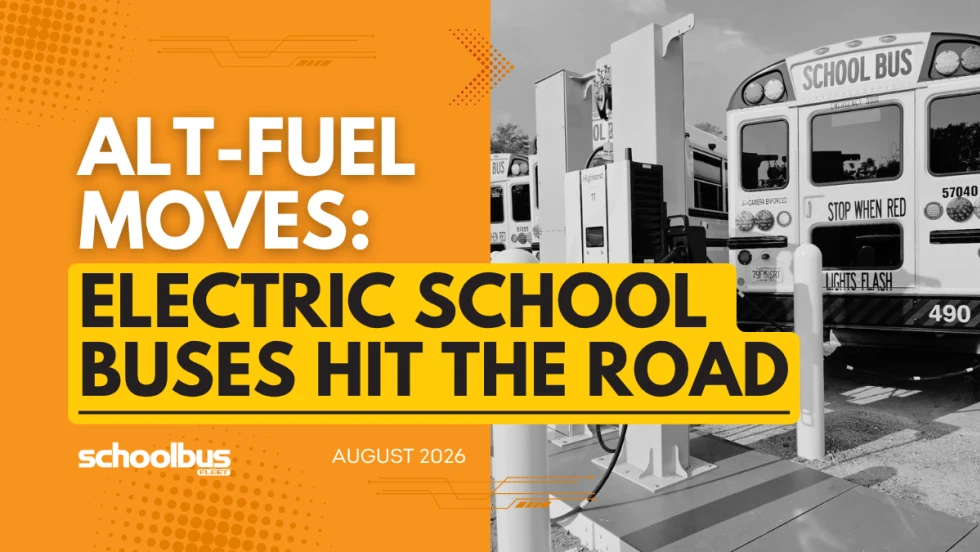
Alt-Fuel Moves: Electric School Bus Investments Hit the Road
See which districts across the U.S. are putting electric school buses into service, expanding charging infrastructure, and planning the next phase of fleet electrification.
Read More →
With Fuel Volatility Ahead, School Districts Turn to Propane
While diesel prices peaked above $5 this spring, districts with propane autogas-powered fleets paid under $2 per gallon, according to PERC.
Read More →
EPA Unveils Proposed Changes to 2027 Heavy-Duty Engine Rules
The federal agency has proposed changes to next year’s targets that would eliminate DEF derates, ease warranty requirements, and retain current NOx emissions standards.
Read More →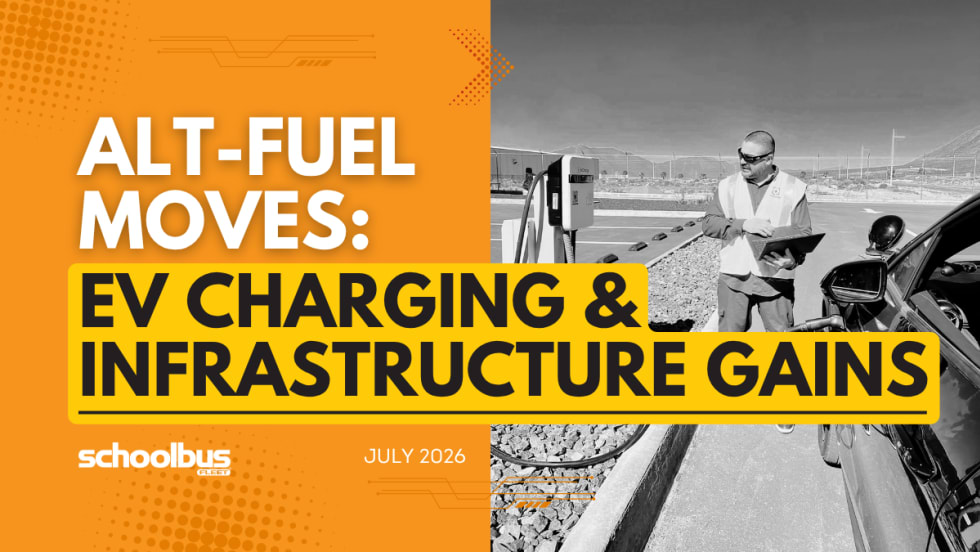
Alt-Fuel Moves: EV Charging & Infrastructure Projects Gain Momentum
The latest developments include new funding, charging infrastructure, utility investments, and fleet technologies designed to support the transition to electric school buses nationwide.
Read More →