




District School Bus Pilot Sees 89% Dip in Stop-Arm Violations
Albemarle County (Va.) Public Schools conducted the pilot with extended stop arms on school buses in May and June.

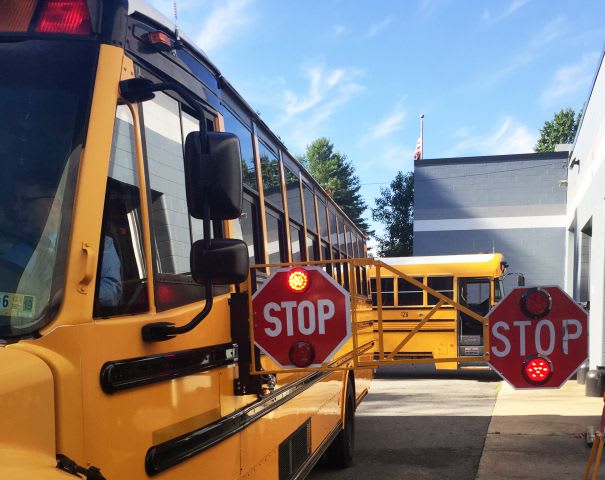
Albemarle County (Va.) Public Schools conducted a pilot with extended stop arms on school buses in May and June and saw illegal passing incidents decline by 89%. Photo courtesy Albemarle County Public Schools
Albemarle County (Va.) Public Schools conducted a pilot with extended stop arms on school buses in May and June and saw illegal passing incidents decline by 89%. Photo courtesy Albemarle County Public Schools
ALBEMARLE COUNTY, Va. — The frequency with which motorists illegally passed a stopped school bus declined by 89% in a pilot program conducted by the Albemarle County Public Schools’ transportation department in May and June.
The results follow an earlier pilot program, conducted over a 15-day period in September 2017, in which extended stop arms were installed on school buses, according to a news release from the school district. In that instance, school bus safety violations were reduced by more than 50%.
The extended stop arms in the first pilot measured 6 feet when deployed, compared to the one-foot deployment standard on most school buses. The extended stop arms proved to be more instantly visible to motorists, who not only stopped more often when a school bus was loading or unloading students, but also stopped farther from the bus.
“We were very encouraged by those results,” said Jim Foley, the transportation director for the district. “We continued to test the use of the extended stop arms on selected routes for the rest of the school year and used what we learned to further improve the program.”
That led to the most recent pilot program this year. The deployment time of the extended stop arms was sped up from 7 seconds to 4 seconds by changing the actuator from a mechanically-operated cylinder to a pneumatic cylinder, according to the district’s news release. The length of the arms was reduced from 6 feet to 4 feet to prevent the stop arms from striking vehicles in adjoining lanes.
Three routes were used for the pilot this year, including two roads with a history of unusually high incidences of motorists illegally passing stopped school buses. On one of the routes without the extended stop arms, 15 violations were recorded between May 7 and May 18. On that same route, with the extended stop arm, no violations occurred between May 21 and June 5.
Overall, on the three test routes, there were 55 violations between May 7 and 18 without the use of the extended stop arms, but between May 21 and June 5, the number of violations were reduced to six, an 89% improvement.
Motorists illegally passing stopped school buses have been a major concern of the school division for several years, according to the district’s news release. A 2013 study found that as many as 6,000 safety violations occur each year throughout the county as the result of motorists passing stopped school buses while students are entering or leaving the bus.
The transportation department first proposed the use of stop-arm cameras to record the license plates of motorists who violate the law, a proposal that was approved by both the school board and the board of supervisors. The proposal was initially passed by the General Assembly, but its implementation has been stalled by a dispute over whether car registration information can be shared by the state with the operator of the cameras, according to the district’s news release.
“Our objective is not to see more violations issued to drivers,” Foley said. “Our goal is to prevent serious accidents involving children by changing the unsafe behavior of some drivers. Stop-arm cameras have proven in other jurisdictions around the country to have that positive effect.”
While the division hopes that the implementation issues around the stop-arm camera program are resolved as soon as possible, the use of some buses with extended stop arms can help in improving safety, Foley said.
“We were one of two school divisions in the state to test the extended stop-arm concept last fall,” Foley added. “The combination of the stop-arm cameras and the use of extended stop arms would significantly improve our ability to keep our students as safe as possible,” he said.
The state department of education is reviewing the results of the district's extended stop-arm pilot programs and is considering whether to authorize all school divisions in Virginia to institute similar programs in their areas.
More Safety
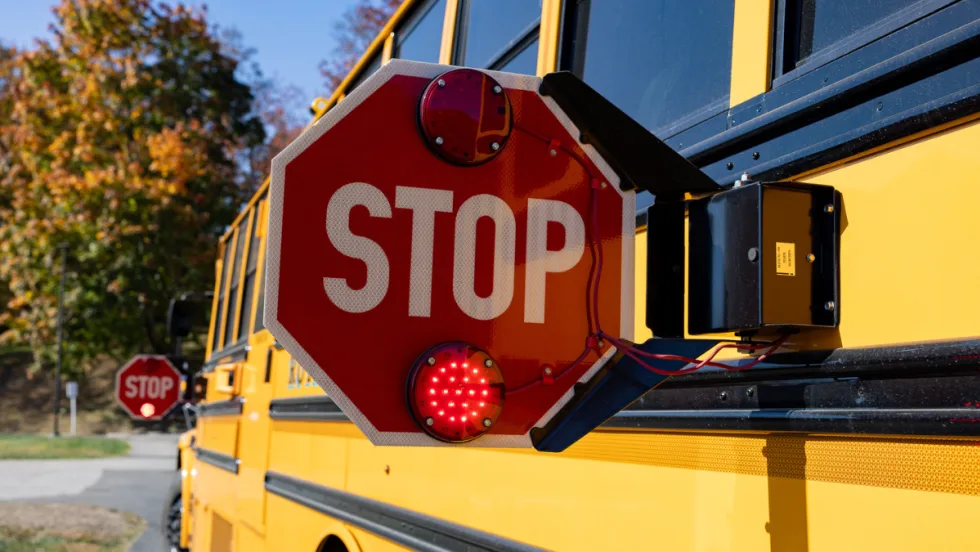
Illegal School Bus Passing Drops 24% in New York Districts
With fewer than 5% of citations involving repeat offenders, Westchester County officials said enforcement, education, and community partnerships are helping change driver behavior.
Read More →
School's Back. Here's What Happened to Traffic, Speeding & Distraction
What happens to traffic when school resumes? New data analysis examines changes in distracted driving, congestion, and speeding around schools.
Read More →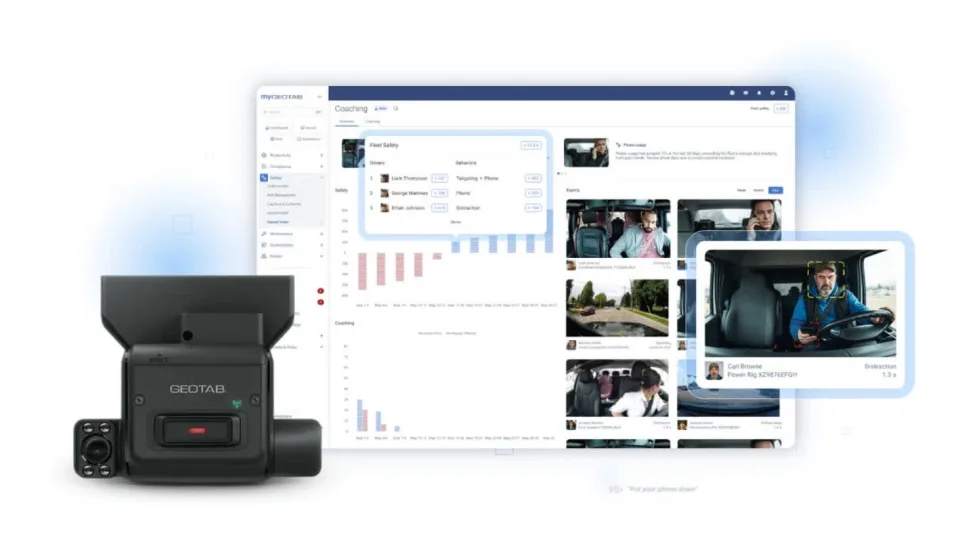
Geotab Expands Fleet Safety Tools With Video Coaching, Risk Insights
New safety and video capabilities aim to help fleet managers assess risk, support drivers, and take targeted action through video coaching, red-light violation detection, and more.
Read More →
How to Build a Better School Bus Driver Training Program
Is it time to strengthen your driver training? Here’s how to pick the right talent and improve recruitment, retention, and safety. This video is brought to you by IC Bus.
Read More →
Recent School Bus Accidents Leave 2 Dead, 2 Injured
Four school bus crashes in Florida, Illinois, and Georgia highlight risks in transportation lots, at bus stops, and during student loading and unloading.
Read More →
When Every Second Matters, Clarity Keeps Routes Moving
From routine delays to urgent incidents, strong communication practices help drivers, dispatchers, schools, and families respond with confidence.
Read More →
What Happens When a School Bus Catches Fire — and What Can Help
School bus fires are rare but can be devastating. Learn how advances in fire suppression and asset protection help fleets detect fires earlier, reduce damage, and improve safety.
Read More →
Geotab Launches Tool to Help Fleets Investigate Road Incidents
Geotab Investigations combines telematics data, video, documents, and other evidence to help fleets reconstruct incidents, resolve claims, and determine what happened.
Read More →
Texas Sixth Grader Wins 2026 National School Bus Safety Poster Contest
Sai Darshana Yekolu of Moseley Middle School in Prosper, Texas, was named the newest winner for her artwork, bringing the theme of “Safe Rides, Everyday Heroes” to life.
Read More →
Doing More With Less: How Transportation Directors Can Prioritize Safety Amid Budget Uncertainty
With diesel prices soaring and nearly one-third of transportation directors expecting budget cuts, maintaining student safety has never been more challenging. Download this guide to learn how leading districts are prioritizing risk, funding critical safety technology, and building stronger budget cases with data.
Read More →