




Related: 8 Tips for Cleaning School Buses in the Age of Coronavirus
Company Enhances Disinfection Tools for Ground Transportation Fleets
Disinfection solution tools supplier EZ DISSAN will now also include cordless electrostatic handheld sprayers from Victory Innovations for efficient sanitization.
by SBF Staff
July 15, 2020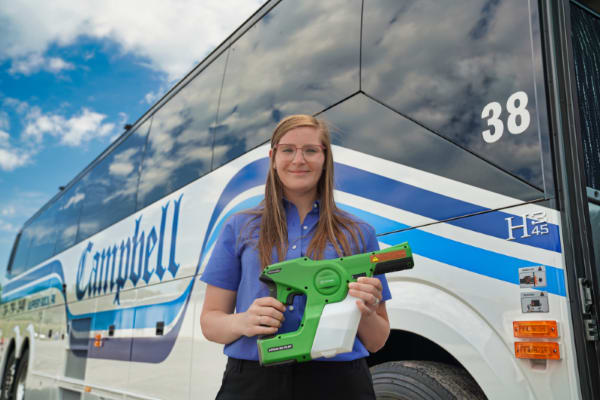
EZ DISSAN will now use Victory Innovations’s cordless electrostatic handheld sprayers along with its disinfection solution for ground transportation vehicles.
Photo courtesy EZ DISSAN
2 min to read
Disinfection solution tools supplier EZ DISSAN has partnered with cordless sprayer provider Victory Innovations to offer easy and efficient sanitization for ground transportation vehicles.
EZ DISSAN’s electrostatic disinfection solution is designed for passenger transportation industries, including motorcoach, school bus, public transit, and commuter, subway, and light rail passenger trains.
EZ DISSAN will use Victory Innovations’s cordless electrostatic handheld sprayers to achieve maximum disinfection and sanitization, according to a news release from the disinfection solution supplier.
The 2020 Sanitary Maintenance Distributor Award-winning sprayers are operated by transportation professionals in applications such as motorcoach, transit bus, subway train, light rail, airport transfer, transit stations, maintenance facilities, and administrative offices.
“Running a motorcoach and school bus business for over 50 years, we understood the importance of getting it right the first time,” said Todd Campbell, president of EZ DISSAN. “That is why we partnered with Victory Innovations to ensure our clients can disinfect vehicles and facilities quickly with a peace of mind that award-winning, state-of-the-art technology reinforced with environmentally friendly electro-statically activated disinfectant solution is being used to keep their customers and employees safe while out there on the road.”
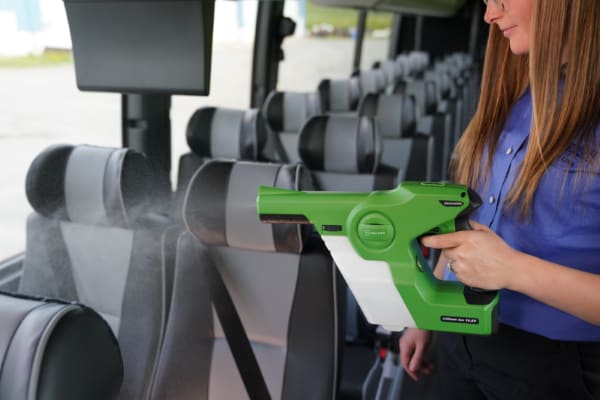
Sprayers from Victory Innovations are operated by transportation professionals in applications such as motorcoach, transit bus, subway train, and light rail.
Photo courtesy EZ Dissan
Using bleach wipes or power washing is simply not enough these days, so electrostatic disinfecting is quickly becoming the preferred method to ensure safety, according to EZ DISSAN. Delta Airlines and Marriott Hotels and Resorts are using cordless handheld electrostatic sprayers for small, hard-to-reach nooks and crannies. San Francisco Municipal Transportation Agency and AC Transit are also using electrostatic sprayer technology to disinfect their buses, according to the supplier.
Additionally, EZ DISSAN is in final development of a mobile application that will track the date, time, and location of every vehicle disinfection process, take driver and passenger temperatures as required, and provide that data to transit managers and motorcoach operators. The mobile app also includes Department of Defense Carrier Passenger Service reporting functionality.
Accountability is key to the success of a disinfection program, Campbell said, and EZ DISSAN’s mobile app will help transportation professionals maintain the necessary records they need to ensure a safe environment for their employees and customers.
Training is also critical to a disinfection/sanitization program’s success, so the supplier has created a library of materials that customers can use to ensure their employees are following procedures correctly and efficiently, Campell added.
For more information, visit ezdissan.com.
More Safety

Illegal School Bus Passing Drops 24% in New York Districts
With fewer than 5% of citations involving repeat offenders, Westchester County officials said enforcement, education, and community partnerships are helping change driver behavior.
Read More →
School's Back. Here's What Happened to Traffic, Speeding & Distraction
What happens to traffic when school resumes? New data analysis examines changes in distracted driving, congestion, and speeding around schools.
Read More →
Geotab Expands Fleet Safety Tools With Video Coaching, Risk Insights
New safety and video capabilities aim to help fleet managers assess risk, support drivers, and take targeted action through video coaching, red-light violation detection, and more.
Read More →

How to Build a Better School Bus Driver Training Program
Is it time to strengthen your driver training? Here’s how to pick the right talent and improve recruitment, retention, and safety. This video is brought to you by IC Bus.
Read More →
Recent School Bus Accidents Leave 2 Dead, 2 Injured
Four school bus crashes in Florida, Illinois, and Georgia highlight risks in transportation lots, at bus stops, and during student loading and unloading.
Read More →
Sponsored•September 8, 2026
When Every Second Matters, Clarity Keeps Routes Moving
From routine delays to urgent incidents, strong communication practices help drivers, dispatchers, schools, and families respond with confidence.
Read More →
What Happens When a School Bus Catches Fire — and What Can Help
School bus fires are rare but can be devastating. Learn how advances in fire suppression and asset protection help fleets detect fires earlier, reduce damage, and improve safety.
Read More →
Geotab Launches Tool to Help Fleets Investigate Road Incidents
Geotab Investigations combines telematics data, video, documents, and other evidence to help fleets reconstruct incidents, resolve claims, and determine what happened.
Read More →
Texas Sixth Grader Wins 2026 National School Bus Safety Poster Contest
Sai Darshana Yekolu of Moseley Middle School in Prosper, Texas, was named the newest winner for her artwork, bringing the theme of “Safe Rides, Everyday Heroes” to life.
Read More →
Sponsored•August 27, 2026
Doing More With Less: How Transportation Directors Can Prioritize Safety Amid Budget Uncertainty
With diesel prices soaring and nearly one-third of transportation directors expecting budget cuts, maintaining student safety has never been more challenging. Download this guide to learn how leading districts are prioritizing risk, funding critical safety technology, and building stronger budget cases with data.
Read More →