




Blue Bird Leaders Reflect on Difficult 2021
Demand started soft, but erupted as schools reopened - only to see production hampered by semiconductor shortages and supply chain issues. However, new legislation and possible market expansion give Blue Bird reasons for optimism in 2022.

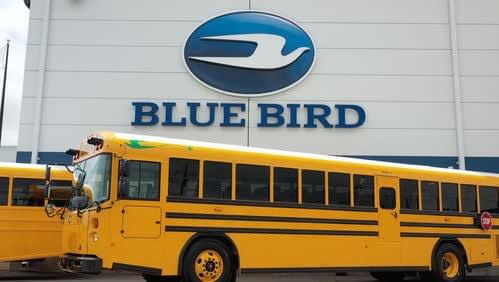
Blue Bird reports more than 4,200 vehicles in its production backlog due to shortages and supply chain challenges.
File photo
Supply chain disruptions, COVID outbreaks, and shortages of parts and labor meant Blue Bird Corporation ended the year with more than 4,200 vehicles in backlog.
“Overall, it was a tough year,” said Razvan Radulescu, the company’s chief financial officer, during the fourth-quarter earnings call with investors on Wednesday.
He noted that although demand seemed soft early in 2021, it grew more robust as schools reopened despite the ongoing coronavirus pandemic. But then raw materials and semiconductors grew scarce, leaving Blue Bird – like its competitors – with buses it couldn’t finish and ship to waiting school districts.
“We were encouraged by new orders of more than 9,700 buses this year as the school bus industry rebounded strongly in the second half of the year with schools reopening and fleet replacement resuming,” said Blue Bird CEO Matt Stevenson in a statement. It was Stevenson’s first earnings call since joining Blue Bird in July and assuming the CEO role in November.
“Unfortunately, like the majority of the automotive industry, our production was limited by supply chain constraints,” he said. “As such, we have built a substantial order backlog … comprising both our traditional internal combustion engine buses and a record level of electric buses.”
For the year, the company sold 6,679 vehicles – about half of them equipped with alternative power options, such as electric or propane, Stevenson said.
Blue Bird finished with annual revenue reported at $684 million – down $195.2 million compared to 2020. Looking ahead, the company currently projects net revenue between $750 million and $850 million for fiscal year 2022.
Stevenson said in the news release that “there is clear evidence of exciting longer-term trends in demand and we are going to be ideally positioned to capture our profitable share. The unprecedented situation in the world around us has only temporarily delayed what I see as a remarkable opportunity ahead for our company and its investors.”
He said he expects that the recently passed bipartisan infrastructure bill and the Build Back Better legislation will continue to fuel demand for environmentally friendly electric and low-emission buses.
Steps that Radulescu outlined for leading Blue Bird back toward pre-pandemic profitability include:
Implementing an 11% price increase to recover known cost increases
Reducing quote guarantee from 90 to 60 days
Engineering second- or third-source suppliers for key components, resourcing where needed
Exploring vertical integration
Introducing a variable pricing structure
The company recently got a $75-million investment from Coliseum Capital Management to help with scaling production of electric vehicles and infrastructure. Blue Bird also intends to expand its reach beyond the familiar yellow school bus by making its chassis with factory-installed electric drivetrains available to the commercial vehicle market, Stevenson said.
He told listeners on the call that there’s been “a lot of interest in everyone from last-mile delivery to mobile homes. We build a great chassis with a great aftermarket support network and people realize that.”
Blue Bird also filed a $200-million shelf registration to provide flexibility to raise capital “should this become necessary” during the next three years, Radulescu said.
More Management
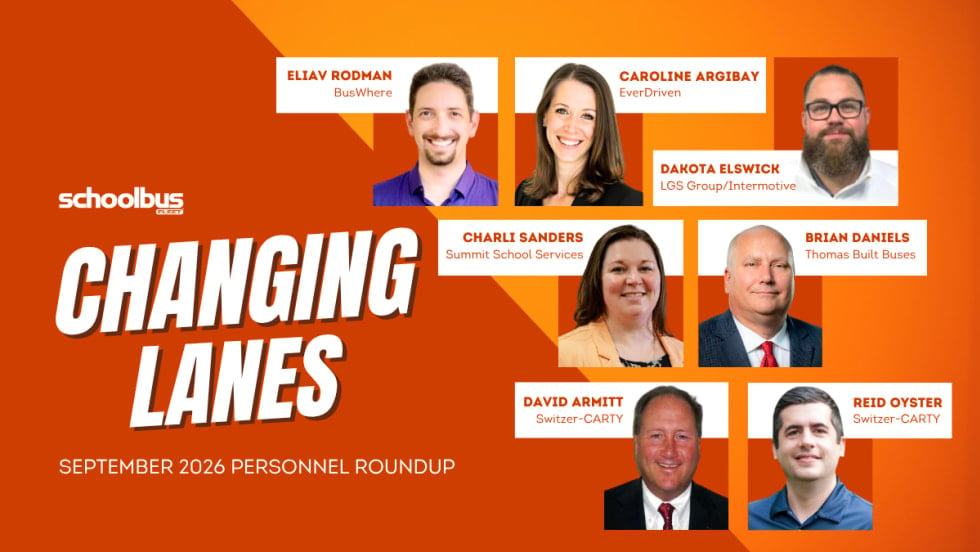
Changing Lanes: BusWhere, EverDriven, InterMotive, Summit School Services, Switzer-Carty & Thomas Built Buses
Check out who's been hired, promoted, and appointed to leadership positions at various school transportation suppliers, contractors, and manufacturers.
Read More →
The Most Expensive Thing You Do Before Selling a School Bus: Wait
When should you sell an aging school bus? Learn how maintenance, mileage, corrosion, specifications, and timing can affect resale value long before the auction.
Read More →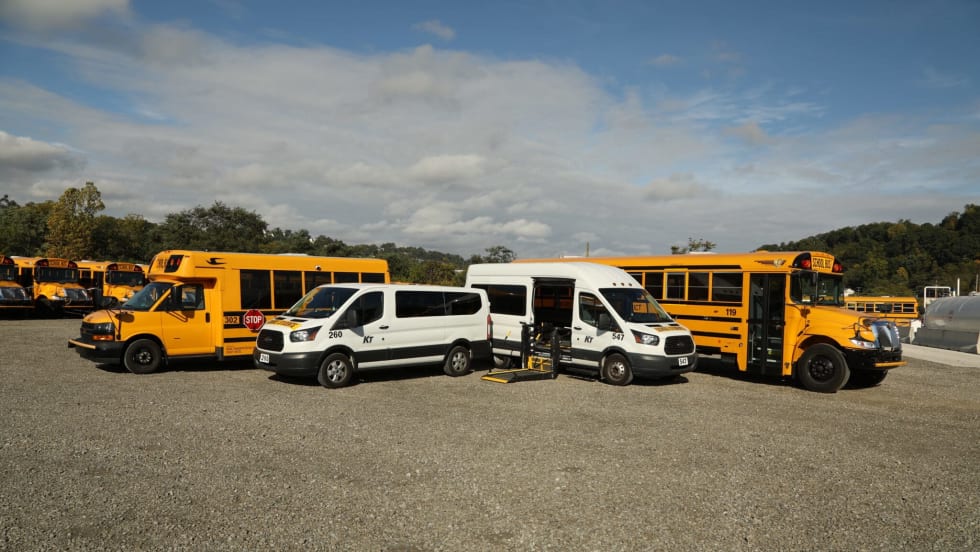
American Student Transportation Partners Acquires AJ Myers and Sons
A new deal brings a 75-year Pennsylvania student transportation provider into one of the nation’s largest private school bus contracting groups.
Read More →
What I Brought Home From SBFX: Relationships, Leadership, and Preparing What's Next
Who could lead your transportation operation tomorrow if you couldn't? Bernando Brown explores succession planning, mentorship, and preparing emerging leaders to step up.
Read More →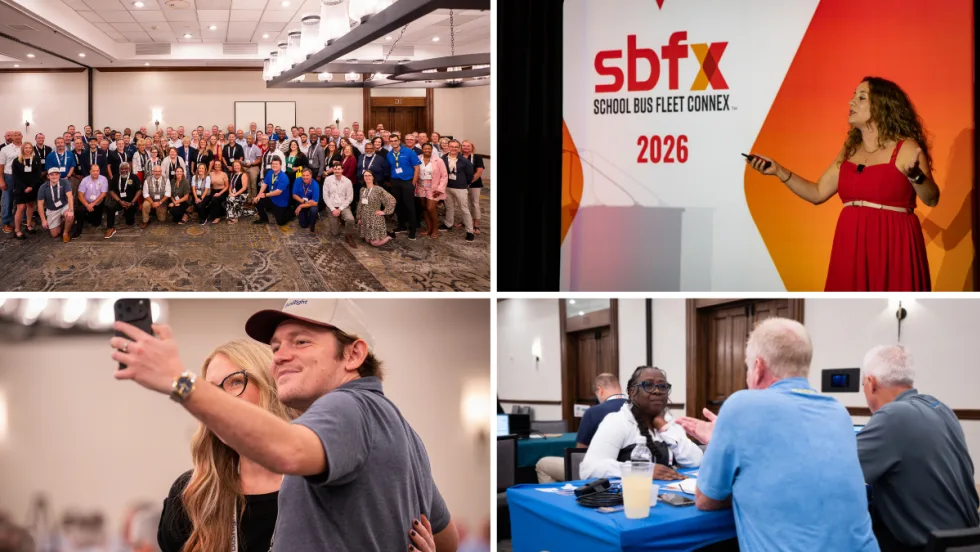
Inside School Bus Fleet ConneX 2026: Industry Leaders Connect in Scottsdale [Photos]
See highlights from SBFX 2026 in Arizona, where school bus operators and suppliers gathered for meetings, education, networking, awards, and more.
Read More →
School Transportation’s Biggest Pressures and Opportunities: SBFX Attendees Weigh In
School bus operators point to rising costs, staffing, and vehicle prices as immediate pressures while identifying technology, training, and routing as opportunities for growth.
Read More →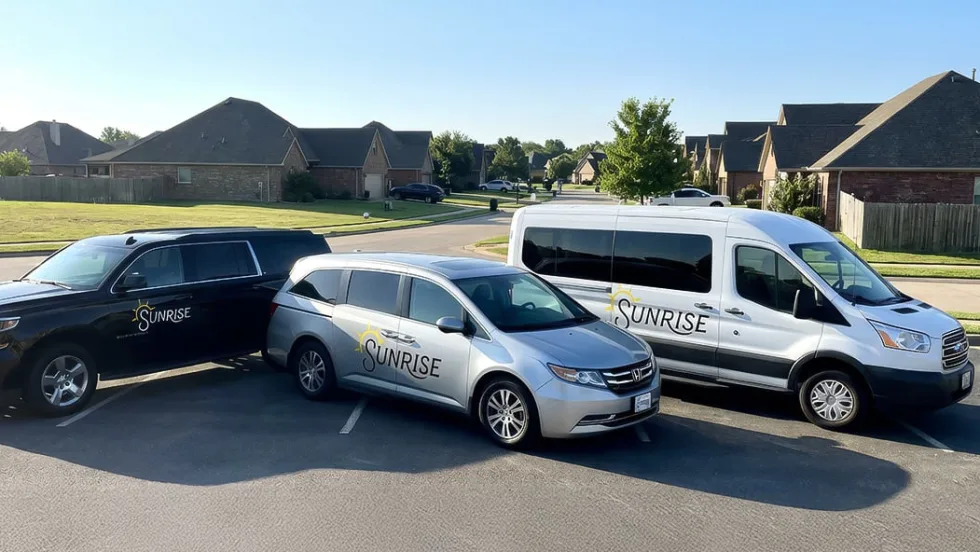
STA Acquires Sunrise Transportation
Student Transportation of America expands in Illinois and Connecticut through Sunrise's fleet of nearly 1,000 vehicles.
Read More →
EPA Opens $180M DERA Funding Round for Diesel Upgrades
The 2026 Diesel Emissions Reduction Act program seeks applications from eligible organizations to accelerate the retirement of legacy diesel vehicles.
Read More →
HopSkipDrive’s CareEngine Targets the ‘Exceptions’ in Student Transportation
The new platform works alongside districts’ existing transportation management systems to coordinate specialized rides, automate last-minute changes, and turn ride data into operational improvements.
Read More →
The Right Ride for Every Student: Navigating the New Student Transportation Ecosystem
How should districts blend school buses with small-vehicle transportation and other options? EverDriven CEO Mitch Bowling discusses safety, costs, partnerships, and strategy.
Read More →