




Blue Bird, Georgia District Join Vehicle-to-Everything Deployment Program
The school bus manufacturer and Fulton County Schools team up with Audi of America, Applied Information, and Temple Inc. to demonstrate the technology, aimed at preventing crashes when children are being picked up or dropped off at their bus stops.
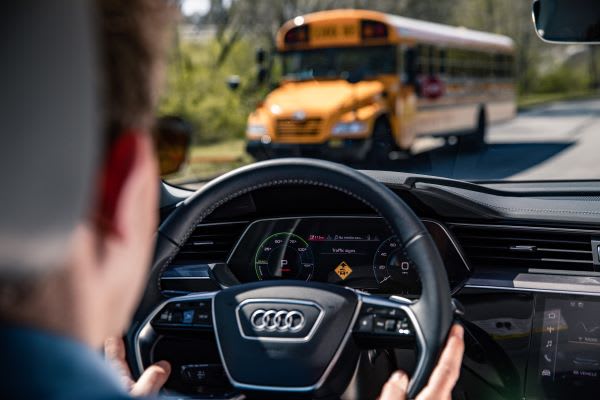
The school bus manufacturer and Fulton County Schools have partnered with Audi of America, Applied Information, and Temple Inc. to demonstrate cellular vehicle-to-everything technology to reduce vehicle hazards to schoolchildren.
Photo courtesy Stephen Averett
Blue Bird and a Georgia-based school district have joined a collaboration with a vehicle manufacturer and intelligent transportation system solution suppliers to deploy cellular vehicle-to-everything (C-V2X) technology aimed at reducing vehicle hazards to schoolchildren.
The school bus manufacturer and Fulton County Schools, located in the greater Atlanta metropolitan area, will work with Audi of America, Applied Information, and Temple Inc., according to a news release from Audi.
The new school bus and school district partners bring automotive and school bus technology expertise together with a large and experienced school bus fleet operation to maximize potential safety and driver support.
“The addition of Blue Bird and a large school district like Fulton County Schools completes the picture of all major players who are eager to unlock the benefits of emerging C-V2X technology for children too often exposed to danger during their school days,” said Brad Stertz, director of government affairs for Audi of America. “We expect this noteworthy project to show that C-V2X is an indispensible safety tool for educators nationwide.”
Audi stated in the news release that it believes C-V2X can provide significant safety benefits to alleviate traffic risks facing vulnerable road users. Children are among the most vulnerable and continue to be at great risk in school zones, especially when other vehicles are present, and vehicles fail to yield for pedestrians. Additionally, stop-arm violations continue to be a danger to students.
“This technology can help prevent accidents during student pickup and drop-off, which is when students are most at risk,” said Trevor Rudderham, senior vice president of product planning for Blue Bird. “While more stringent stop-arm laws and even camera systems help bring awareness to school buses, C-V2X could be programmed to warn drivers of upcoming school bus stops.”
C-V2X technologies use both direct (PC5) and indirect (Uu) low-latency cellular signals to communicate where people and vehicle sensors cannot always see, such as over hills or around curves or other vehicles, according to Audi. Last November, the Federal Communications Commission finalized guidelines for next-generation 5.9 GHz signals to be allocated for automotive-focused C-V2X communications, Audi stated in the news release, clearing the path to bring technologies to drivers across the U.S. in the next several years.
Initially announced last October and being codeveloped at the Volkswagen Group Innovation and Engineering Center in Belmont, California, and the Infrastructure Automotive Technology Laboratory (iATL), this C-V2X technology is scheduled to be brought to the Fulton County Schools district in Georgia this spring using a Blue Bird propane-powered school bus and a 2021 Audi e-tron Sportback electric SUV.
“We hope this test helps provide information that enhances safety for our students and community in the future,” said Trey Stow, director of transportation services for Fulton County Schools.
The goal of this deployment is to demonstrate technologies that could help prevent accidents both within school zones and when children are being picked up or dropped off at their bus stop. The first application from this program is designed to warn drivers when they are approaching an active school safety zone or are exceeding the speed limit when children are present via instrument displays and audio alerts.
When active, roadside units installed in school zone safety beacons — flashing signs that are intended to slow drivers down as they pass by a school — will broadcast messages to development vehicles indicating the location of the school and the reduced speed limit. This initial deployment aims to alert drivers to the changes in speed limit as school times change due to circumstances, such as half school days and early dismissals for weather.
The second application aims to warn drivers when they are approaching a school bus stopped to pick up or drop off students. In this application, onboard units are being developed to broadcast C-V2X safety messages from school buses to C-V2X-equipped vehicles when the bus stop arm is extended to indicate no passing is allowed. The project is expected to be completed in the first half of 2021.
Through this program, partners look to gain insights about the distance needed around school zones and buses to ensure the safety of children in a continuing effort to lessen accidents and fatalities.
This program is held in conjunction with iATL, which is based in Alpharetta, Georgia, and is one of the largest connected-vehicle testing facilities in the world, according to Audi. It also benefits from carrying a license for PC5 direct wireless communication within 75 square miles of its facility. Temple Inc. is lending its expertise of integration and management of the new technologies.
More Safety

How to Build a Better School Bus Driver Training Program
Is it time to strengthen your driver training? Here’s how to pick the right talent and improve recruitment, retention, and safety. This video is brought to you by IC Bus.
Read More →
Recent School Bus Accidents Leave 2 Dead, 2 Injured
Four school bus crashes in Florida, Illinois, and Georgia highlight risks in transportation lots, at bus stops, and during student loading and unloading.
Read More →
When Every Second Matters, Clarity Keeps Routes Moving
From routine delays to urgent incidents, strong communication practices help drivers, dispatchers, schools, and families respond with confidence.
Read More →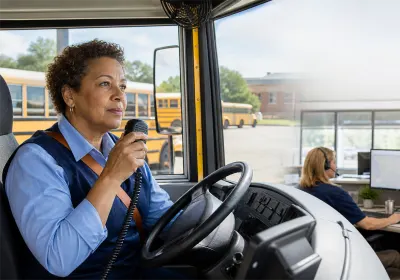

What Happens When a School Bus Catches Fire — and What Can Help
School bus fires are rare but can be devastating. Learn how advances in fire suppression and asset protection help fleets detect fires earlier, reduce damage, and improve safety.
Read More →
Geotab Launches Tool to Help Fleets Investigate Road Incidents
Geotab Investigations combines telematics data, video, documents, and other evidence to help fleets reconstruct incidents, resolve claims, and determine what happened.
Read More →
Texas Sixth Grader Wins 2026 National School Bus Safety Poster Contest
Sai Darshana Yekolu of Moseley Middle School in Prosper, Texas, was named the newest winner for her artwork, bringing the theme of “Safe Rides, Everyday Heroes” to life.
Read More →
Doing More With Less: How Transportation Directors Can Prioritize Safety Amid Budget Uncertainty
With diesel prices soaring and nearly one-third of transportation directors expecting budget cuts, maintaining student safety has never been more challenging. Download this guide to learn how leading districts are prioritizing risk, funding critical safety technology, and building stronger budget cases with data.
Read More →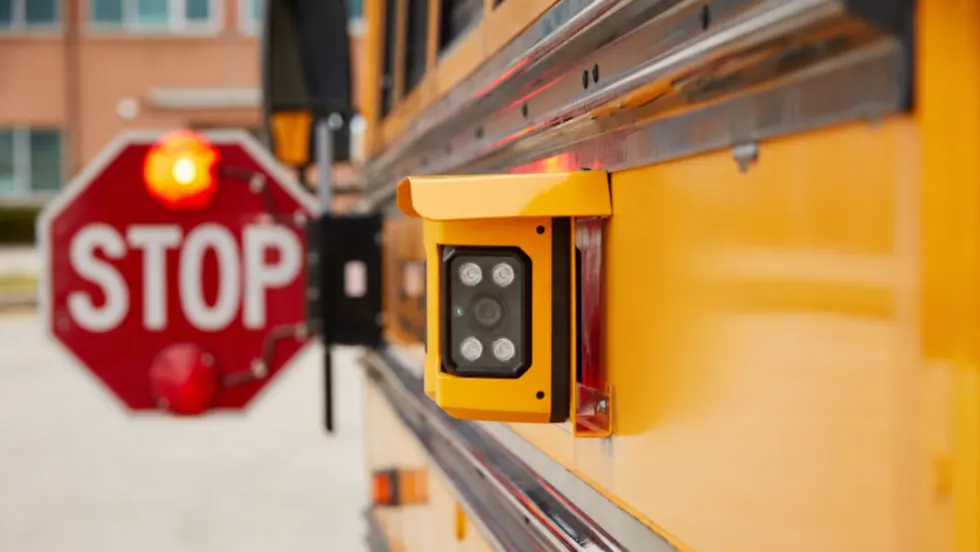
Walton County Schools Adds Gatekeeper Stop-Arm Enforcement System
The Florida district will deploy Gatekeeper’s updated Student Protector technology, which now incorporates AI to improve video evidence.
Read More →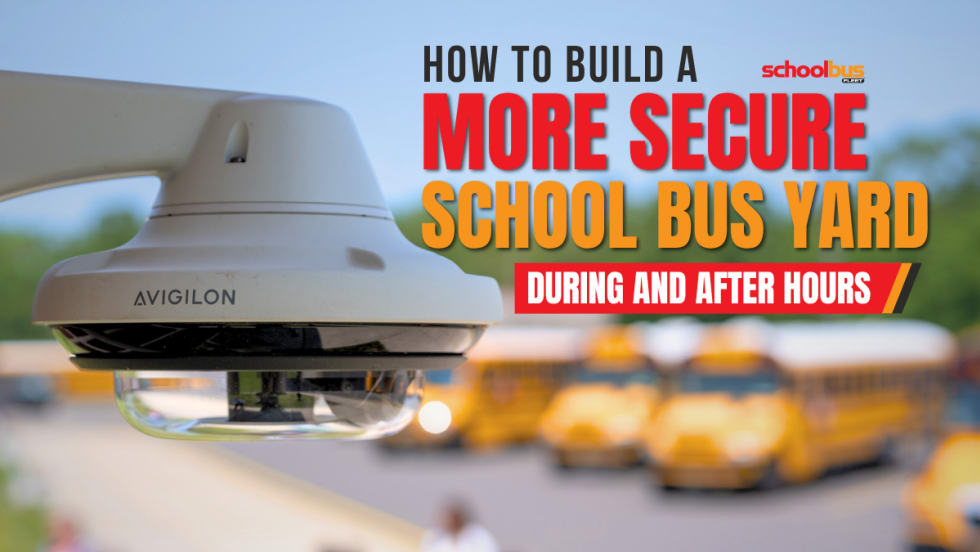
How To Build a More Secure School Bus Yard During and After Hours
As thefts and overnight security threats continue, school transportation leaders are combining stronger operational practices with AI-enabled surveillance to better protect buses, facilities, and staff.
Read More →
FMCSA Names New Chief Safety Officer: What School Bus Operators Should Know
Steve Dowling is set to lead the federal agency's efforts to advance commercial motor vehicle safety and reduce crashes, fatalities, and injuries on the nation's roadways.
Read More →