




Blue Bird Delivers Its First Electric Bus to Michigan
The Blue Bird All American RE school bus represents a new pilot project for Dearborn Public Schools, which is exploring the feasibility of eventually converting its 70+ vehicle fleet to electric school buses.

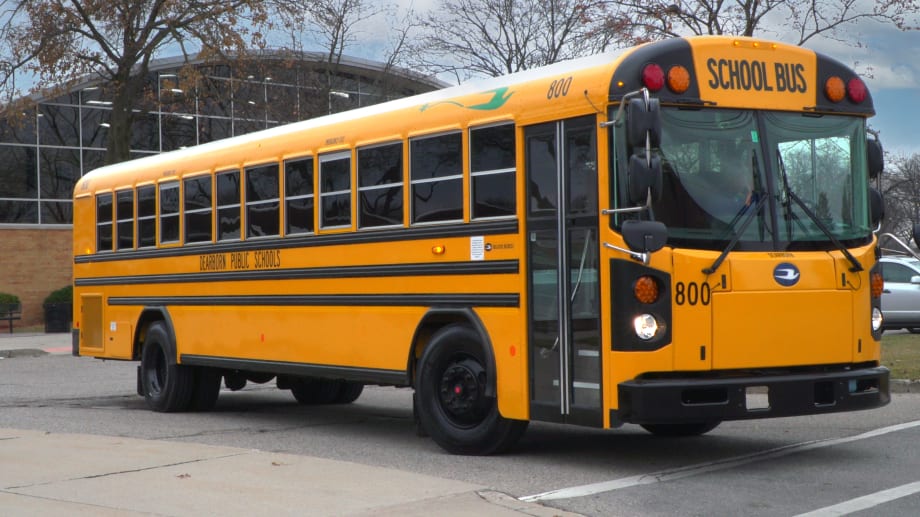
Dearborn (Michigan) Public Schools has maintained a fleet of Blue Bird school buses for more than 30 years. This All American RE is the district's first electric school bus.
Photo: Blue Bird
Blue Bird Corporation has delivered its first electric school bus to Michigan.
The zero-emission vehicle will serve Dearborn Public Schools as part of a pilot program that's expected to usher in a new era of clean student transportation for the school district. Dearborn Public Schools is the third largest school district in Michigan with 37 neighborhood elementary, middle, and high schools educating more than 20,000 students.
Dearborn Public Schools received an advanced Blue Bird All American RE electric school bus. The school bus can carry a maximum of 84 passengers for up to 120 miles on a single charge. The vehicle takes between three and eight hours to fully recharge depending on the charging infrastructure.
“We are thrilled to add the first electric vehicle to our school bus fleet and to test the school bus in our real-world environment year-round,” said Glenn Maleyko, superintendent of Dearborn Public Schools. “Electric school buses help reduce harmful greenhouse gas emissions. Today marks an important step as we start to evaluate this new technology.”
“Blue Bird is recognized as a technology leader and innovator of zero-emission school buses in North America,” said Britton Smith, senior vice president of electrification and chief strategy officer of Blue Bird Corporation, which has more than 850 electric-powered school buses in operation. “We are excited to deliver our first electric bus to Michigan, a state on the cutting edge of automotive innovation and eMobility. Blue Bird continually expands its electric vehicle footprint and market reach. Today, Blue Bird electric buses transport thousands of school children every day in the majority of U.S. states.”
Dearborn Public Schools has solely relied on Blue Bird for more than 30 years to meet its student transportation needs and currently maintains a fleet of more than 70 Blue Bird buses. The transition to electric vehicles will help the school district to reduce harmful greenhouse gas emissions while improving student and community health.
Blue Bird’s electric school bus was partially funded by a $300,000 grant through the U.S. Environmental Protection Agency’s (EPA) 2021 American Rescue Plan Electric School Bus Rebate program. The EPA recently awarded extra funding to Dearborn Public Schools for up to 18 additional electric school buses through the 2022 Clean School Bus rebate program. The EPA classifies Dearborn Public Schools as a priority district as about 70 percent of the families in the district qualify as low-income.
Dearborn Public Schools anticipates benefiting from significant cost saving opportunities by reducing or eliminating the fuel and maintenance costs tied to traditional diesel-powered vehicles. Select Blue Bird customers reported fuel costs of up to 49 cents per mile for their diesel buses, compared to an average 14 cents per mile in energy costs for electric buses.
More Alternative Fuels
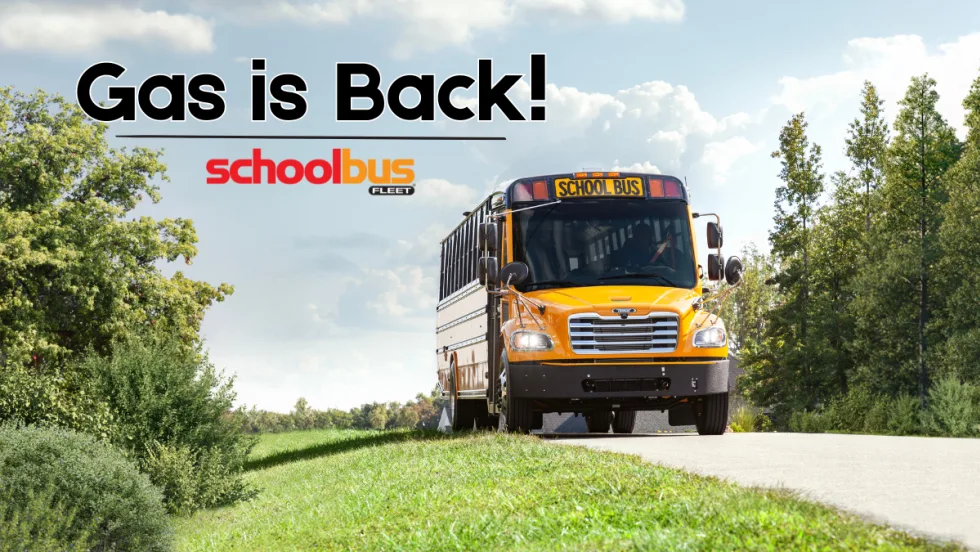
Why Gasoline School Buses Are Making a Comeback
Gasoline is gaining ground in full-size school buses. See how today’s options stack up against diesel on cost, maintenance, emissions, performance, and more.
Read More →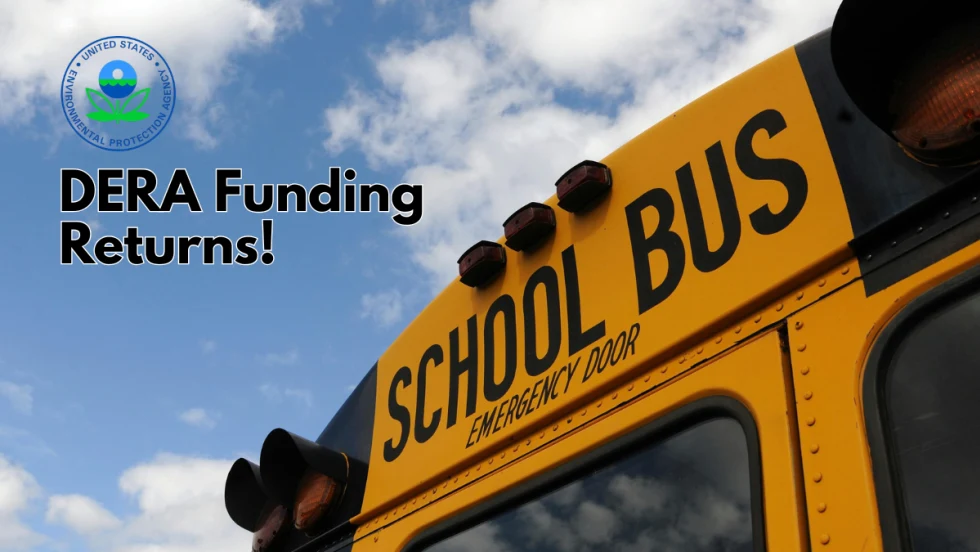
EPA Opens $180M DERA Funding Round for Diesel Upgrades
The 2026 Diesel Emissions Reduction Act program seeks applications from eligible organizations to accelerate the retirement of legacy diesel vehicles.
Read More →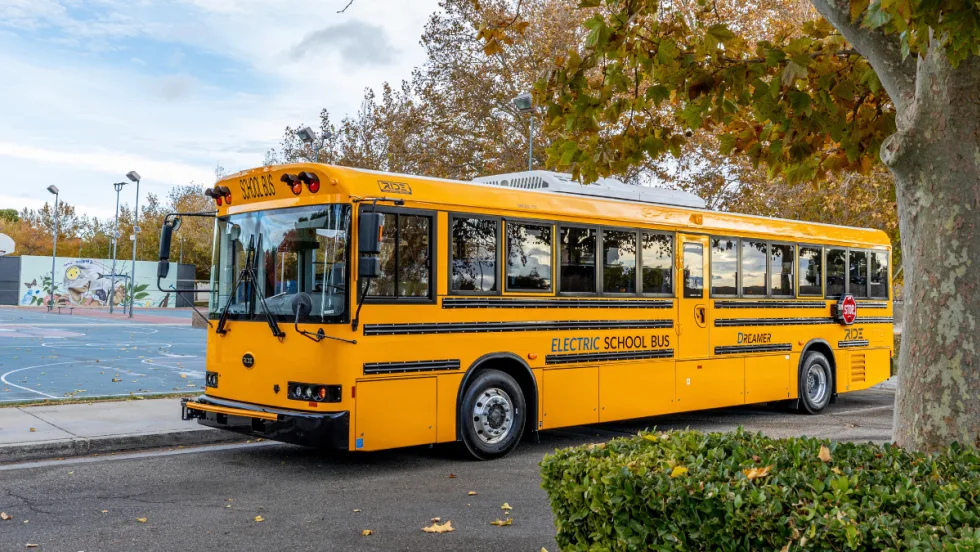
The Secret Life of an Electric School Bus Battery
Batteries change throughout years of daily routes, but degradation doesn’t necessarily mean the end. Here’s what operators should know about performance, safety, and second life.
Read More →
CALSTART and Forth Combine to Form Catalyst Mobility
The new name represents a renewed vision for the nonprofit focused on advancing clean, equitable, and affordable transportation solutions that move people and goods.
Read More →
Alt-Fuel Moves: New Buses, Charging Hubs & Real-World EV Testing
Propane and electric school bus deployments continue to grow as districts add new vehicles, expand charging infrastructure, and gather more real-world operating data.
Read More →
Fewer Electric School Bus Models Reshape the U.S. Market
WRI’s latest buyer’s guide points to a consolidating electric school bus market, but fewer options may reflect a maturing industry rather than fewer meaningful choices for school bus operators.
Read More →
The Fuel Budget You Can Actually Predict: How Propane Autogas Keeps Money in the Classroom
Learn how propane autogas helps school districts manage fuel costs with predictable pricing, lower maintenance, and reduced emissions from former transportation director Joel Stutheit.
Read More →
Hendrickson, Driventic Introduce New Electric Powertrain for School Buses
ELECTRAAX, the electrified, lightweight drive axle offers integrated ePowertrain efficiency and modular flexibility for Class 6–7 school bus use.
Read More →
The Mobility House Joins PowerFlex in Fleet Electrification Deal
The acquisition combines intelligent charging software, bidirectional charging expertise, and fleet electrification services to support the growing adoption of electric school buses across North America.
Read More →
Alt-Fuel Moves: Electric School Bus Investments Hit the Road
See which districts across the U.S. are putting electric school buses into service, expanding charging infrastructure, and planning the next phase of fleet electrification.
Read More →