




Bill would allow stop-arm cameras on Alabama buses
Under the legislation, local school boards would be permitted to authorize the use of the technology to capture motorists who illegally pass buses. The fine for a stop-arm violation under the legislation would be a maximum of $300 for the first offense, $750 for a second offense and $1,000 for each subsequent offense in a five-year period.
MONTGOMERY, Ala. — A bill is making its way through the state Legislature that would allow local boards of education to approve the use of stop-arm cameras to capture motorists who illegally pass school buses.
Under Senate Bill (SB) 144, also known as the Alabama School Bus Safety Act, a school board may approve the use of these cameras by voting at a meeting, and members may elect to operate a school bus enforcement program without the involvement of the governing body or sheriff by utilizing a trained technician.
Alternately, if such a program is approved by a school board and authorized by a resolution enacted by the governing body, the board would be permitted to enter into an agreement with a contractor (in this case, a company that provides services to a board or governing body, including, but not limited to, automated devices, citation processing and collection of the civil fines) for all aspects of managing the stop-arm cameras. Prior to entering into a contract, the board would be required to enter into an intergovernmental agreement with the appropriate law enforcement agencies.
The fine for a stop-arm violation under the legislation would be a maximum of $300 for the first offense, $750 for a second offense and $1,000 for each subsequent offense in a five-year period.
After deducting costs to run the program, 40% of the fine would go to the county or municipal governing body that contracted for the operation of a school bus violation program, 40% would go to the school system where the offense was committed and 10% each would go to the state Department of Education for school bus safety initiatives and to the Alabama Department of Public Safety for highway safety enforcement.
The bill would take effect on the first day of the third month following approval by the governor.
Last week, SB 144 was engrossed in the state Senate and referred to the House of Representatives committee on Public Safety and Homeland Security.
More Safety
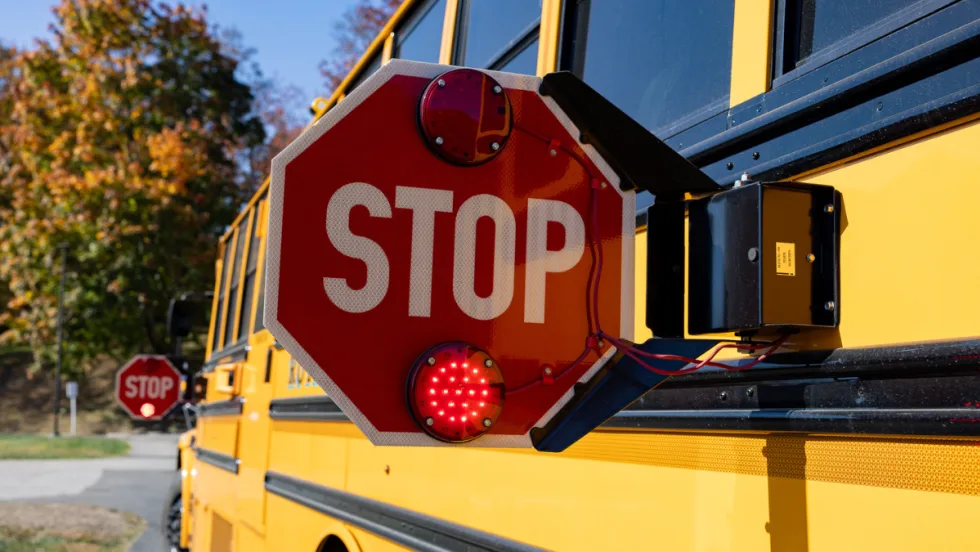
Illegal School Bus Passing Drops 24% in New York Districts
With fewer than 5% of citations involving repeat offenders, Westchester County officials said enforcement, education, and community partnerships are helping change driver behavior.
Read More →
School's Back. Here's What Happened to Traffic, Speeding & Distraction
What happens to traffic when school resumes? New data analysis examines changes in distracted driving, congestion, and speeding around schools.
Read More →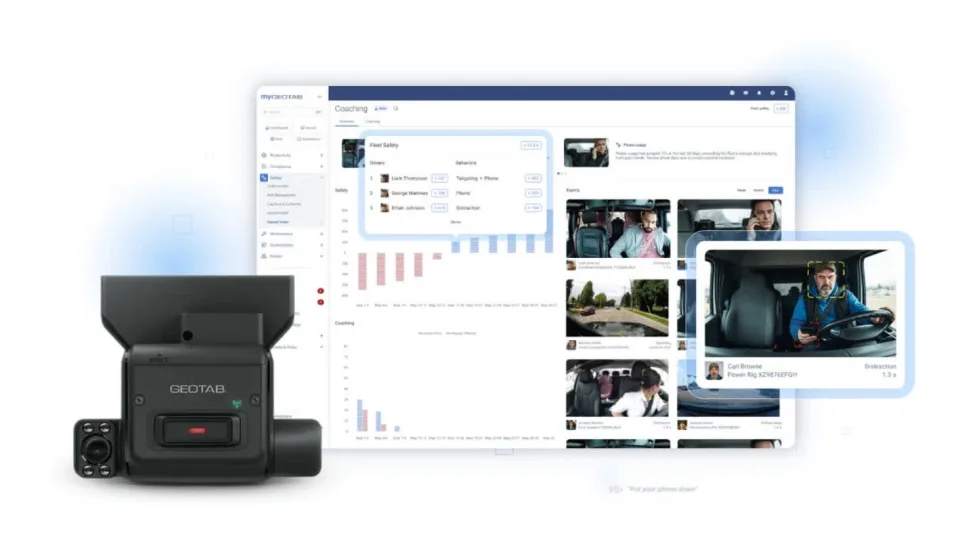
Geotab Expands Fleet Safety Tools With Video Coaching, Risk Insights
New safety and video capabilities aim to help fleet managers assess risk, support drivers, and take targeted action through video coaching, red-light violation detection, and more.
Read More →

How to Build a Better School Bus Driver Training Program
Is it time to strengthen your driver training? Here’s how to pick the right talent and improve recruitment, retention, and safety. This video is brought to you by IC Bus.
Read More →
Recent School Bus Accidents Leave 2 Dead, 2 Injured
Four school bus crashes in Florida, Illinois, and Georgia highlight risks in transportation lots, at bus stops, and during student loading and unloading.
Read More →
When Every Second Matters, Clarity Keeps Routes Moving
From routine delays to urgent incidents, strong communication practices help drivers, dispatchers, schools, and families respond with confidence.
Read More →
What Happens When a School Bus Catches Fire — and What Can Help
School bus fires are rare but can be devastating. Learn how advances in fire suppression and asset protection help fleets detect fires earlier, reduce damage, and improve safety.
Read More →
Geotab Launches Tool to Help Fleets Investigate Road Incidents
Geotab Investigations combines telematics data, video, documents, and other evidence to help fleets reconstruct incidents, resolve claims, and determine what happened.
Read More →
Texas Sixth Grader Wins 2026 National School Bus Safety Poster Contest
Sai Darshana Yekolu of Moseley Middle School in Prosper, Texas, was named the newest winner for her artwork, bringing the theme of “Safe Rides, Everyday Heroes” to life.
Read More →
Doing More With Less: How Transportation Directors Can Prioritize Safety Amid Budget Uncertainty
With diesel prices soaring and nearly one-third of transportation directors expecting budget cuts, maintaining student safety has never been more challenging. Download this guide to learn how leading districts are prioritizing risk, funding critical safety technology, and building stronger budget cases with data.
Read More →