





Don't Forget: 2022 and 2023 Clean School Bus Program Paperwork Submission Deadlines Approaching
Apply Soon for Charging Infrastructure Incentives in California
Attention California school bus fleets seeking funding for EV buses and infrastructure: Don’t miss the newly extended ZESBI deadline of Nov. 22!
September 18, 2024

Schools looking for financial assistance should be ready to scrap their old ICE buses to purchase new zero-emission replacements.
Photo: School Bus Fleet/Canva
2 min to read
Editor's Note: Since this news was originally published on Sept. 17, 2024, this post was modified on Nov. 7, 2024. ZESBI’s application period has been extended through Nov. 22, 2024, at 5 p.m. Pacific Time.
Additionally, on Oct. 31, the state announced that the Implementation Manual for the Clean Truck and Bus Voucher Incentive Project for Fiscal Year 2023-24 is now available, detailing new policy changes. CARB will conduct a public meeting Nov. 21 at 9 a.m., to consider adoption of the FY24-25 Funding Plan for Clean Transportation Incentives, which includes proposed HVIP policy changes.
The original post follows.
The deadline for California’s Zero Emission School Bus and Infrastructure (ZESBI) incentive project is quickly approaching; applications are due by 5 p.m. Pacific Time on Monday, Sept. 30.
The ZESBI program provides $5 million appropriated from Senate Bill (SB) 114 from the California Air Resources Board (CARB), with charging infrastructure incentives through the California Energy Commission (CEC). For fiscal year 2023-24, $375 million is reserved for the replacement of ICE buses with zero-emission school bus purchases, while $125 million is set for infrastructure cost incentives.
Funding Requirements
To be eligible, applicants must be from a California public school district, public charter school, California Joint Power Authorities, or California County Offices of Education, they must serve students in K-12 grades, as well as own their own school buses.
To receive funding, be ready to part with your old ICE buses! Participation requires the scrappage of an old school bus for each new zero-emission school bus awarded. It does not need to be a like-for-like replacement, as any fuel type qualifies, including gasoline, diesel, propane, or CNG.
Other requirements include:
The chassis must be a 2010 model or older.
The school bus must be applicant owned.
The must have a GVWR larger than 10,000 pounds.
The bus must have a current California Highway Patrol Safety Certification at the time of submission.
Buses that are diesel-fueled and greater than 14,000 pounds GVWR must be compliant with the California Truck and Bus Regulation to receive a full voucher amount.
Applicants should have ready a letter of intent, current copy of DMV registration for each old bus, and a current copy of the CHP 292 for each old bus.
Applicant tiers and prioritization, funding caps, infrastructure types, FAQs and more resources can be found on ZESBI’s web page. More information on the incentive program can be found in their online implementation manual.
Applications initially opened on May 14.
GreenPower's Type D BEAST and Type A Nano BEAST is eligible.
More Alternative Fuels

Alt-Fuel Moves: Electric Bus Rollouts, Bidirectional Charging & Propane Growth
See which fleets are adding electric and propane school buses as districts and operators invest in charging infrastructure, bidirectional technology, and alternative-fuel expansion.
Read More →
Nobody Told Diesel Prices They Were Supposed to Come Down
With diesel prices surging, school bus fleets have new reason to stress-test fuel costs, consider diversification, and calculate what each route really costs to operate.
Read More →
Why Gasoline School Buses Are Making a Comeback
Gasoline is gaining ground in full-size school buses. See how today’s options stack up against diesel on cost, maintenance, emissions, performance, and more.
Read More →
EPA Opens $180M DERA Funding Round for Diesel Upgrades
The 2026 Diesel Emissions Reduction Act program seeks applications from eligible organizations to accelerate the retirement of legacy diesel vehicles.
Read More →
The Secret Life of an Electric School Bus Battery
Batteries change throughout years of daily routes, but degradation doesn’t necessarily mean the end. Here’s what operators should know about performance, safety, and second life.
Read More →
CALSTART and Forth Combine to Form Catalyst Mobility
The new name represents a renewed vision for the nonprofit focused on advancing clean, equitable, and affordable transportation solutions that move people and goods.
Read More →
Alt-Fuel Moves: New Buses, Charging Hubs & Real-World EV Testing
Propane and electric school bus deployments continue to grow as districts add new vehicles, expand charging infrastructure, and gather more real-world operating data.
Read More →
Fewer Electric School Bus Models Reshape the U.S. Market
WRI’s latest buyer’s guide points to a consolidating electric school bus market, but fewer options may reflect a maturing industry rather than fewer meaningful choices for school bus operators.
Read More →
The Fuel Budget You Can Actually Predict: How Propane Autogas Keeps Money in the Classroom
Learn how propane autogas helps school districts manage fuel costs with predictable pricing, lower maintenance, and reduced emissions from former transportation director Joel Stutheit.
Read More →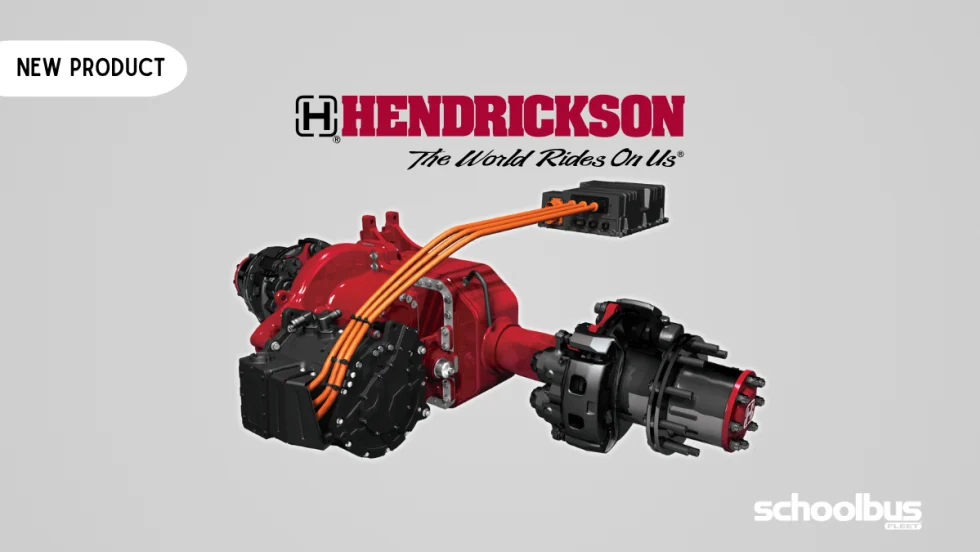
Hendrickson, Driventic Introduce New Electric Powertrain for School Buses
ELECTRAAX, the electrified, lightweight drive axle offers integrated ePowertrain efficiency and modular flexibility for Class 6–7 school bus use.
Read More →