





Related: 247Security Producing Protective Equipment for Medical Workers
Freedman Seating Launches Line of Passenger Protective Equipment
The products are intended to help curb the spread of germs on public and commercial transportation vehicles.
May 29, 2020
2 min to read
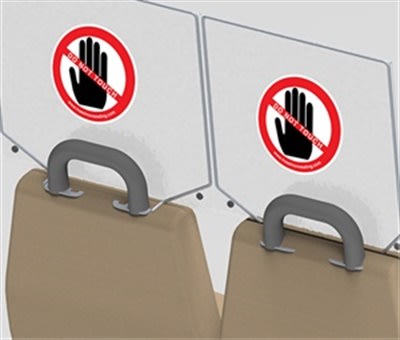
Freedman Seating's new Passenger Protective Equipment Line currently includes three products. Shown here is a rendering of the passenger guard, courtesy Freedman Seating
A version of this story appeared onMetro magazine, School Bus Fleet’s sister publication.
CHICAGO — Freedman Seating Co. announced a new line of safety products intended to help curb the spread of germs on public and commercial transportation vehicles.
“There is nothing more important to us than to protect the safety and well-being of our employees, business partners, and America’s transportation infrastructure. Every decision we make and action we take keeps those principles in mind,” said Dan Cohen, president for Freedman Seating in a news release from the company. “Our team is proud to develop and manufacture PPE to help keep America moving, responding, and delivering hope.”
Freedman’s Passenger Protective Equipment (PPE) line currently includes three products:
• Passenger Guards: Made from a clear, soft durable vinyl that is designed to be easy to replace and clean, and UV and mildew resistant. The guards are mounted at the top of a passenger seat behind the passenger’s head, providing protection from sneezes, coughs, droplets, and other airborne person-to-person threats and germs. These guards can be easily added in the field to 3PT mid-high, Feather Weight mid-high, GO-ES and most Freedman Foldaway seats.
• Grab Rail Covers: Created to be easy to clean, replace, or add in the field, these covers are made from CMI Dimensions Nanocide vinyl with embedded silver, a natural antimicrobial.
• Social Distance Seat Bands: These bands are made to communicate social distancing restrictions with a durable seat band, wrapped around any seat designated “Do Not Sit.”
“Adding PPE to a bus is a significant step forward in improving safety and trust within public transportation at a time when attracting and retaining ridership is extremely tough,” Cohen said.
The new line of PPE products represents another major benchmark in Freedman’s 125-year history as a supplier of seating and safety solutions to the commercial market.
More Safety

How to Build a Better School Bus Driver Training Program
Is it time to strengthen your driver training? Here’s how to pick the right talent and improve recruitment, retention, and safety. This video is brought to you by IC Bus.
Read More →
Recent School Bus Accidents Leave 2 Dead, 2 Injured
Four school bus crashes in Florida, Illinois, and Georgia highlight risks in transportation lots, at bus stops, and during student loading and unloading.
Read More →
Sponsored•September 8, 2026
When Every Second Matters, Clarity Keeps Routes Moving
From routine delays to urgent incidents, strong communication practices help drivers, dispatchers, schools, and families respond with confidence.
Read More →

What Happens When a School Bus Catches Fire — and What Can Help
School bus fires are rare but can be devastating. Learn how advances in fire suppression and asset protection help fleets detect fires earlier, reduce damage, and improve safety.
Read More →
Geotab Launches Tool to Help Fleets Investigate Road Incidents
Geotab Investigations combines telematics data, video, documents, and other evidence to help fleets reconstruct incidents, resolve claims, and determine what happened.
Read More →
Texas Sixth Grader Wins 2026 National School Bus Safety Poster Contest
Sai Darshana Yekolu of Moseley Middle School in Prosper, Texas, was named the newest winner for her artwork, bringing the theme of “Safe Rides, Everyday Heroes” to life.
Read More →
Sponsored•August 27, 2026
Doing More With Less: How Transportation Directors Can Prioritize Safety Amid Budget Uncertainty
With diesel prices soaring and nearly one-third of transportation directors expecting budget cuts, maintaining student safety has never been more challenging. Download this guide to learn how leading districts are prioritizing risk, funding critical safety technology, and building stronger budget cases with data.
Read More →
Walton County Schools Adds Gatekeeper Stop-Arm Enforcement System
The Florida district will deploy Gatekeeper’s updated Student Protector technology, which now incorporates AI to improve video evidence.
Read More →
How To Build a More Secure School Bus Yard During and After Hours
As thefts and overnight security threats continue, school transportation leaders are combining stronger operational practices with AI-enabled surveillance to better protect buses, facilities, and staff.
Read More →
FMCSA Names New Chief Safety Officer: What School Bus Operators Should Know
Steve Dowling is set to lead the federal agency's efforts to advance commercial motor vehicle safety and reduce crashes, fatalities, and injuries on the nation's roadways.
Read More →