




Proterra to Expand Electrification of OEM Offerings
The electric bus and charging system manufacturer has launched Proterra Powered vehicle electrification solutions to help commercial vehicle manufacturers electrify their heavy-duty vehicles.

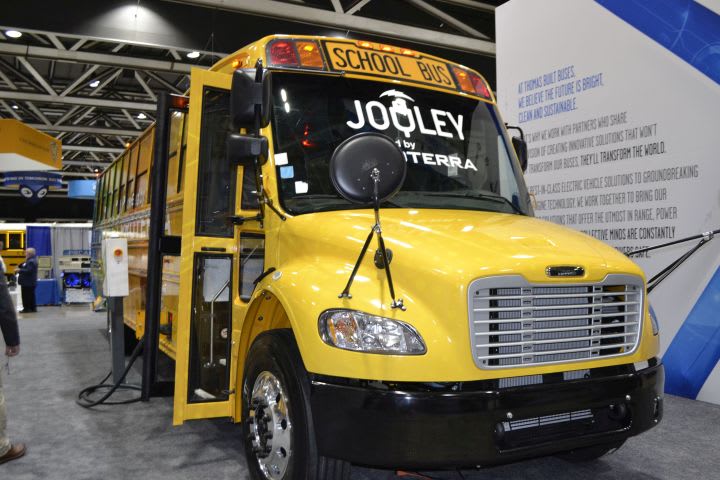
Electric bus and charging system manufacturer Proterra has launched Proterra Powered vehicle electrification solutions to help commercial vehicle manufacturers electrify their heavy-duty vehicles. Shown here is Thomas Built Buses' Saf-T-Liner C2 Jouley, powered by Proterra.

Electric bus and charging system manufacturer Proterra has launched Proterra Powered vehicle electrification solutions to help commercial vehicle manufacturers electrify their heavy-duty vehicles. Shown here is Thomas Built Buses' Saf-T-Liner C2 Jouley, powered by Proterra.
Electric bus and charging system manufacturer Proterra has launched Proterra Powered vehicle electrification solutions, which leverages the company’s electric vehicle technology and expertise to help commercial vehicle manufacturers electrify their heavy-duty vehicles.
As previously reported, Proterra is already partnering with OEMs such as Daimler Trucks North America, the parent company of Thomas Built Buses, on its new electric school bus: the Saf-T-Liner C2 Jouley.
Additionally, the manufacturer has partnered with Van Hool and Alexander Dennis to introduce 100% battery-electric vehicles that are powered by the company’s electric vehicle technology, according to a news release from Proterra. Van Hool selected Proterra for its first all-electric motorcoach in the North American market.
In addition to providing vehicle electrification hardware, Proterra works with partners to ensure a successful electric vehicle program. From initial design consulting, engineering services, and integration, to service support, training, and charging infrastructure implementation, Proterra offers comprehensive solutions for vehicle electrification. By partnering with Proterra, OEMs can leverage years of experience in electric vehicle engineering and proven operational performance.
• Designed from the cell level up for commercial usage, Proterra battery systems’ modular designs enable customizable battery pack dimensions that can easily be configured to fit within a variety of heavy-duty vehicle platforms.
• In addition to energy density, Proterra battery systems are manufactured with safety mechanisms built directly into the battery architecture and undergo rigorous testing to ensure they can withstand the toughest conditions, according to the manufacturer.
• Proterra battery systems are coupled with the company’s electric drivetrains to maximize efficiency and provide longer range, greater acceleration, and simplified maintenance for heavy-duty electric vehicles.
• In addition to the electric vehicle components, Proterra also offers high-power charging systems that are purpose-built for heavy-duty applications and use standardized technology for interoperability. The charging systems utilize the universal J1772-CCS Type 1 charging standard, enabling operators to utilize the company’s charging systems for a range of battery-electric powered vehicles.
• Proterra also offers a turnkey approach to delivering the complete energy ecosystem for heavy-duty electric fleets through Proterra Energy fleet solutions, including charging infrastructure design, build, financing, operations, maintenance, and energy optimization using the Proterra APEX connected vehicle intelligence system.
The Proterra Powered group is led by Toby Kraus. Kraus has been with Proterra for more than three years and has had a leadership role in the manufacturer’s finance, strategy, and business development efforts.
For more information on Proterra Powered, go here.
More Alternative Fuels

CALSTART and Forth Combine to Form Catalyst Mobility
The new name represents a renewed vision for the nonprofit focused on advancing clean, equitable, and affordable transportation solutions that move people and goods.
Read More →
Alt-Fuel Moves: New Buses, Charging Hubs & Real-World EV Testing
Propane and electric school bus deployments continue to grow as districts add new vehicles, expand charging infrastructure, and gather more real-world operating data.
Read More →
Fewer Electric School Bus Models Reshape the U.S. Market
WRI’s latest buyer’s guide points to a consolidating electric school bus market, but fewer options may reflect a maturing industry rather than fewer meaningful choices for school bus operators.
Read More →
The Fuel Budget You Can Actually Predict: How Propane Autogas Keeps Money in the Classroom
Learn how propane autogas helps school districts manage fuel costs with predictable pricing, lower maintenance, and reduced emissions from former transportation director Joel Stutheit.
Read More →
Hendrickson, Driventic Introduce New Electric Powertrain for School Buses
ELECTRAAX, the electrified, lightweight drive axle offers integrated ePowertrain efficiency and modular flexibility for Class 6–7 school bus use.
Read More →
The Mobility House Joins PowerFlex in Fleet Electrification Deal
The acquisition combines intelligent charging software, bidirectional charging expertise, and fleet electrification services to support the growing adoption of electric school buses across North America.
Read More →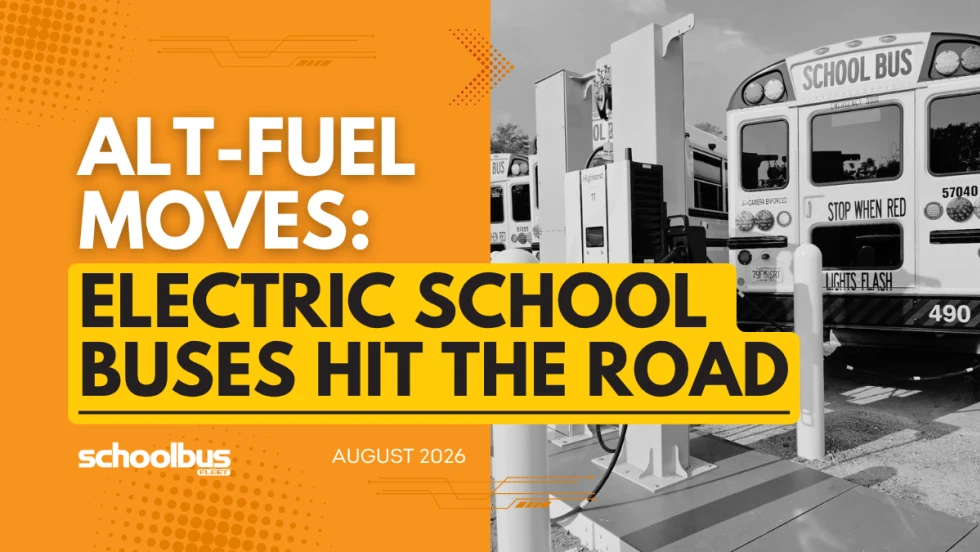
Alt-Fuel Moves: Electric School Bus Investments Hit the Road
See which districts across the U.S. are putting electric school buses into service, expanding charging infrastructure, and planning the next phase of fleet electrification.
Read More →
With Fuel Volatility Ahead, School Districts Turn to Propane
While diesel prices peaked above $5 this spring, districts with propane autogas-powered fleets paid under $2 per gallon, according to PERC.
Read More →
EPA Unveils Proposed Changes to 2027 Heavy-Duty Engine Rules
The federal agency has proposed changes to next year’s targets that would eliminate DEF derates, ease warranty requirements, and retain current NOx emissions standards.
Read More →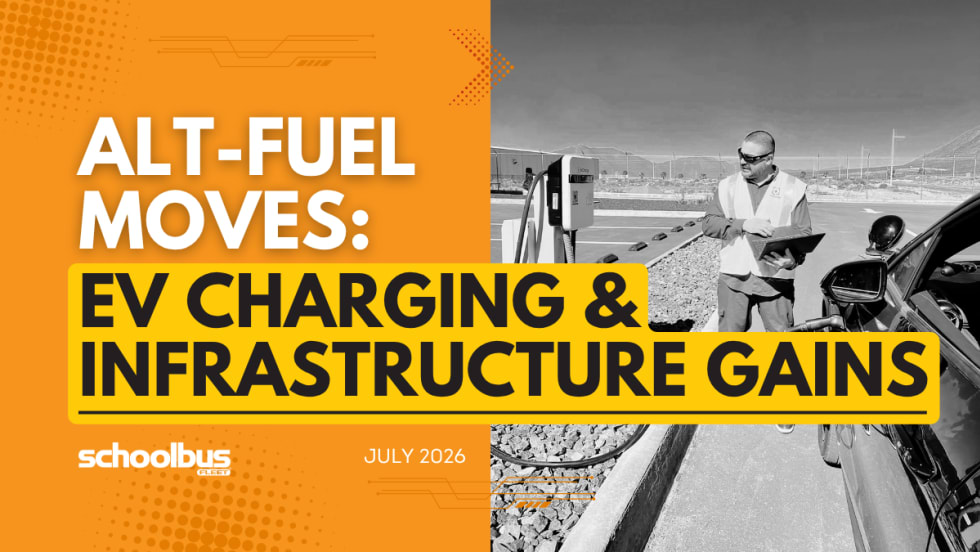
Alt-Fuel Moves: EV Charging & Infrastructure Projects Gain Momentum
The latest developments include new funding, charging infrastructure, utility investments, and fleet technologies designed to support the transition to electric school buses nationwide.
Read More →