




Driver Shortage Statistics, Recruitment Solutions Shared at NAPT Conference
Survey results show driver shortage is still a top concern. Attendees discuss successful recruiting ideas and learn more about effective interviewing tactics.

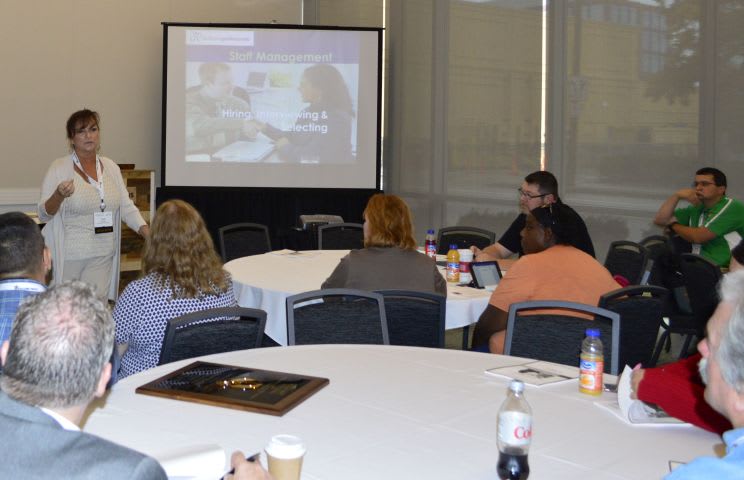
Lori Miller, owner of the company Developing Professionals, discussed best practices for selecting job candidates and the most effective uses for different types of interviews.
Lori Miller, owner of the company Developing Professionals, discussed best practices for selecting job candidates and the most effective uses for different types of interviews.
COLUMBUS, Ohio — National Association for Pupil Transportation (NAPT) conference attendees got a glimpse at some of the numbers behind the driver shortage across the U.S. and hashed out some solutions for hiring quality candidates at conference sessions here on Sunday.
The results of NAPT’s 2017 Driver Shortage survey, shared with attendees by John Hazelette, a school transportation consultant who also serves on the NAPT board, sparked spirited discussion about recruitment challenges and successes.
Among the findings were the top factors causing driver shortage: benefits; rate of pay; obtaining a commercial driver’s license (CDL); and the hours available to work. Audience members noted that wait times for taking the CDL exam present a hurdle, with one saying his candidates sometimes have to wait about six months.
More than half of survey respondents said that driver shortage is their top concern. Some audience members said that they think that the pool of potential drivers is becoming more varied, whereas it used to be mostly stay-at-home moms and some retirees, who had more flexible schedules.
Even with many respondents reporting that they have increased benefits to a full package (retirement, dental, and vision care) from what they offered last year, and the trend in retention is improving, according to survey results, the perception of respondents is that driver shortage is getting worse.
Some of the more positive survey results shared: the hiring process is significantly shorter than it was last year, decreasing from an average of 28 days to 21 days among unionized organizations, Hazelette said.
Regarding recruitment, some attendees said they are now opting for Facebook instead of newspaper ads, and have seen some success. Placing an ad on "I Heart Radio" was another suggestion that yielded positive results.
Other recruitment methods that attendees said worked for them are developing a relationship with a local reporter who now also covers the district transportation department's positive developments, holding a transportation open house for prospective applicants, letting people who are interested drive the bus to ease fears of driving a large vehicle, and placing monitors on nearly all buses, which has also helped get more substitute drivers to fill in routes, one attendee noted.

Miller also got attendees on their feet and in pairs for some interactive observation exercises.
Meanwhile, Lori Miller, owner of the company Developing Professionals, got attendees on their feet for some interactive exercises as she shared information on best practices for selecting job candidates and the most effective uses for different types of interviews.
In a test of observation skills and a show of the desire to maintain habit, attendees formed pairs and observed each other for 15 seconds. Then, they each turned around and changed three things about their appearance. Their partners guessed what was different about them, and most attendees proved pretty sharp, getting two or all three of the changes right.
Miller also noted that every attendee changed their appearance back immediately after the exercise, and some said they preferred going back to their normal routine. She asked the audience to step out of their comfort zone when they come across an “a-ha!” moment and to apply it, even if that shakes up routine.
Clearly defining the knowledge, skills, and abilities necessary for a job in the form of a job description is essential, Miller said, because it clarifies the job’s purpose and holds people accountable. In groups, attendees then listed all the qualities of the “perfect” employee, as well as those of the “worst” employee. Desirable qualities included being coachable, a team player, and detail-oriented. Red flags included being unreliable, negative, and not paying attention to students.
To assess the qualities and abilities of candidates, Miller went over tools to analyze applicants, including phone interviews. Over-the-phone interviews, she said, can provide information not always easily obtained in resumes and in-person interviews on a candidate’s character and demeanor, by focusing on tone of voice and removing visual biases.
In addition to acting as another filter, conducting a phone interview before an in-person interview can also gauge an applicant’s level of interest and allow the employer to share information, such as pay rate or job requirements, that may change the candidate’s mind about the job, saving the employer money and time on testing and training.
Miller recommended having five simple questions to ask in the interview.
“Within five minutes, I can tell whether they are going to be a good fit or not,” she said.
She also advised consistency in who conducts the interviews to avoid biases.
Miller also cautioned attendees about laws that prohibit asking certain questions, such as those about race, religion, marital status, or whether the candidate has children. Focusing questions on the job’s required skills and responsibilities and asking how they would handle typical scenarios on the job is best, she added.
More Management
Nominate Rising School Transportation Pros Under 40!
We’re searching for the next generation of leaders making an impact across the K-12 student transportation industry to recognize as SBF’s 2027 Trailblazers. Nominations are open now!
Read More →
Changing Lanes: BusWhere, EverDriven, InterMotive, Summit School Services, Switzer-Carty & Thomas Built Buses
Check out who's been hired, promoted, and appointed to leadership positions at various school transportation suppliers, contractors, and manufacturers.
Read More →
The Most Expensive Thing You Do Before Selling a School Bus: Wait
When should you sell an aging school bus? Learn how maintenance, mileage, corrosion, specifications, and timing can affect resale value long before the auction.
Read More →
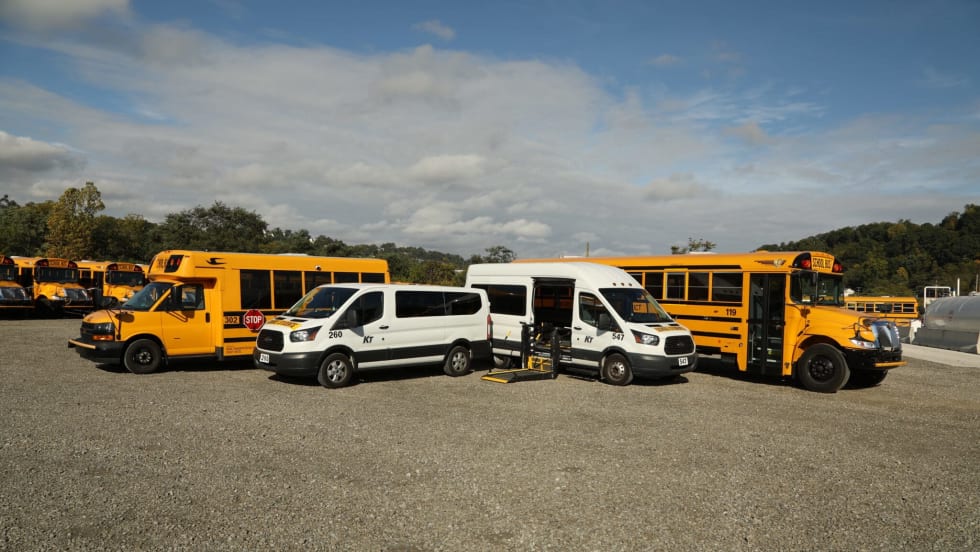
American Student Transportation Partners Acquires AJ Myers and Sons
A new deal brings a 75-year Pennsylvania student transportation provider into one of the nation’s largest private school bus contracting groups.
Read More →
What I Brought Home From SBFX: Relationships, Leadership, and Preparing What's Next
Who could lead your transportation operation tomorrow if you couldn't? Bernando Brown explores succession planning, mentorship, and preparing emerging leaders to step up.
Read More →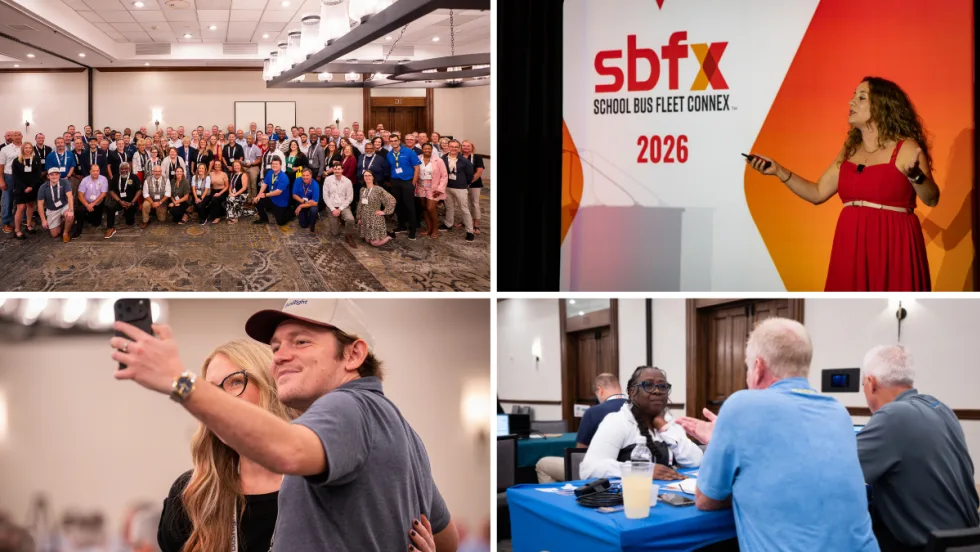
Inside School Bus Fleet ConneX 2026: Industry Leaders Connect in Scottsdale [Photos]
See highlights from SBFX 2026 in Arizona, where school bus operators and suppliers gathered for meetings, education, networking, awards, and more.
Read More →
School Transportation’s Biggest Pressures and Opportunities: SBFX Attendees Weigh In
School bus operators point to rising costs, staffing, and vehicle prices as immediate pressures while identifying technology, training, and routing as opportunities for growth.
Read More →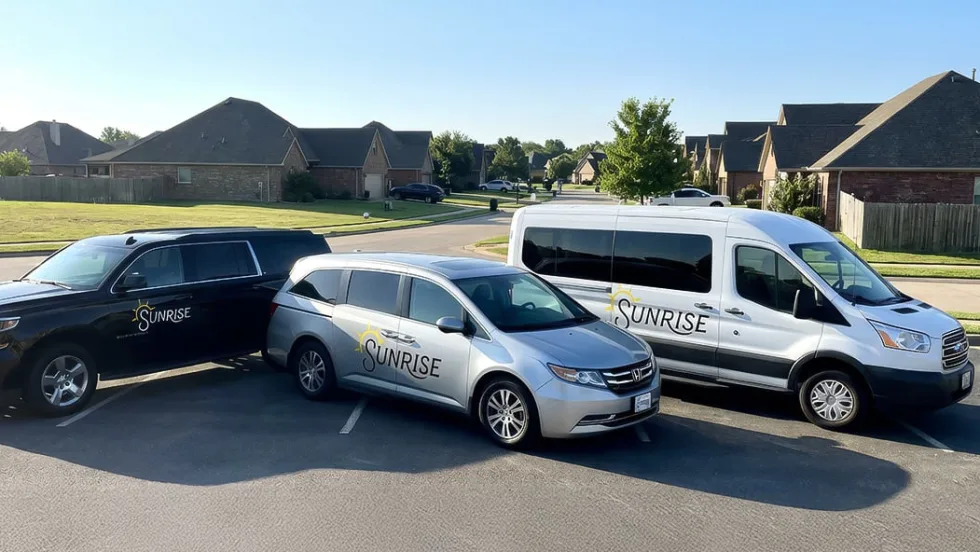
STA Acquires Sunrise Transportation
Student Transportation of America expands in Illinois and Connecticut through Sunrise's fleet of nearly 1,000 vehicles.
Read More →
EPA Opens $180M DERA Funding Round for Diesel Upgrades
The 2026 Diesel Emissions Reduction Act program seeks applications from eligible organizations to accelerate the retirement of legacy diesel vehicles.
Read More →
HopSkipDrive’s CareEngine Targets the ‘Exceptions’ in Student Transportation
The new platform works alongside districts’ existing transportation management systems to coordinate specialized rides, automate last-minute changes, and turn ride data into operational improvements.
Read More →