





See Also: Understanding FMVSS 213: Key FAQs on Child Restraint System Requirements
2025 National Specs and Procedures Manual Now Available
The updated NSTSP book is now complete, the final result of the most recent National Congress on School Transportation, which set new best-practice standards for the industry.
September 11, 2025
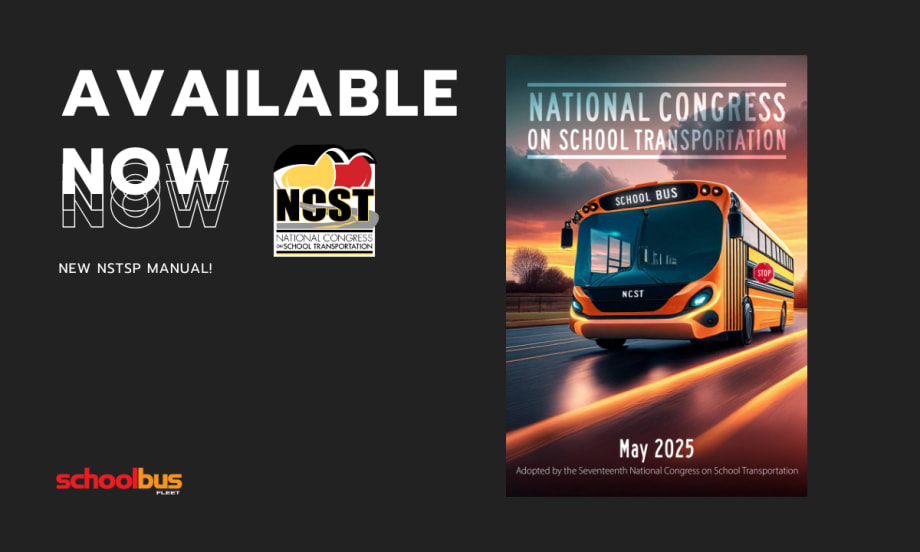
The work of 11 writing committees and over 200 state delegates has concluded into the now-final industry manual, outlining key specs, standards, and minimum best practices for the industry to follow.
Photo: NCST/School Bus Fleet
2 min to read
The 2025 National School Transportation Specifications and Procedures Manual (NSTSP) is now available and can be accessed on the NCST website here.
Copies of the physical book are being distributed soon. If you want to request one and have not ordered it, the printer has made a few extra copies available, which can be ordered online here. Otherwise, view the entire digital document (and past NSTSPs) on the NASDPTS website here.
This manual is the result of the 2025 National Congress on School Transportation (NCST), which happened last May. There, delegates from 48 states gathered to discuss and decide new minimum standards for the pupil transportation industry. With recommendations spanning 11 sections, all industry professionals can find the final guidance on these topics:
General Operations
School Bus Specifications
Specially Equipped School Buse
School Bus Inspections
Activity Bus Operations
School Transportation Security & Emergency Preparedness
Students with Disabilities and Special Health Care Needs
Infants, Toddlers & Pre-School Children
Emerging Technologies
Alternative Fuels
Several states adopt the NSTSP manual in full, while others adopt portions of it. It is intended to be a trusted resource for industry professionals across multiple sectors to reference.
“The NSTSP manual is like the Bible,” said Sue Shutrump, a retired PT/OT supervisor and consultant. “As an expert witness, I refer to it all the time. It’s the industry-standard, our guiding light.”
Because the 2020 NCST was cancelled due to COVID, this new guide is the first one in 10 years.
Catch up on key themes from the NCST from delegates who were there on the ground in this episode of The Route:
Mike LaRocco, Indiana's state director and NCST chair, said that information on the next NCST will be released in the spring of 2026.
More Management

How to Build a Better Driver Training Program
Ready to boost up your school bus instructor training? Here’s how to pick the right talent and improve recruitment, retention, and safety.
Read More →
CALSTART and Forth Combine to Form Catalyst Mobility
The new name represents a renewed vision for the nonprofit focused on advancing clean, equitable, and affordable transportation solutions that move people and goods.
Read More →
What Makes a Great School Bus Driver Trainer?
Choosing the right school bus driver trainer takes more than experience. Learn six keys to selecting and developing trainers and evaluating program effectiveness.
Read More →


School Bus Contractors Expand Through New Deals, Acquisitions & Partnerships
STA's Canadian division acquires Ontario-based G&L Stevenson Transport while Durham School Services adds a new district contract in California, First Student adds a New Jersey contract, and Minnesota Coaches acquires Halo Transportation.
Read More →
Logan Bus Company Rolls Out AI Phone System for NYC School Bus Families
A summer pilot found that AI agents could handle most routine calls, freeing up time for customer service staff to focus on emergencies and complex family concerns.
Read More →
From Intent to Impact: What I Learned About Leadership from TAPT
A Texas transportation supervisor shares lessons on self-awareness, accountability, managing stress and building trust — and why investing in leadership development matters at every stage of your career.
Read More →
NAPT Names 2026 Award Recipients, Hall of Fame Inductee
Who earned national recognition for their work in student transportation? This year, NAPT named five recipients of its 2026 awards for service, safety, and leadership, plus its newest Hall of Famer.
Read More →
Sponsored•September 2, 2026
2026 State of Student Transportation Report
Driver shortages. Rising costs. Growing safety expectations. More data, but not enough time to act on it. The 2026 State of Student Transportation Report reveals what transportation leaders say is putting the most pressure on their operations—and where they’re investing next. See how your priorities compare.
Read More →
How to De-Escalate an Angry Person: 5 Steps for Handling Workplace Conflict
What makes emotions run high, and how should you handle an angry colleague or parent? Follow these steps for staying calm, listening, showing empathy, and resolving conflict.
Read More →
Sponsored•September 1, 2026
What Readiness Looks Like This School Year
Learn about the challenges shaping the 2026–2027 school year, from persistent driver shortages and budget pressure to technology and readiness gaps. See how school districts are responding and adapting in Zonar’s 2026 Back-to-School Readiness Report.
Read More →