




Tragedy puts emphasis on planning, teamwork
When such a tragedy occurs, it challenges our leadership skills. As a superintendent, it's my job to ensure that every department, including transportation, is working as a team with the district office.
On Dec. 7, 1998, one of our school buses fatally struck Samantha Barrett, an 8-year-old student who was riding her bicycle home from school. This tragedy sent tremendous reverberations throughout our community, a small but growing area in Riverside County in Southern California. When such a tragedy occurs, it challenges our leadership skills. As a superintendent, it's my job to ensure that every department, including transportation, is working as a team with the district office. To achieve this goal, I offer the following steps.
Plan, plan and, yes, plan
Before a tragedy occurs, a crisis plan that is reviewed and regularly adjusted needs to be in place. Transportation needs to stay in the planning loop because it is often a key support service that will assist in an emergency. On an annual basis, we review our district disaster plan and run simulated disasters. We often invite outside groups, including fire and police, to evaluate our procedures. When the school bus tragedy occurred, we already had a working relationship with the California Highway Patrol and Beaumont Police Department, who were investigating the accident.
Clear message is critical
After a tragedy, a clear, consistent message needs to be sent to a variety of school community audiences. A designated staff person needs to serve as the messenger. While large districts may have a public relations representative, our school district of 3,600 students usually has the superintendent serve in this capacity. After I first heard the terrible possibilities that may have occurred, I immediately put our crisis plan into action. I directed the deputy superintendent to the accident scene to work with administrative staff and our transportation director. Meanwhile, I stayed at the district office and kept in touch with the deputy superintendent. From there I could give accurate, timely information to all necessary parties. Cellular phones and in-house radio systems were used, as in crisis simulations. They were the most effective devices.
Feedback system is required
Referring back to your crisis plan, a feedback system must be built into your plan. While in most cases you do not want to jump to action based on feedback, you should be prepared to make both short- and long-term decisions. The morning following the accident, the deputy superintendent, a trained community church counselor and I met with the transportation staff. In this case the drivers were able to provide key feedback. For example, they informed us that students from other schools were riding the ill-fated bus. These students, like the ones from Samantha's school, were also strongly affected by the accident. But that morning, we had not provided any counseling to students other than those at Samantha's school. We immediately confirmed that a crisis counselor would be directed to ride that route home that afternoon and provide counseling assistance. Without that type of immediate short-term feedback from the bus drivers, those needs would have been unmet.
Now Review Your Plan
Review your plan after the crisis situation. This could be done one week, one month or even a year later. We are still continuing to review our safety procedures, but will rely upon recommendations from the district's insurance handlers and the California Highway Patrol. We will review this with our community planning agencies and make the necessary adjustments to our plan. This plan will be communicated to students, staff and community so that further preparations can be done so that when, not if, the next crisis occurs, we can be even better prepared to provide safety for our students.
John Wood is superintendent of Beaumont (Calif.) Unified School District.
More Management

How to Build a Better Driver Training Program
Ready to boost up your school bus instructor training? Here’s how to pick the right talent and improve recruitment, retention, and safety.
Read More →
CALSTART and Forth Combine to Form Catalyst Mobility
The new name represents a renewed vision for the nonprofit focused on advancing clean, equitable, and affordable transportation solutions that move people and goods.
Read More →
What Makes a Great School Bus Driver Trainer?
Choosing the right school bus driver trainer takes more than experience. Learn six keys to selecting and developing trainers and evaluating program effectiveness.
Read More →

School Bus Contractors Expand Through New Deals, Acquisitions & Partnerships
STA's Canadian division acquires Ontario-based G&L Stevenson Transport; Durham School Services adds a new district in California; First Student expands in New Jersey; and Minnesota Coaches rebrands and acquires Halo Transportation.
Read More →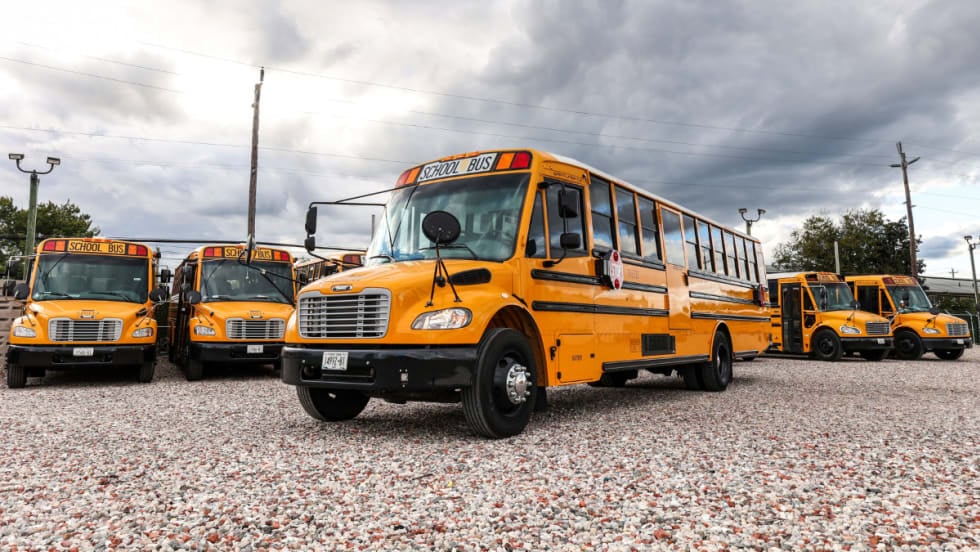
Logan Bus Company Rolls Out AI Phone System for NYC School Bus Families
A summer pilot found that AI agents could handle most routine calls, freeing up time for customer service staff to focus on emergencies and complex family concerns.
Read More →
From Intent to Impact: What I Learned About Leadership from TAPT
A Texas transportation supervisor shares lessons on self-awareness, accountability, managing stress and building trust — and why investing in leadership development matters at every stage of your career.
Read More →
NAPT Names 2026 Award Recipients, Hall of Fame Inductee
Who earned national recognition for their work in student transportation? This year, NAPT named five recipients of its 2026 awards for service, safety, and leadership, plus its newest Hall of Famer.
Read More →
2026 State of Student Transportation Report
Driver shortages. Rising costs. Growing safety expectations. More data, but not enough time to act on it. The 2026 State of Student Transportation Report reveals what transportation leaders say is putting the most pressure on their operations—and where they’re investing next. See how your priorities compare.
Read More →
How to De-Escalate an Angry Person: 5 Steps for Handling Workplace Conflict
What makes emotions run high, and how should you handle an angry colleague or parent? Follow these steps for staying calm, listening, showing empathy, and resolving conflict.
Read More →
What Readiness Looks Like This School Year
Learn about the challenges shaping the 2026–2027 school year, from persistent driver shortages and budget pressure to technology and readiness gaps. See how school districts are responding and adapting in Zonar’s 2026 Back-to-School Readiness Report.
Read More →