




The Old and New in School Bus Mirror Systems
School bus mirrors are a critical safety system, and failure to use or adjust them properly can have tragic consequences. Of course, proper mirror usa...

School bus mirrors are a critical safety system, and failure to use or adjust them properly can have tragic consequences. Of course, proper mirror usage first depends on finding the right model. As an essential part of a safe school bus, mirrors are manufactured with the latest technology to increase visibility for drivers and overall safety for riders.
Driver-adjustable options
Manufacturers and operators agree that driver-adjustable mirrors are one of the most popular designs currently available. Side mirrors controlled electrically with a remote are also being incorporated into many school buses around the country.
“Electric controls are a huge advantage for operators,” says Bonnie Russell, general manager of transportation for the Houston Independent School District. Nearly 200 of the district’s 1,060 buses have been equipped with remote-control adjustment for side mirrors.
Rosco Inc., a manufacturer of both interior and exterior school bus mirrors, offers many options to give drivers ultimate control of the mirror systems. “Visibility is so much better when drivers can properly adjust the mirrors themselves,” says Ben Englander, vice president of engineering for Rosco in Jamaica, N.Y.
Paul Schuster, communications manager for Mirror Lite in Rockwood, Mich., says the company’s remote mirrors are designed on an interchangeable component level, allowing individual pieces to be replaced without purchasing a complete new mirror. A broken lens can be removed on a tray to avoid touching sharp glass and can quickly be changed without replacing all adjacent parts.
Cross-view styles
Cross-view mirrors on the front of the bus are standard on fleets today. Though not used for driving, these mirrors allow drivers to see directly in front of the bus during loading and unloading.
Mirror Lite introduced a design for these mirrors intended to reduce glare. “Our cross-view mirrors are quadrispherical in design, which makes them somewhat eye-shaped,” Schuster says. “The effect of blinding glare on drivers is potentially disastrous.”
Interior models
Interior mirrors have also received some upgrades in recent years. Radius mirrors with tempered glass provide a clearer, wider view of occupants on the bus and resist breakage, says Tony Pietrowski, project engineer at Tiger Mirror Corp. in Clay Center, Ohio.
As drivers adjust a flat glass rearview mirror, it has a tendency to break if pulled or pushed too hard, and can require a mechanic to tighten the screws as it loosens with frequent adjustments. “With a radius mirror, you glance up at one spot and you can see everybody at one time,” Pietrowski says. “it’s just like turning around in the seat, and drivers love that.”
Tempered glass mirrors are available for exterior use as well, enabling them to withstand greater abuse without breaking. Tiger modeled its design after a bulldozer-type construction mirror and incorporated the technology into a mirror for school buses, Pietrowski explains.
Fundamentals and features
Despite the extra gadgets available, a good mirror system still comes down to the basics. Using a convex mirror to see traffic while driving and a flat mirror to judge distance is essential for safe bus operation.
Quick and easy adjustment and repair are valuable qualities to the operators and mechanics working with the systems each day. Simplified strong brackets significantly cut down on service time, says Bill Johnston, vehicle maintenance coordinator for Placentia-Yorba Linda Unified School District in Placentia, Calif.
Additionally, special features are available to increase a system’s operating life while decreasing maintenance time. For instance, breakaway mountings allow the mirror to swing away if struck and return to the original position without damage. Stainless steel eliminates paint chip problems and corrosion.
LED signals embedded in the mirrors enable other motorists to see if the bus is signaling for a lane change or turn. This has been a very popular feature among Rosco’s customers, says Englander. “The most important thing to drivers is to see as much as they can without sacrificing significant forward vision,” he says.
Size and placement
Debate exists over the optimal size of rearview mirrors when considering rear visibility vs. unobstructed forward viewing. Englander advocates proper placement of the mirror over a specific size.
Mounting the mirror as an overhang can move it out of an obstructing position while still giving the driver adequate rear vision. Reducing blind spots on side-view mirrors can be achieved by splitting the mirror into two parts that can be adjusted independently.
“You can see through the gap in the upper and lower head, which keeps the forward line of vision from being obstructed,” Mirror Lite’s Schuster says. “Dual head mirrors with a slightly larger reflective glass area provide greater visibility so you can see multiple lanes of traffic and in closer to the bus where kids are standing.”
Some operators say that a single shell mirror system is easier to adjust properly than a divided mirror. Manually controlled separate flat and convex mirrors create blind spots that can cause safety issues, according to Karen Strickland, general manager for the Hillsborough County Schools transportation department in Tampa, Fla.
The future of mirror systems holds many possibilities. For example, improved technology has allowed Rosco to test mirrors in a three-dimensional environment to ensure that federal standards are met.
Englander predicts that in the “not too distant future” buses may move toward electronic vision systems. Cameras and monitors would be added to eliminate the issue of blind spots and glare. Currently, the technology is extremely delicate and expensive, Englander says.
Driving instructors once told Chuck Ashley, division manager of Vision Mfg. in El Cajon, Calif., that they would like to have transparent mirrors that would eliminate blind spots created by mirrors. While that kind of system does exist, Ashley says it won’t be used in the mainstream for many years because of cost.
More Safety
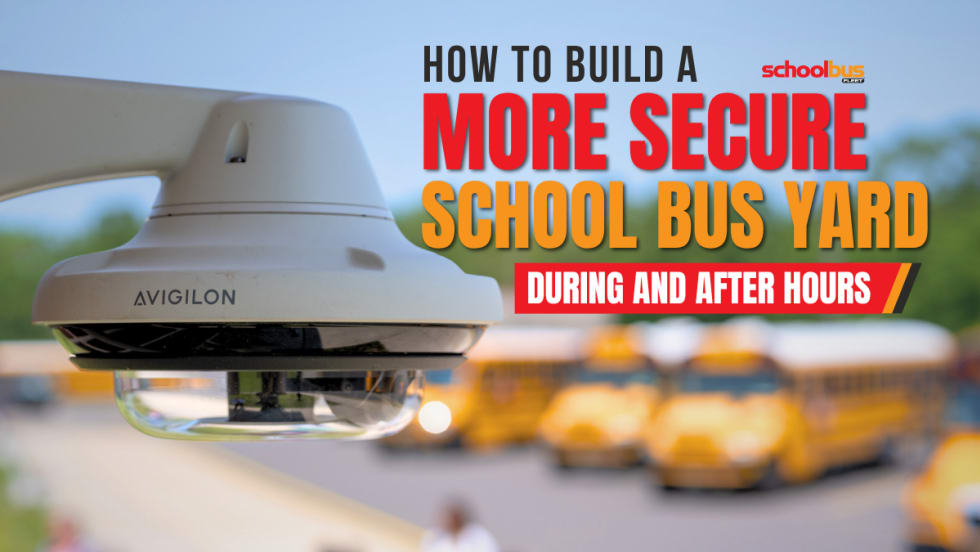
How To Build a More Secure School Bus Yard During and After Hours
As thefts and overnight security threats continue, school transportation leaders are combining stronger operational practices with AI-enabled surveillance to better protect buses, facilities, and staff.
Read More →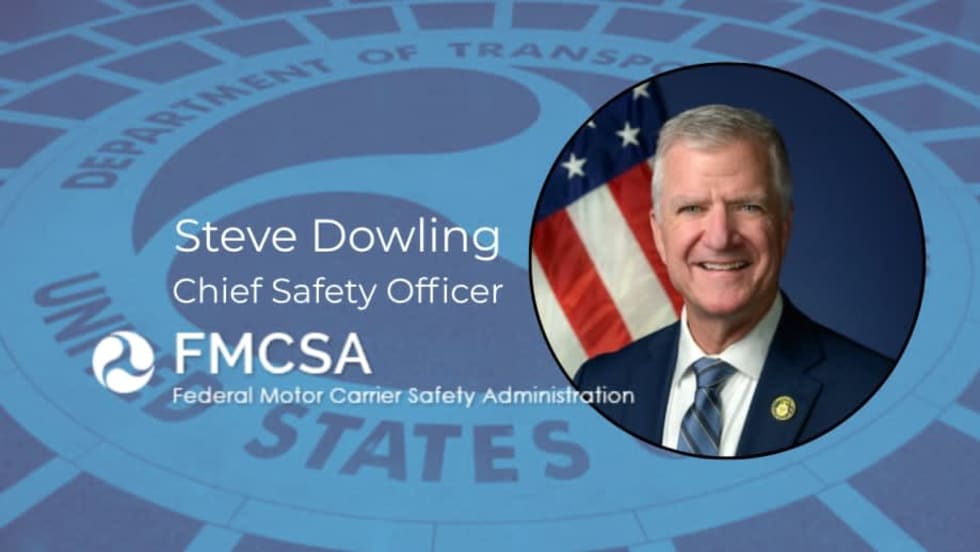
FMCSA Names New Chief Safety Officer: What School Bus Operators Should Know
Steve Dowling is set to lead the federal agency's efforts to advance commercial motor vehicle safety and reduce crashes, fatalities, and injuries on the nation's roadways.
Read More →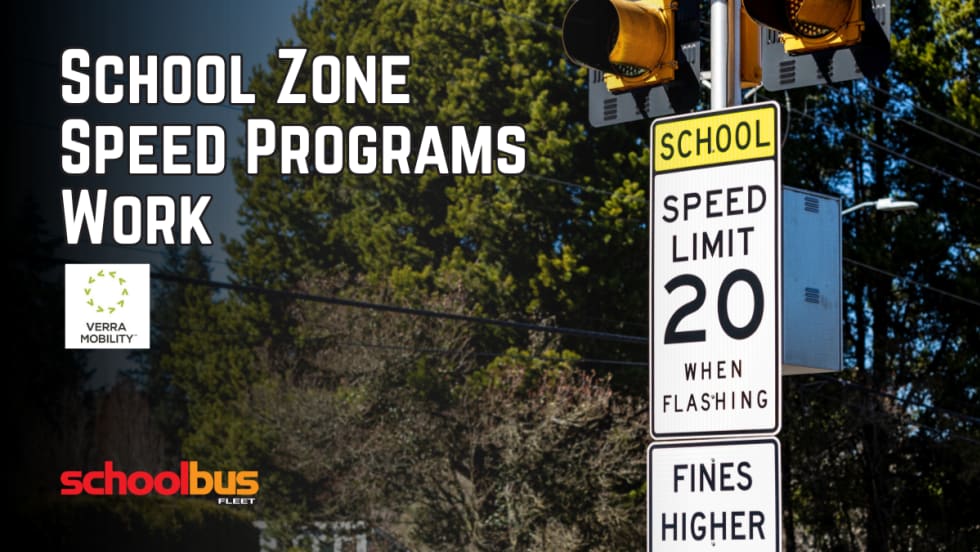
New Study Finds School Zone Speed Safety Cameras Cut Speeding Violations 97%
A Florida university's research demonstrates that Verra Mobility's automated enforcement changes driver behavior and significantly improves school zone safety.
Read More →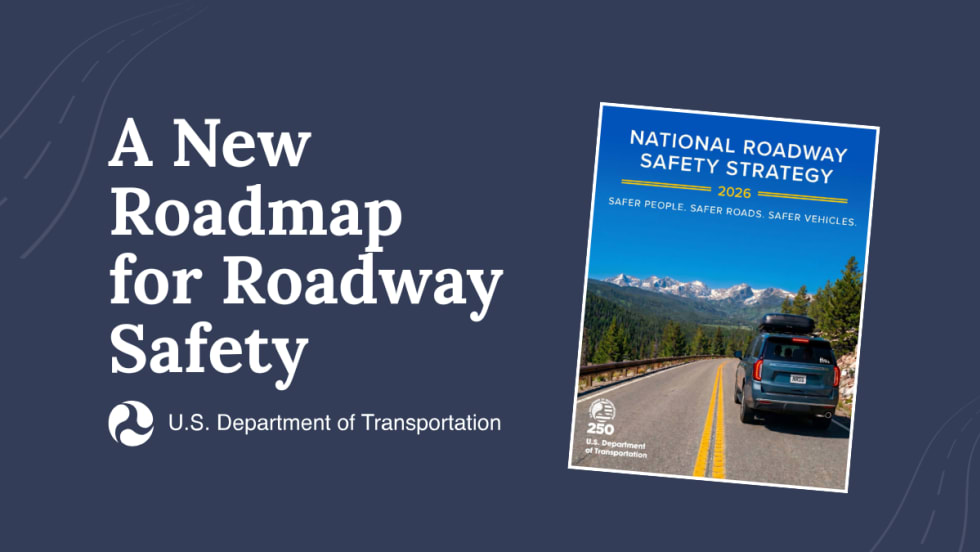
What Changed in DOT’s New National Roadway Safety Strategy?
The federal agency's new plan shifts its focus to safer people, roads and vehicles, with a new three-pronged approach instead of five. One outlined action even addresses a key industry concern around illegal school bus passing.
Read More →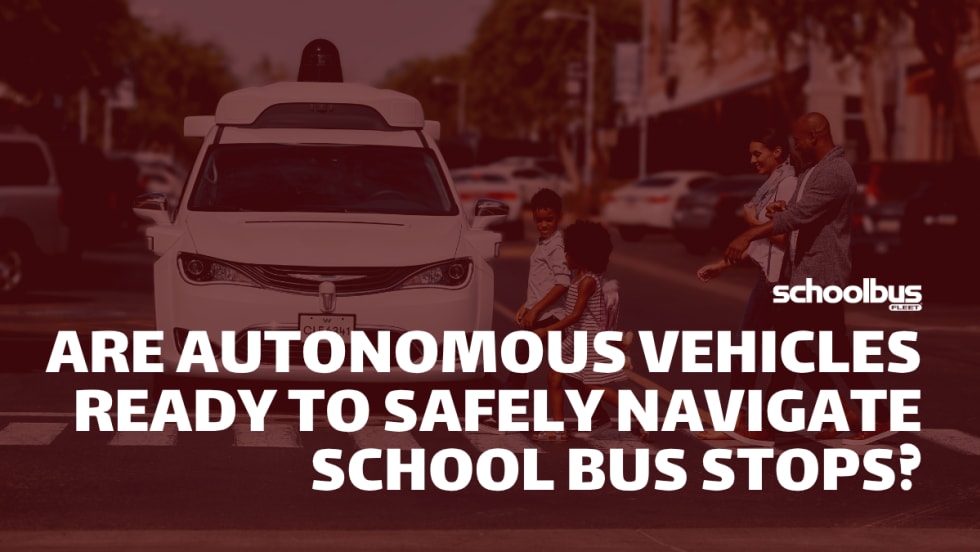
Are Autonomous Vehicles Ready to Safely Navigate School Bus Stops?
NHTSA is accelerating autonomous vehicle deployment through new safety standards and commercial approvals. See why school transportation leaders are watching.
Read More →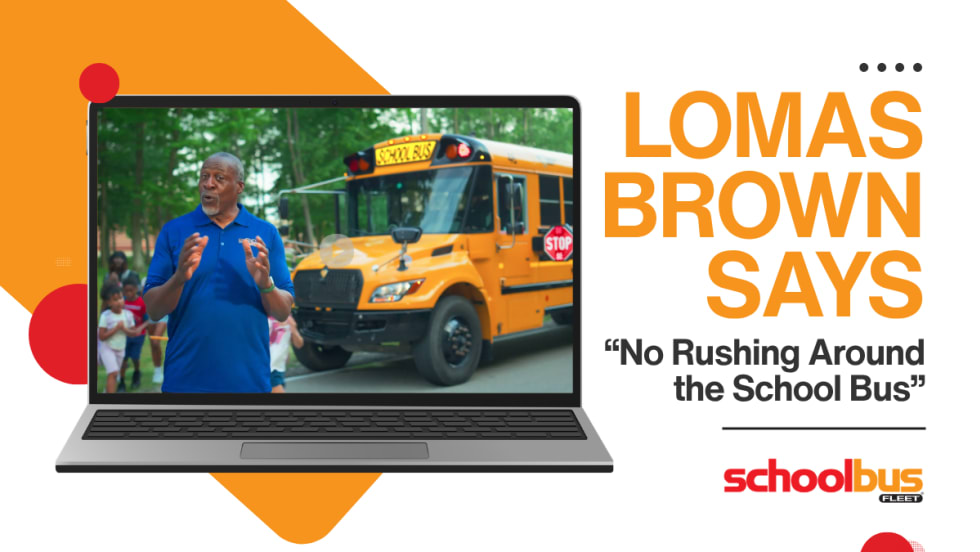
NFL Star Lomas Brown Kicks Off New Illegal School Bus Passing PSA
Just in time for the back-to-school season, the former Detroit Lions offensive tackle took time to record a video encouraging motorists to slow down around school buses.
Read More →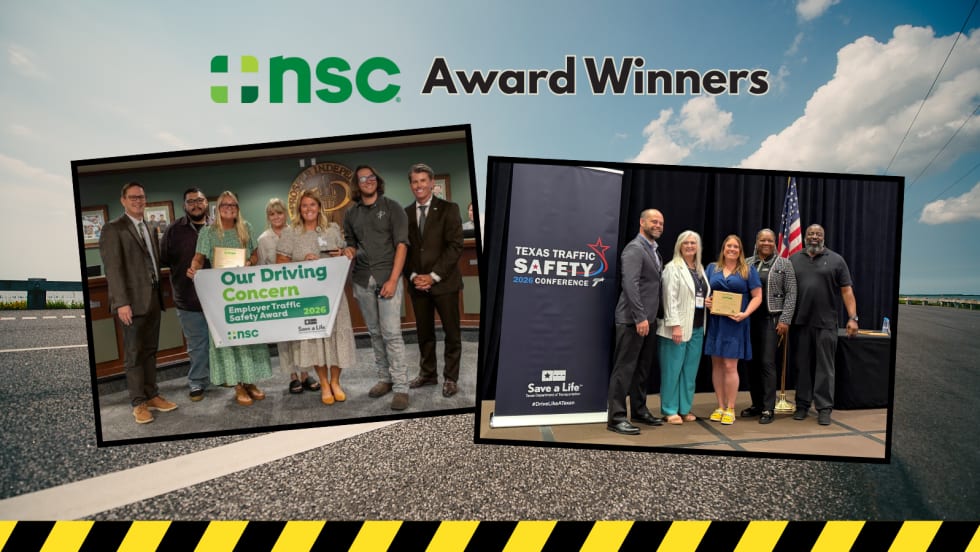
How Two Texas Districts Built Award-Winning Safety Programs
Learn how Prosper ISD and Rockwall ISD earned National Safety Council honors through hands-on training, safety culture, and strategies that reduced transportation incidents.
Read More →
NHTSA Releases 10-Year Review of Fatal School Bus Crashes
The latest federal analysis reinforces the safety of school buses while identifying where school-age pedestrians and other motorists remain most at risk.
Read More →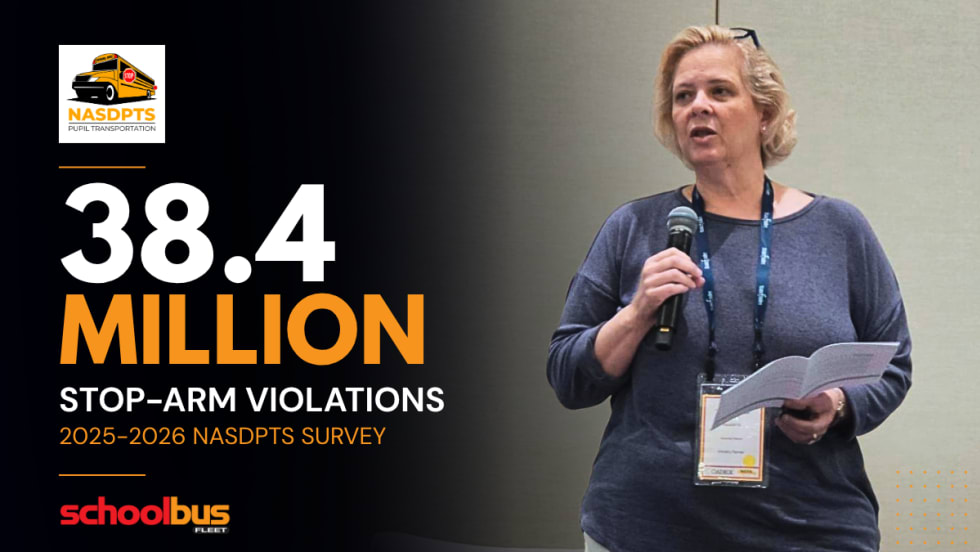
2026 NASDPTS Survey: Data Shows Further Reduction of Illegal Passing
New data is in! School bus stop-arm passings are down to 38.4 million violations per year, about a 2.3% decrease from last school year — but passings on the right side of the bus are higher than ever.
Read More →
Another School Bus Fatality Reported in Monsey, New York
A 7-year-old girl died after being struck by a school bus in Rockland County, New York while crossing the street. Here's what we know.
Read More →