




The debate on traffic monitoring systems
Any drivers who are worried about being photographed and fined, whether at a traffic light or next to a school bus, should shift their focus to following the laws.
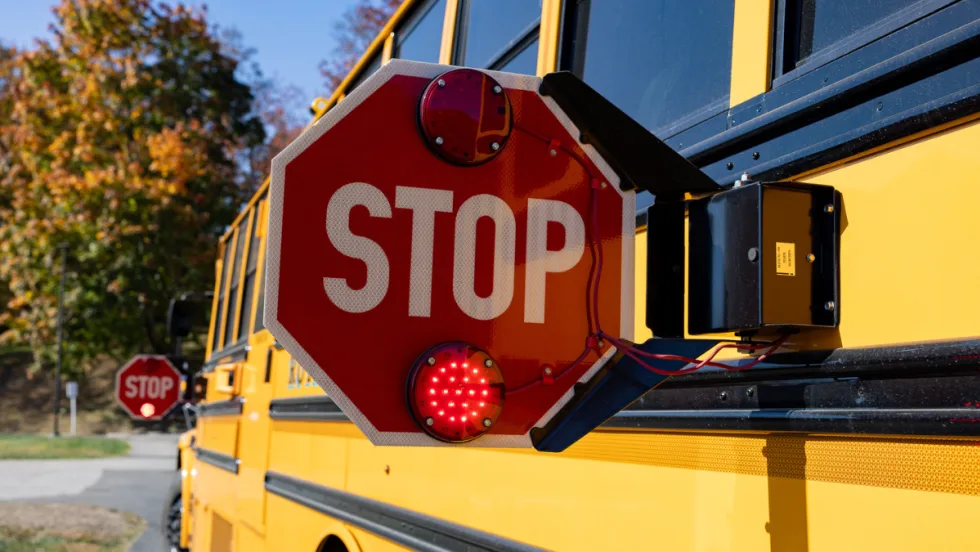
In the long-running battle against the illegal passing of school buses, one of the more recent developments is the use of cameras to catch violators.
These types of surveillance systems — which are typically mounted on the outside of the bus near the stop arm — have been around for several years now, but some states haven’t approved their use. However, this year there has been a wave of legislation in support of exterior school bus cameras.
In Connecticut, a law change that went into effect in July lets video surveillance footage be used against motorists who illegally pass stopped school buses.
The amended law requires that warning signs are posted on buses equipped with surveillance systems to catch the stop-arm violations. An image that clearly shows the license plate number of a passing vehicle is considered sufficient proof of the identity of the vehicle.
In Virginia, legislation that became effective in July authorizes localities to allow local school divisions to install surveillance systems on their buses to detect drivers passing illegally.
In New York, the state Assembly passed a bill that would approve the use of photographic evidence to prosecute illegal passers. That bill and other pieces of state legislation that have been introduced this year aim to crack down on stop-arm running in various ways, including raising penalties.
The New York Association for Pupil Transportation has run demonstration projects using a related type of technology: a digital license reader. The association says that the results supported its estimate that there are more than 50,000 instances of illegal school bus passing in the state every school day.
Stop-arm surveillance systems certainly show potential in catching and deterring these dangerous violations. But as the cameras’ use becomes more widespread and draws more attention, might they be faced with public resistance and legal challenges?
That notion came to mind upon hearing of the Los Angeles City Council’s debate on whether to end the city’s contentious red-light camera program, which has units installed on 32 traffic signals.
As of our press time, the Los Angeles Times had reported that the council was deadlocked, with the deliberations expected to continue for weeks.
Yet a new survey from the Insurance Institute for Highway Safety indicates that two-thirds of drivers in 14 big cities with longstanding red-light camera programs support their use. That finding follows a study by the institute that found that these cameras have reduced the rate of fatal red-light running crashes by 24 percent in these same cities.
Similarly, new research from the University of Missouri confronts the claims of many drivers that city governments install automated traffic monitoring systems as a way to generate revenue. According to the researchers, the safety benefits of the systems (school bus cameras were not part of the study) “far outweigh the potential for abuse.”
Any drivers who are worried about being photographed and fined, whether at a traffic light or next to a school bus, should shift their focus to following the laws. Then they can smile for the cameras — they have nothing to worry about.
More Safety
Illegal School Bus Passing Drops 24% in New York Districts
With fewer than 5% of citations involving repeat offenders, Westchester County officials said enforcement, education, and community partnerships are helping change driver behavior.
Read More →
School's Back. Here's What Happened to Traffic, Speeding & Distraction
What happens to traffic when school resumes? New data analysis examines changes in distracted driving, congestion, and speeding around schools.
Read More →
Geotab Expands Fleet Safety Tools With Video Coaching, Risk Insights
New safety and video capabilities aim to help fleet managers assess risk, support drivers, and take targeted action through video coaching, red-light violation detection, and more.
Read More →

How to Build a Better School Bus Driver Training Program
Is it time to strengthen your driver training? Here’s how to pick the right talent and improve recruitment, retention, and safety. This video is brought to you by IC Bus.
Read More →
Recent School Bus Accidents Leave 2 Dead, 2 Injured
Four school bus crashes in Florida, Illinois, and Georgia highlight risks in transportation lots, at bus stops, and during student loading and unloading.
Read More →
When Every Second Matters, Clarity Keeps Routes Moving
From routine delays to urgent incidents, strong communication practices help drivers, dispatchers, schools, and families respond with confidence.
Read More →
What Happens When a School Bus Catches Fire — and What Can Help
School bus fires are rare but can be devastating. Learn how advances in fire suppression and asset protection help fleets detect fires earlier, reduce damage, and improve safety.
Read More →
Geotab Launches Tool to Help Fleets Investigate Road Incidents
Geotab Investigations combines telematics data, video, documents, and other evidence to help fleets reconstruct incidents, resolve claims, and determine what happened.
Read More →
Texas Sixth Grader Wins 2026 National School Bus Safety Poster Contest
Sai Darshana Yekolu of Moseley Middle School in Prosper, Texas, was named the newest winner for her artwork, bringing the theme of “Safe Rides, Everyday Heroes” to life.
Read More →
Doing More With Less: How Transportation Directors Can Prioritize Safety Amid Budget Uncertainty
With diesel prices soaring and nearly one-third of transportation directors expecting budget cuts, maintaining student safety has never been more challenging. Download this guide to learn how leading districts are prioritizing risk, funding critical safety technology, and building stronger budget cases with data.
Read More →