




The Case for Audio Monitoring on School Buses
Audio monitoring can help deter and resolve verbal conflicts, bullying accusations and general bad behavior. But privacy concerns must be addressed.
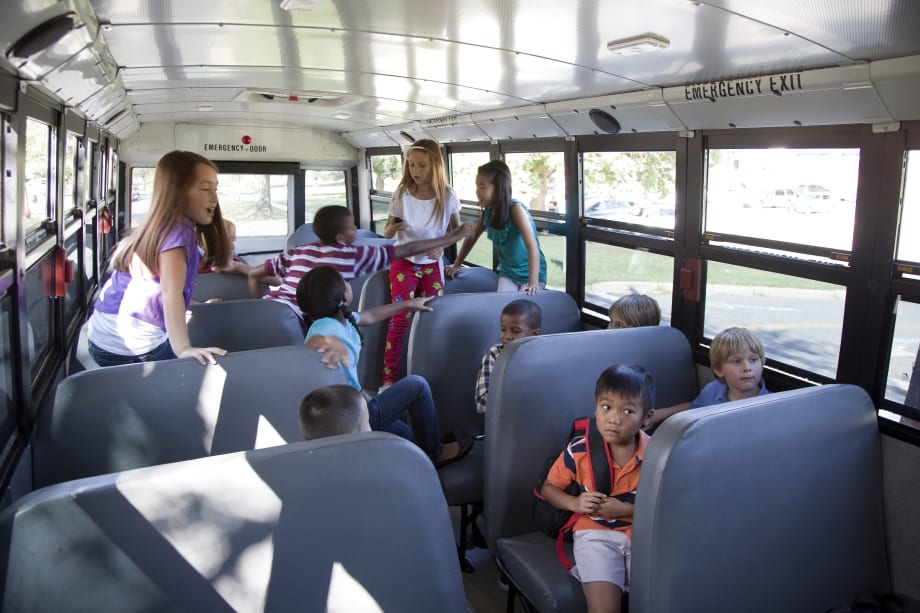
Photo courtesy NHTSA
Concern about school safety is at an all-time high, in all corners of the country, and with good reason.
Recent events have sadly shown that schools are among the most vulnerable organizations when it comes to security breaches. Thus, it is imperative that more schools adopt a proactive stance and take steps toward enhancing the security and safety of students.
One method of achieving this goal for school buses is to leverage two complementary technologies simultaneously: audio and video surveillance. Some may feel that using cameras on school buses would be enough to monitor students and provide safety, but visuals alone only capture partial information.
When there is a physical altercation, video might identify the guilty person, but what if a verbal assault is taking place, with no physical contact? Video by itself simply would not yield sufficient evidence of what happened and who was at fault.
It makes little sense to cut off one of our most valuable senses when sophisticated technologies for both video and audio recording are so affordable and readily available.
Audio as a protection tool
Audio monitoring can serve an important role to deter and resolve verbal conflicts, disagreements, bullying accusations and general bad behavior.
There are two main benefits in this regard:
• Deterrence: Potential bullies are more likely to think twice before launching a verbal assault on a classmate on the bus if they know that their words are being monitored; similarly, potential theft may be avoided as well.
• Resolution: If a student does verbally harass their peer, audio monitoring will capture what the person said and can be used as evidence for disciplinary or criminal action; in addition, dispute resolution in non-bullying situations (e.g., heated arguments, accusations of stealing, name calling) would also be easier to achieve.
Balancing security with privacy, cost
Using surveillance systems on school buses is not a cut and dry issue. Safety concerns for students and bus drivers must be weighed against every citizen’s right to privacy.
One case that illustrates this involves Boston’s school system. On July 21, 2014, The Boston Globe reported that Boston Public Schools would equip all of its buses with cameras — as well as microphones — to help officials better investigate reports of bullying, other disciplinary issues and traffic accidents.
The transportation director said that the district wanted more data in order to respond more rapidly to incidents and keep students and employees safe. The Anti-Defamation League, which works to decrease school bullying, agreed with the implementation of school bus monitoring systems, calling the cameras a useful tool to investigate cases of bullying, especially those that are complicated to resolve.
Boston school officials told The Boston Globe that their school system transports more than 30,000 students a day, and in one school year drivers wrote up about 5,600 incident reports documenting bad behavior by students, such as swearing, refusing to stay seated, throwing items out the window, vandalizing property or bothering others. The hope is that the presence of cameras might reduce some of that misconduct.
Other groups, such as the American Civil Liberties Union, have expressed apprehension toward the sound equipment. Their primary concern is on whether implementing the audio monitoring component would be too much of an invasion of privacy.
For the record, it is illegal to monitor in situations where privacy is promised and consent from the required involved parties is not obtained. The law actually states that audio recording is permitted when there is no expectation of privacy, such as in a public place that has clearly visible signs that say the area is under surveillance.
It is only in those circumstances that audio can be effective as a preventive tool to deter bad behavior or resolve verbal conflict. In other words, when audio is used correctly, privacy is not lost; there is only an extra sense of security and safety that is gained.
Boston Public Schools is currently using cameras that have audio recording capability. The audio has not been activated. If officials and community leaders come to an agreement and develop a policy on using audio, the sound equipment will be turned on. Many thought leaders continue to voice their opinion on the issue.
The case study brings up a fundamental question: When does the need for a school bus audio monitoring program outweigh concerns about privacy and cost? The answer seems related to the case of airport security; when there are no recent cases of damage or loss of life, the voices for reducing privacy-invading security measures get louder — but once a horrific incident happens, the balance shifts the other way.
Perhaps one answer in the school bus domain is to gather more data. More studies will hopefully lead to additional evidence of how audio monitoring systems decrease negative student behaviors across several cities’ school systems. Moreover, educating people on the dos and don’ts of audio monitoring as well as best practices for recording is crucial.
[PAGEBREAK]

Richard Brent
Shift in attitude on audio recording
In the past couple of years, there has been a shift in mood regarding audio monitoring. We already discussed the case of Boston Public Schools deploying cameras with microphones on their school buses. Another example involves Pennsylvania, which sanctioned the use of audio monitoring on school buses, officially recognizing the value of audio.
In early 2014, the governor of Pennsylvania approved legislation permitting audio recording to be employed on school buses. Under this bill, school boards have to vote on a local policy outlining audio recording rules, send parents written notices at the beginning of each school year about audio bus recordings, and post signs on buses alerting students of audio recording.
The Pennsylvania School Bus Association expressed support for the bill, saying that it “will be a step closer towards a safer school bus environment.” In addition, officials noted another benefit for school bus operations: the ability to use audio taping under certain circumstances “without fear of criminal or civil penalties.”
Conclusion
Schools throughout the U.S. can benefit from using both video and audio monitoring in order to achieve optimal safety and security for students. In today’s environment, institutions of learning simply must leverage the most state-of-the-art security technologies — especially those such as audio monitoring systems that have already been in extensive use and have demonstrated their efficacy.
The area that seems most likely to be positively affected by school bus audio monitoring is the deterrence and resolution of bullying incidents. As the Pennsylvania School Bus Association said, “In this day and age where bullying is very prevalent in and out of school, having all the resources available to control behavior and resolve issues will help ensure a safe ride for students. When schools and contractors have the use of audio in conjunction with the video, discipline issues will be resolved faster and with more certainty.”
In summary, the implementation of audio monitoring on school buses is one of the most beneficial technologies for enhancing student security and safety. Its deployment can serve as an important step toward the nationwide goal of increasing school security, in all areas of student life.
Richard Brent is CEO of Louroe Electronics, a manufacturer of audio monitoring technology. For more information, go towww.louroe.com.
More Safety

2 Killed, Dozens Injured in Florida School Bus Crash
A multi-vehicle collision caused a Polk County school bus carrying 37 students to overturn on its way to Winter Haven High School.
Read More →
Illegal School Bus Passing Drops 24% in New York Districts
With fewer than 5% of citations involving repeat offenders, Westchester County officials said enforcement, education, and community partnerships are helping change driver behavior.
Read More →
School's Back. Here's What Happened to Traffic, Speeding & Distraction
What happens to traffic when school resumes? New data analysis examines changes in distracted driving, congestion, and speeding around schools.
Read More →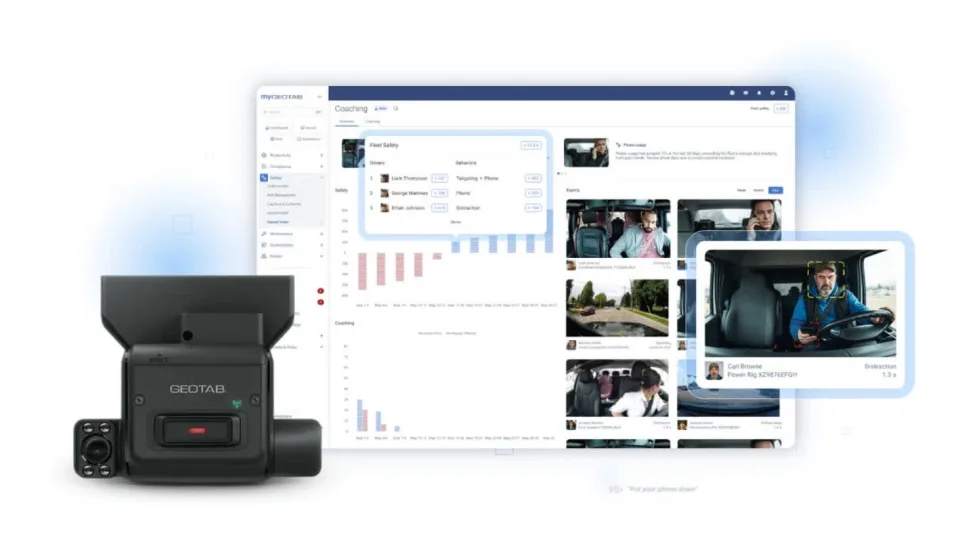
Geotab Expands Fleet Safety Tools With Video Coaching, Risk Insights
New safety and video capabilities aim to help fleet managers assess risk, support drivers, and take targeted action through video coaching, red-light violation detection, and more.
Read More →
How to Build a Better School Bus Driver Training Program
Is it time to strengthen your driver training? Here’s how to pick the right talent and improve recruitment, retention, and safety. This video is brought to you by IC Bus.
Read More →
Recent School Bus Accidents Leave 2 Dead, 2 Injured
Four school bus crashes in Florida, Illinois, and Georgia highlight risks in transportation lots, at bus stops, and during student loading and unloading.
Read More →
When Every Second Matters, Clarity Keeps Routes Moving
From routine delays to urgent incidents, strong communication practices help drivers, dispatchers, schools, and families respond with confidence.
Read More →
What Happens When a School Bus Catches Fire — and What Can Help
School bus fires are rare but can be devastating. Learn how advances in fire suppression and asset protection help fleets detect fires earlier, reduce damage, and improve safety.
Read More →
Geotab Launches Tool to Help Fleets Investigate Road Incidents
Geotab Investigations combines telematics data, video, documents, and other evidence to help fleets reconstruct incidents, resolve claims, and determine what happened.
Read More →
Texas Sixth Grader Wins 2026 National School Bus Safety Poster Contest
Sai Darshana Yekolu of Moseley Middle School in Prosper, Texas, was named the newest winner for her artwork, bringing the theme of “Safe Rides, Everyday Heroes” to life.
Read More →