




Tackling non-conforming vans requires concern — and action
Perhaps the question should be: Why have not the leaders in pupil transportation raised the volume on this issue to the same decibel level that has been done with the issue of seat belts vs. compartmentalization?
“State Directors Tab Safety Issues as Top Concerns”(February 1999) provides insightful reading in many respects. The article summarizes responses of brief reports submitted by state directors regarding new materials, new programs, legislation, court rulings, concerns, etc., from their perspectives. Sometimes it is good to know that varied activities are underway to provide safer rides for our nation’s children. For the efforts of state departments and the untold number of creative school district employees, we should be very proud. For the candid responses of the state directors who took the time to respond, we should be appreciative. Thirty-one states were cited in the article — enough of a sampling to raise antenna to more than just “the good things” that may be prevalent in the pupil transportation industry. Take the issue of seat belts, for example. Six states listed belts as a “major issue”: California and Texas (No. 1), Pennsylvania (No. 2), Mississippi (No. 3), Connecticut (No. 4) and Kansas (No. 5). There may be many reasons for the relatively few inclusions of seat belts and for the somewhat low ranking when it was included. Many state directors may believe that adequate ink has already been expended on that topic; they may be waiting for the outcome of federal testing; their states may be between legislative sessions and they do not intend to kick a “sleeping dog”; or for other reasons “seat belts” was not listed as a concern. But we all know that this is still a hot issue. Van concerns top list
A concern that did receive a great deal of attention — in fact, more than any other topic — is “non-conforming vans.” Nearly one-half (14, or 45.2 percent) of the responses listed non-conforming vans as a major issue of concern, with 64.3 percent (9) of those responses listing non-conforming vans as No. 1 or No. 2. Three other states might be included in the tally, as well: Florida — “use of multipurpose passenger vehicles (MPVs) and passenger cars”; Missouri — “use of non-school bus vehicles;” and South Dakota — “some progress has been made in discouraging use of non-conforming vans.” The fact that more than 50 percent of the respondents referred to non-conforming vans in one manner or another is enough to catch the attention of any reader. But does that change the reader’s emotion from one of interest to a feeling of “wonder” or “amazement”? Perhaps the question should be: Why have not the leaders in pupil transportation raised the volume on this issue to the same decibel level that has been done with the issue of seat belts vs. compartmentalization?
NAPT, NASDPTS offer support
A positive step was taken by the National Association for Pupil Transportation (NAPT) and by the National Association of State Directors of Pupil Transportation Services (NASDPTS) when a joint resolution was adopted at the annual NAPT conference on Nov. 5, 1998. This resolution placed the support of the two organizations behind federal, state and local legislation designed “ …to eliminate the transportation of children to their educational programs using vehicles that do not meet school bus Federal Motor Vehicle Safety Standards.”
But where do we go from here?
The federal government and the various state governments must be deluged with requests to go beyond the law that does not address the sale of used non-compliant vans, nor their use by “schools,” but rather that holds vendors of new vans, alone, accountable when the vans are sold for the purpose of transporting students to and from school and school-related activities. Could anyone conceive of the notion that federal and state laws regulate the initial sale of illegal drugs, but not their resale nor to the use of the product? Laughable? Of course; but logically, how would that not be identical to the issue of non-compliant vans? If the reason for a mass assault on the issue of non-conforming vans is cost of transition, that cannot be a factor greater than the worth of the passengers we are obligated to protect. If it is anything else, what possibly could be a reason that would justify reticence on this issue?
Push until a door opens
Is it the notion that NHTSA has no authority beyond the manufacture and initial sale of non-conforming vans? Then, perhaps another avenue through Congress is necessary. Give up at the federal level? Try state assemblies and legislatures. No luck there? Time for local school districts to step up and develop regulatory policies. For the safety of our passengers, we cannot afford to stand by and say, “Somebody needs to do something about this.” Each of us is a “somebody.” Now is the time for the pupil transportation industry in whole and in part to convert concerns into a plan of action, amassing all resources at our disposal to storm the bastions of government in an attempt to change present laws. We need to develop and support resolutions calling on the U.S. Department of Transportation to ask Congress to take the law to the next level: to outlaw resale of non-compliant vans and the use of non-compliant vans by schools for the purpose of transporting children to and from school and school-related activities. Once the die is cast and the bill has been filed, the industry will have to wage a major effort to back its passage. We have done it on other issues; why not on non-conforming vans?
George Horne is southeast regional manager for the Pupil Transportation Safety Institute in Syracuse, N.Y. He is based in Metairie, La.
More Safety
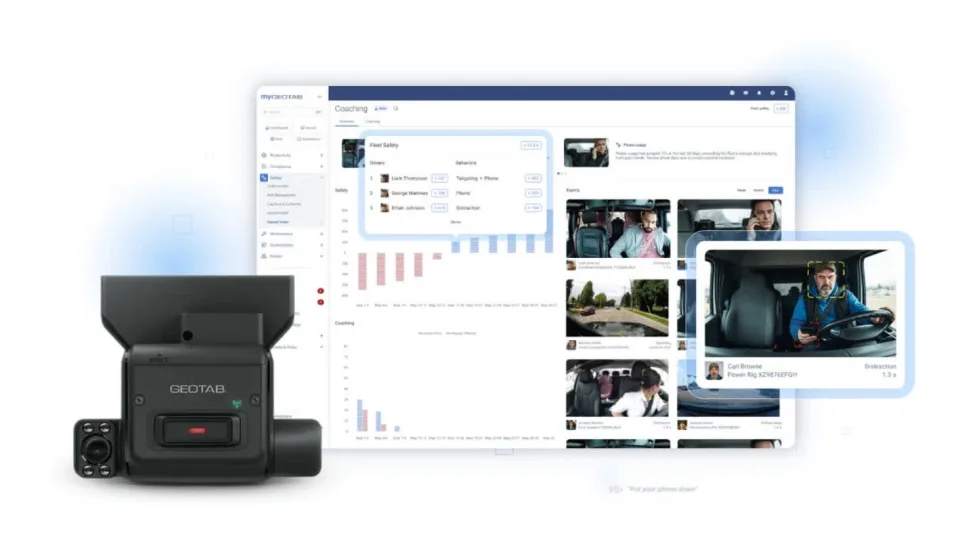
Geotab Expands Fleet Safety Tools With Video Coaching, Risk Insights
New safety and video capabilities aim to help fleet managers assess risk, support drivers, and take targeted action through video coaching, red-light violation detection, and more.
Read More →
How to Build a Better School Bus Driver Training Program
Is it time to strengthen your driver training? Here’s how to pick the right talent and improve recruitment, retention, and safety. This video is brought to you by IC Bus.
Read More →
Recent School Bus Accidents Leave 2 Dead, 2 Injured
Four school bus crashes in Florida, Illinois, and Georgia highlight risks in transportation lots, at bus stops, and during student loading and unloading.
Read More →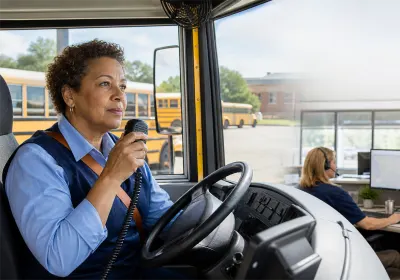

When Every Second Matters, Clarity Keeps Routes Moving
From routine delays to urgent incidents, strong communication practices help drivers, dispatchers, schools, and families respond with confidence.
Read More →
What Happens When a School Bus Catches Fire — and What Can Help
School bus fires are rare but can be devastating. Learn how advances in fire suppression and asset protection help fleets detect fires earlier, reduce damage, and improve safety.
Read More →
Geotab Launches Tool to Help Fleets Investigate Road Incidents
Geotab Investigations combines telematics data, video, documents, and other evidence to help fleets reconstruct incidents, resolve claims, and determine what happened.
Read More →
Texas Sixth Grader Wins 2026 National School Bus Safety Poster Contest
Sai Darshana Yekolu of Moseley Middle School in Prosper, Texas, was named the newest winner for her artwork, bringing the theme of “Safe Rides, Everyday Heroes” to life.
Read More →
Doing More With Less: How Transportation Directors Can Prioritize Safety Amid Budget Uncertainty
With diesel prices soaring and nearly one-third of transportation directors expecting budget cuts, maintaining student safety has never been more challenging. Download this guide to learn how leading districts are prioritizing risk, funding critical safety technology, and building stronger budget cases with data.
Read More →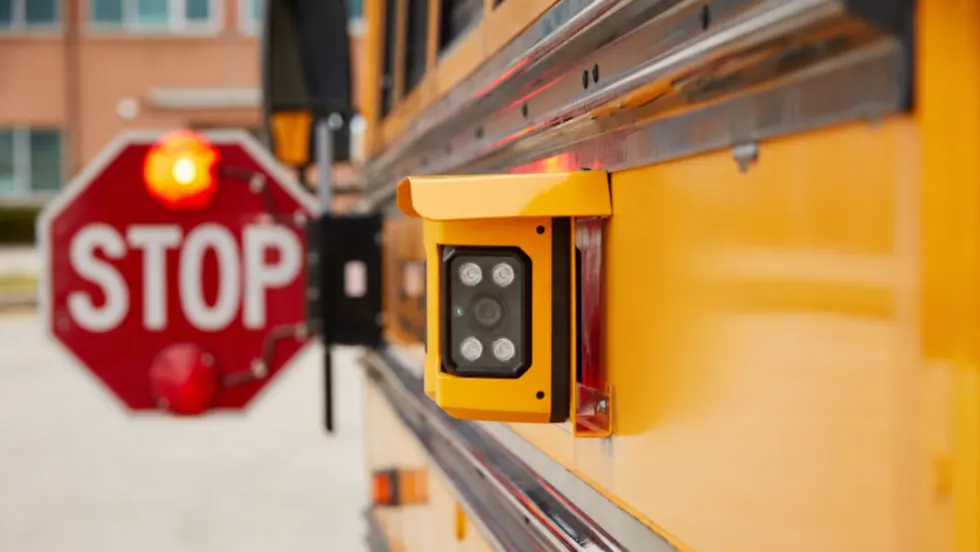
Walton County Schools Adds Gatekeeper Stop-Arm Enforcement System
The Florida district will deploy Gatekeeper’s updated Student Protector technology, which now incorporates AI to improve video evidence.
Read More →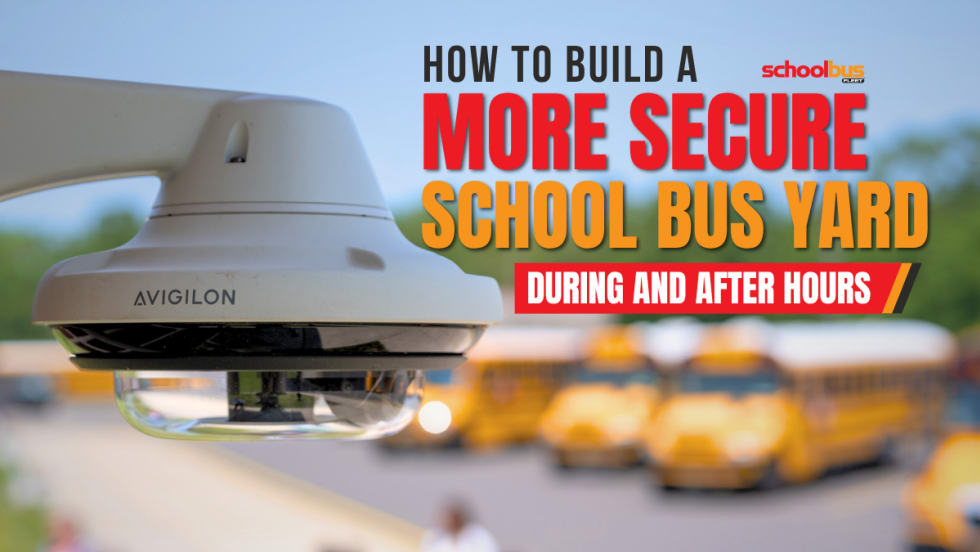
How To Build a More Secure School Bus Yard During and After Hours
As thefts and overnight security threats continue, school transportation leaders are combining stronger operational practices with AI-enabled surveillance to better protect buses, facilities, and staff.
Read More →