




Stats show steady growth in contracted school buses
Data collected by SBF over the past six consecutive years show increases in the proportion of contractor buses being used, from one-quarter in 2007-08 to one-third in 2012-13.

James Blue is general manager of School Bus Fleet.
In lean years for education funding — which is starting to seem like every year — school districts typically look for ways to run an even tighter ship.
When it comes to budget cuts, transportation is often a target. But innovative directors have often found ways to cut costs without sacrificing bus service.
For example, some districts have saved millions of dollars per year by restructuring their school bell times. With buses serving schools on a multi-tiered system, more students can be transported with fewer buses.
There are many other ways to increase transportation efficiency, and thereby reduce expenses. But for some districts, it may seem that they’ve already implemented all options for optimizing efficiency.
Many districts have had success in reducing transportation costs by contracting out some or all of their school bus service. On the other hand, many other districts will tell you that they can run a more cost-effective operation in-house.
I’m not here to tell you whether outsourcing school bus service is a good fit for your district. But I will suggest that this option appears to have been utilized by a growing number of districts. And I have data to back up that assertion.
In our January 2012 issue (pg. 60), we ran an editorial that showed growth in the outsourcing of school busing. So what has happened in the three years since then?
First, some background information: Each year, SBF collects U.S. school transportation data (see pg. 29 in our 2015 Fact Book), which breaks down most states’ school buses by how many are owned by districts, contractors or the state.
With this data, we can get an estimate of the proportion of school buses in the nation that are contractor owned, and we can compare it to previous years.
Here’s what we found in our previous editorial:
• 2007-08 school year: 25.6% contractor buses
• 2008-09: 26.9% contractor buses
• 2009-10: 28.1% contractor buses
Now, we’ve done the same calculations for the data we’ve compiled in the years since that editorial. Here’s what we found:
• 2010-11 school year: 28.3% contractor buses
• 2011-12: 30.0% contractor buses
• 2012-13: 34.7% contractor buses
Keep in mind that these are estimates, and they only take into account the school buses that states were able to categorize as district, contractor or state owned (some states can’t give us that breakdown). However, these percentages are useful in making year-to-year comparisons, and now they’ve shown increases in the proportion of contractor buses for six consecutive years.
Here’s some corroborating evidence: In our previous editorial on this topic, we cited the Mackinac Center for Public Policy’s 2011 Michigan School Privatization Survey, which found that 12.2% of districts in the state were using privatized bus service. That was nearly triple the 2006 rate of 4.4%.
Now, the Mackinac Center’s 2014 survey shows that 24% of Michigan districts contract out for transportation services.
Again, whether outsourcing is the best fit for any given district is a question that should be explored locally. But the numbers continue to suggest that more districts are embracing the contracting option.
More Safety
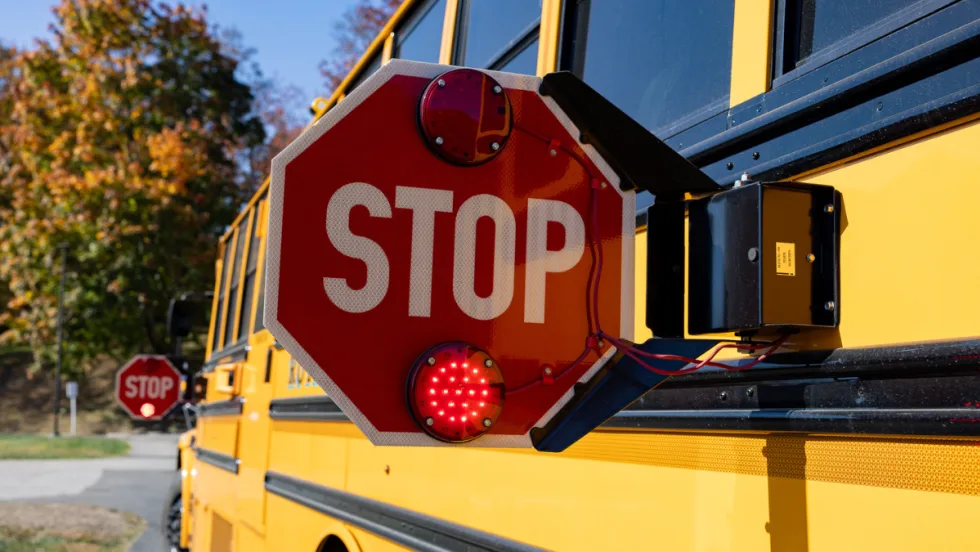
Illegal School Bus Passing Drops 24% in New York Districts
With fewer than 5% of citations involving repeat offenders, Westchester County officials said enforcement, education, and community partnerships are helping change driver behavior.
Read More →
School's Back. Here's What Happened to Traffic, Speeding & Distraction
What happens to traffic when school resumes? New data analysis examines changes in distracted driving, congestion, and speeding around schools.
Read More →
Geotab Expands Fleet Safety Tools With Video Coaching, Risk Insights
New safety and video capabilities aim to help fleet managers assess risk, support drivers, and take targeted action through video coaching, red-light violation detection, and more.
Read More →

How to Build a Better School Bus Driver Training Program
Is it time to strengthen your driver training? Here’s how to pick the right talent and improve recruitment, retention, and safety. This video is brought to you by IC Bus.
Read More →
Recent School Bus Accidents Leave 2 Dead, 2 Injured
Four school bus crashes in Florida, Illinois, and Georgia highlight risks in transportation lots, at bus stops, and during student loading and unloading.
Read More →
When Every Second Matters, Clarity Keeps Routes Moving
From routine delays to urgent incidents, strong communication practices help drivers, dispatchers, schools, and families respond with confidence.
Read More →
What Happens When a School Bus Catches Fire — and What Can Help
School bus fires are rare but can be devastating. Learn how advances in fire suppression and asset protection help fleets detect fires earlier, reduce damage, and improve safety.
Read More →
Geotab Launches Tool to Help Fleets Investigate Road Incidents
Geotab Investigations combines telematics data, video, documents, and other evidence to help fleets reconstruct incidents, resolve claims, and determine what happened.
Read More →
Texas Sixth Grader Wins 2026 National School Bus Safety Poster Contest
Sai Darshana Yekolu of Moseley Middle School in Prosper, Texas, was named the newest winner for her artwork, bringing the theme of “Safe Rides, Everyday Heroes” to life.
Read More →
Doing More With Less: How Transportation Directors Can Prioritize Safety Amid Budget Uncertainty
With diesel prices soaring and nearly one-third of transportation directors expecting budget cuts, maintaining student safety has never been more challenging. Download this guide to learn how leading districts are prioritizing risk, funding critical safety technology, and building stronger budget cases with data.
Read More →