




Selling Safety to Your Community
Earlier this year, a school bus and a large trash truck collided in the Washington, D.C., area, killing two elementary school children and injuring se...
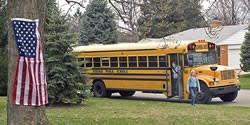
Earlier this year, a school bus and a large trash truck collided in the Washington, D.C., area, killing two elementary school children and injuring several others. The tragic crash brought to the public eye that age-old question about seat belts and school buses.
Although the crash is still under investigation, the damage to the bus was undeniably catastrophic. Any children seated in the area of impact and intrusion would likely not have survived the crash, whether or not they were wearing seat belts.
The local media had a wide range of reactions to the crash. Some were very responsible, sharing information about the success of compartmentalization and the incredible safety record of school buses. Others, however, reacted the way people often do to this type of event, with a rush to judgment about the need for seat belts. But, as one informed commentator stated, "Some crashes are just not survivable."
Fighting public opinion
Following the crash, one of the local news channels conducted a call-in survey. Nearly 90 percent of respondents said they were concerned about their children's safety on the school bus. Just as many answered yes to the question, "Should school buses have seat belts?" This is a strong indicator that we as transportation managers are doing something wrong.
"Why don't school buses have seat belts?" I delight in fielding this question, whether it's at a PTA meeting or in some other situation. But it can be difficult to defend this position when you're called to testify before your well-intentioned local legislature, whose members have already concluded that putting seat belts on school buses is the right thing to do based on what they know about automobiles.
Safety is top priority
Being a transportation manager is a tremendous responsibility. All of us who work in this industry — many of us for a considerable number of years — have the safety of the children we transport at the heart of every decision and action we take throughout our working day. We live and breathe safety in every phone call we answer, in every decision we make, in every conversation we have and in everything we do from budgets to buses. It is simply second nature for us.
Why, we wonder, would anyone question our motives? Why would anyone second-guess our decisions? And why would so many people in the general public believe school buses are unsafe without safety belts?
The answer is simple. We have not done a good job as transportation managers of spreading the word about our success.
{+PAGEBREAK+} Highway safety sells
Every day, the public is inundated with information about highway safety.
You can hardly turn on the evening news without seeing yet another crash test by the Insurance Institute for Highway Safety and hear how one model SUV outperforms another in one of its crash tests. The American public is now making car purchasing decisions based on crash-test performance.
Each time there is a car crash that involves teenagers, the media is on top of it. This is a vast change from the 1960s, when Lee Iacocca was building Pintos and saying, "Safety doesn't sell." Safety is now on the minds of people, and the auto industry is doing a great job of selling cars on a platform of information about safety.
The safety record of school buses is something all of us should be very proud of. Having worked in this industry for more than 30 years, I feel like I have played some important role in this accomplishment. The truth is, I am just one of the players who has benefited from the team's success, even though I never really got to handle the ball.
Ignorance is our fault
So why is it that people are so concerned about safety on school buses? Because no one tells them what they need to know to have an educated opinion.
Each of us in a local school system should do what we can to get this information out to the public. We should all study the information available on crash history and be well versed in the basic ideas and dynamics of compartmentalization. We should each have an area on our Websites that talks about why we don't have seat belts in school buses.
We should include it in mailings to our students and parents with school newsletters or bus schedules. We should have info spots on the local cable television channel or the school system's cable television, if available.
Let's tell our story
We should be proud of and brag about our success story. We should do what we can to educate the public about our accomplishments and give them confidence about the buses we transport our children in. And we should tell them what to tell their children so they don't get a confusing, mixed message about lap belts.
We should all be working with our public information officers to develop handouts and other materials to educate the public.
To help you tell the compelling story about the safety record of school buses and the role that compartmentalization has played in this success, I've prepared a historical and issue-oriented treatise on school bus safety that has been posted on the SBF Website. Click on "Resources," then "Miscellaneous Reports," then the title "The Facts About School Bus Safety."
This information resource discusses pre-1977 and post-1977 levels of safety in school buses, compartmentalization, lap belts, safety statistics, types of fatal crashes, three-point belt systems and school buses vs. airliners.
John Matthews is transportation director at Montgomery County Public Schools in Rockville, Md.
More Management

EverDriven Launches Route Consolidation Calculator to Estimate Diesel Savings
As diesel prices hit record highs, the largest alternative transportation provider says a 10% route consolidation could save a 120-route district more than $78,000 a year in fuel alone.
Read More →
Zum Secures Continued Financing Support for School Bus Expansion
Generate Private Credit has financed approximately $75 million in school bus deployments across three states, supporting more than 500 buses as Zum expands across the county.
Read More →
Beyond Discipline: A Different Approach to Student Behavior on the Bus
After implementing a dean of students program in Oregon, North Clackamas is seeing positive improvements. Here’s how it worked. The Route is brought to you by IC Bus.
Read More →
A Dean of Transportation's Different Approach to Student Behavior on the School Bus
After implementing a dean of students program in Oregon, North Clackamas is seeing positive improvements on the bus. Here’s how it worked.
Read More →
Inside NAPT ACTS 2026: Highlights from Louisville
From federal updates and student behavior strategies to new school bus technology and industry awards, see highlights from NAPT ACTS 2026 in Louisville.
Read More →
Meet the 2025 School Bus Driver Hero Winner: Annette Brown
We caught up with Wa-Nee Community Schools' Annette Brown on site at SBFX, where she was named the 2026 School Bus Driver Hero Award winner. Hear about her reaction, what she loves most about being a school bus driver, and more!
Read More →
Predictability Is Like Ketchup (According to 6-Year-Olds)
To students, a different school bus can feel like a full-blown crisis. One driver reflects on why familiar routines, showing up on time, and being reliably boring matter more than we think.
Read More →
Samsara Launches Free Driver Rewards Program
The new Driver Perks program gives eligible professional drivers access to discounts and offers without adding a cost for participating fleets.
Read More →
How Tax-Exempt Municipal Leases Can Help Finance School Buses
Let’s explore school bus financing options, including municipal leases, vendor payable accounts, and balloon payments, and how they can help stretch fleet budgets.
Read More →
Nominate Rising School Transportation Pros Under 40!
We’re searching for the next generation of leaders making an impact across the K-12 student transportation industry to recognize as SBF’s 2027 Trailblazers. Nominations are open now!
Read More →