




Seat belt or hospital bed
A school bus driver needs to be buckled in so he doesn't get thrown out of his seat, but there are some drivers out there who seem to be ignoring this message, as evidenced by the fatal Huntsville, Ala., bus crash in 2006. The driver was not wearing his seat belt.
I’ve dedicated this column on more than one occasion to making a case for lap-shoulder belts on school buses, and I’ve heard back from readers who have strong opinions on both sides of the fence.
Whether school buses should have seat belts for passengers is certainly a contentious issue, and it has been for decades. But I’ve never heard anyone argue that school bus drivers don’t need seat belts.
It seems like a no-brainer: A school bus driver needs to be buckled in so he doesn’t get thrown out of his seat. But there are some drivers out there who seem to be ignoring that clear message.
From time to time, we’ll come across a media report of a school bus crash in which the driver was unbelted and thus ejected from the vehicle. Then there’s the recently released National Transportation Safety Board (NTSB) report on the fatal Huntsville, Ala., school bus crash.
The report confirmed that the bus driver was not wearing his seat belt, although it didn’t indicate whether the accident could have been prevented if he had been wearing it. We checked in with several pupil transportation officials, and they had some strong words on the matter.
Reminders and penalties
Charlie Hood, president of the National Association of State Directors of Pupil Transportation Services and the state director in Florida, said that “the few school bus operators who don’t wear their belts, or don’t wear them properly, must be reminded that in a school bus environment in particular, the safety belt not only helps prevent crash injuries, it helps prevent crashes in the first place by keeping drivers in their seats and in control of the bus.”
Hood noted that after a crash, the driver’s condition is critical to his or her ability to help with evacuations and injured students.
Alabama state pupil transportation director Joe Lightsey said that the Huntsville crash points out “the continuing need for close monitoring of drivers to ensure that their seat belts are buckled, and that severe penalties should be imposed on those who fail to comply.”
Lightsey said that since 2008, all new school buses in Alabama have been required to have audible and visual warnings for drivers if their seat belts are not buckled.
Mike Martin, executive director of the National Association for Pupil Transportation, also pointed to the seat belt component of the NTSB report.
“Safety belt use by school bus drivers is critical to maintaining control of the bus under all operating conditions,” Martin said.
Excuses, excuses
The Kansas Department of Transportation has a great resource on its Website called “Reasons Why I Do Not Wear My Safety Belt” (go to www.ksdot.org and do a search for that title), which lists common excuses and then dismantles them.
Perhaps one of the most effective replies is to the complaint that seat belts are uncomfortable: “Safety belts are a lot more comfortable than a hospital bed.”
More Safety
School's Back. Here's What Happened to Traffic, Speeding & Distraction
What happens to traffic when school resumes? New data analysis examines changes in distracted driving, congestion, and speeding around schools.
Read More →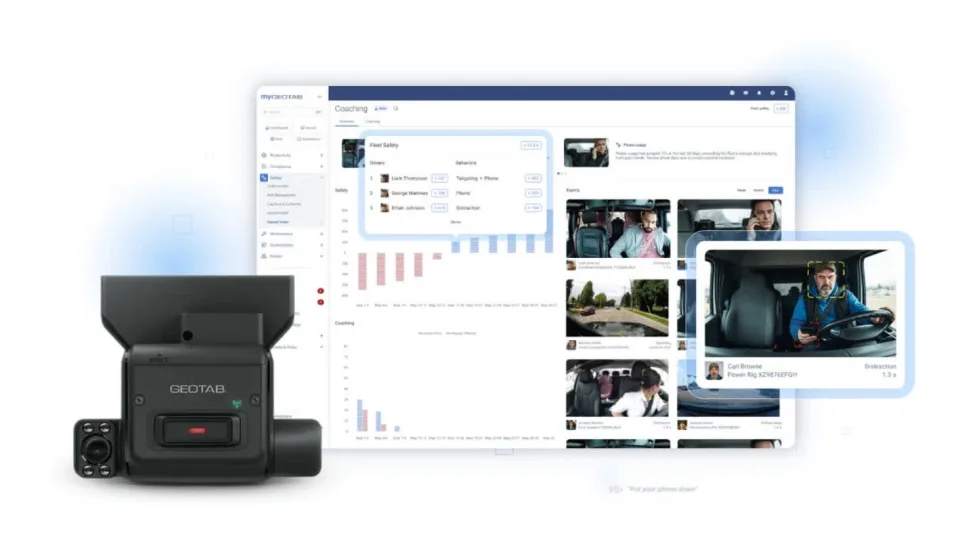
Geotab Expands Fleet Safety Tools With Video Coaching, Risk Insights
New safety and video capabilities aim to help fleet managers assess risk, support drivers, and take targeted action through video coaching, red-light violation detection, and more.
Read More →
How to Build a Better School Bus Driver Training Program
Is it time to strengthen your driver training? Here’s how to pick the right talent and improve recruitment, retention, and safety. This video is brought to you by IC Bus.
Read More →

Recent School Bus Accidents Leave 2 Dead, 2 Injured
Four school bus crashes in Florida, Illinois, and Georgia highlight risks in transportation lots, at bus stops, and during student loading and unloading.
Read More →
When Every Second Matters, Clarity Keeps Routes Moving
From routine delays to urgent incidents, strong communication practices help drivers, dispatchers, schools, and families respond with confidence.
Read More →
What Happens When a School Bus Catches Fire — and What Can Help
School bus fires are rare but can be devastating. Learn how advances in fire suppression and asset protection help fleets detect fires earlier, reduce damage, and improve safety.
Read More →
Geotab Launches Tool to Help Fleets Investigate Road Incidents
Geotab Investigations combines telematics data, video, documents, and other evidence to help fleets reconstruct incidents, resolve claims, and determine what happened.
Read More →
Texas Sixth Grader Wins 2026 National School Bus Safety Poster Contest
Sai Darshana Yekolu of Moseley Middle School in Prosper, Texas, was named the newest winner for her artwork, bringing the theme of “Safe Rides, Everyday Heroes” to life.
Read More →
Doing More With Less: How Transportation Directors Can Prioritize Safety Amid Budget Uncertainty
With diesel prices soaring and nearly one-third of transportation directors expecting budget cuts, maintaining student safety has never been more challenging. Download this guide to learn how leading districts are prioritizing risk, funding critical safety technology, and building stronger budget cases with data.
Read More →
Walton County Schools Adds Gatekeeper Stop-Arm Enforcement System
The Florida district will deploy Gatekeeper’s updated Student Protector technology, which now incorporates AI to improve video evidence.
Read More →