




Preventing Driver Fatigue Takes Commitment
Working long hours, driving long routes and sleep disorders can contribute to fatigue, but adhering to regulations on hours of service, offering training on sleep deprivation or sleep apnea, and consistent supervisor-driver communication will ensure that school bus drivers are in top form to transport students.

Our days are full of personal and professional commitments and responsibilities, creating many opportunities for us to become fatigued. School bus drivers must also juggle commitments and responsibilities, but their profession alone can be draining.
Dick Fischer, owner and president of Trans-Consult, says a contributing factor is the hours they work, citing that they are often on runs at 6 a.m. and then transport students for an athletic trip at night.
Depriving oneself of sleep by staying out late on weekends or having a second job can also contribute to fatigue.
Fischer learned about fatigue through NASA studies of pilots and astronauts. “It’s the hours awake that contribute to fatigue,” he says.
The studies showed that fatigue begins to accrue upon getting out of bed in the morning. “Between the ninth and eleventh hour of being awake, your brain is almost dead,” Fischer explains.
If a bus driver gets up at 6:30 a.m., these “brain dead” hours fall between 3:30 and 5:30 p.m., putting the driver, pedestrians, motorists and students at risk for injury.
The 2007-2008 National School Bus Loading and Unloading Survey indicates that 66.1 percent of danger zone fatalities over the years occurred on the trip home.
“The fatality rate is higher in the afternoon, during those ninth and eleventh hours, because people are fatigued,” Fischer emphasizes. “It ties together.”
Federal regulations
Given the dangers of driving fatigued, the Federal Motor Carrier Safety Administration (FMCSA) established regulations on the number of hours commercial motor vehicle (CMV) drivers are allowed to work.
Motor carriers may not permit or require their employees to drive a passenger-carrying CMV for more than 10 hours after eight consecutive hours off duty, or for any period after having been on duty (including activities other than driving) for 15 hours after eight consecutive off.
Moreover, they cannot permit or require a driver to work after having been on duty for 60 hours in seven consecutive days if the motor carrier does not operate vehicles every day of the week, or if the driver has been on duty 70 hours in any period of eight consecutive days if the motor carrier operates vehicles every day of the week.
Fatigue-related accidents, counteractive technologies
The National Transportation Safety Board (NTSB) drafted reports on two recent fatal crashes wherein fatigue was a factor.
In January 2008, a motorcoach traveling in Mexican Hat, Utah, ran off the road and fell into a drainage ditch.
The report states that the driver “suffered from a self-reported difficulty sleeping that resulted in a lack of adequate rest during each of the three nights before the accident.” NTSB also reports that the vehicle’s gradual departure from the road is consistent with crashes associated with fatigue.
Several counteractive technologies are outlined in the NTSB’s report of a crash in October 2005 wherein a motorcoach collided with an overturned truck-tractor semitrailer combination unit near Osseo, Wis. (It was determined that the combination unit overturned because the driver fell asleep at the wheel.)
The counteractive technologies are classified three ways:
1. Driver-based systems include a wrist device worn during the driver’s off-duty time that monitors his or her sleep/wake history and provides feedback regarding sleep needs and performance readiness.
Other technologies include video-based scoring of eye closure by trained observers, EEG (electroencephalograph) algorithms, a head tracker device and wearable eye blink monitors.
2. Vehicle-based counteractive measures include lane departure warning systems that monitor the road and the vehicle’s position within a lane. Steering position monitors have also been developed.
3. Environmental-based technologies include rumble strips and roadside rest areas.
The sleep apnea factor
Sleep apnea and obstructive sleep apnea (OSA) can also contribute to fatigue. (Sleep apnea is episodes of interrupted breathing while a person is asleep. With OSA, relaxation of muscles in the throat close off a person’s airway during sleep, and the individual wakes enough to take a gasping breath. This is repeated many times and results in daytime sleepiness.)
The NTSB believes the latter disorder played a role in the Mexican Hat, Utah, motorcoach crash. Its report states that the driver had previously been diagnosed with OSA and was prescribed a continuous positive airway pressure (CPAP) device to assist with sleeping. However, the driver did not use the device the first night and used it only sporadically the other two nights before the crash.
The FMCSA’s Medical Review Board (MRB) determined during a January 2008 meeting that OSA can affect a driver’s qualification to operate a CMV and issued guidelines on the disorder.
The guidelines direct medical examiners to use a CMV driver’s body mass index (BMI) as a screen for OSA during his or her physical examination. (BMI is a calculation of obesity based on a person’s height and weight.)
A driver with a BMI greater than or equal to 33 must undergo a sleep study evaluation. If diagnosed with OSA, an individual can receive certification to drive a CMV under certain conditions, such as not exhibiting daytime sleepiness and undergoing an effective treatment for OSA.
A person who meets the requirements can be recertified annually based on demonstrating compliance with OSA therapy.
For more information, visit http://www.mrb.fmcsa.dot.gov/documents/PPP/Expert_Pan_Rec_Sleep_Apnea_12508.pdf.
Some contractors offer sleep apnea training and programs for their drivers.
“We include information about sleep apnea as part of our pre-service training,” says Jim Brown of Rome, N.Y.-based Birnie Bus Service Inc.’s safety and training department.
Birnie Bus utilizes J.J. Keller & Associates Inc.’s “CMV Driver Basics for Entry-Level Training” program. Brown says it covers most of the federal requirements and also contains a sequence about fatigue and driving — what it looks and feels like, and what drivers will experience if they work while fatigued. Birnie Bus also regularly holds refresher courses on fatigue.
Additionally, Riteway Bus Service Inc. in Richfield, Wis., partnered with Sleep Apnea Solutions Inc. (SAS) last year to launch the voluntary Sleep Apnea Health & Safety program.
David Butcher, Riteway’s safety director, says drivers learn what sleep apnea is, its causes, its physical characteristics and treatment options.
Drivers then perform a sleep evaluation with SAS sleep specialists prior to completing a home test. If the test results indicate a high likelihood of sleep apnea, the driver is encouraged to start treatment.
Butcher says that the company has implemented the program for its motorcoach and limousine divisions, but has not yet done so for its school bus division.
Riteway offered the program to its motorcoach and limousine division employees first because those drivers are at a higher risk for sleep apnea since they are on the road longer, Butcher adds.
He says those drivers who shared their experience of participating in the program said they are “far more alert than they used to be.”
Supervisors and drivers share a responsibility
Pupil transportation officials offer useful suggestions for preventing driver fatigue.
Fischer encourages drivers to take a 10-minute nap before coming in to work in the afternoon or in between routes to regenerate their brains and bodies.
He also believes it is essential for an operation’s dispatcher to watch the drivers and talk to them when they come in during the week to look for signs that they might be too tired to drive.
“Managers have a responsibility to be attentive to what their drivers do off duty to make certain that they’re in a condition to drive safely,” Fischer adds.
Brown expresses a similar sentiment. He believes supervisors have a responsibility to watch how much they’re asking their drivers to do, but he also feels that drivers play a large part in this.
“Drivers have to tell their supervisor if they think they’re not right for a job,” Brown says. “They have to think, ‘Can I do this safely?’ and say ‘no’ when they’re tired or their hours are over.”
Communication is essential
Edd Hennerley, transportation director at Queen Creek (Ariz.) Unified School District (USD), shares Brown’s view on driver-supervisor communication.
“It’s a matter of treating people with respect so that they can come to you and say ‘I just can’t do it today,’” he says.
Hennerley’s drivers have told him in the past that they were up all night tending to their sick children and they’re too tired to drive in the morning.
“The people who work for me know that I’m not going to give them a hard time about those kinds of things,” he says.
Hennerley also monitors how many hours the drivers work so that they don’t go over the state’s regulations. (Drivers in Arizona can’t be on duty for more than 10 hours in a 15-hour period.)
Lennie Goff, transportation director at Messalonskee School Administrative District 47 in Oakland, Maine, stresses the importance of bus driver-student interaction.
“If you don’t have a real interest in something, fatigue will set in — this relates to anything,” Goff reasons. “Communication between drivers and students is very important. It shouldn’t be to the point where it’s distracting [while they’re driving], but it will help keep them alert.”
Plan long trips carefully
School bus drivers’ long routes for field and athletic trips create an opportunity for fatigue to set in. For this reason, Louk Markham, transportation manager at Portage (Mich.) Public Schools, has changed the department’s practices on assigning trips.
Previously, drivers would come in to work the day after transporting students on an overnight trip, but Markham no longer permits this.
“We’ll have one driver take the students out, then return [to the office] and go off the clock, and another employee comes in to pick up the students,” he explains.
In another practice, the organization sponsoring an overnight function is obligated to provide a hotel room for the driver and eight consecutive hours of off-duty time between assignments. Markham says that the customers can choose which approach they want the driver to use.
Goff is also attentive to his drivers’ routes. At the beginning of the year, he reviews the length of each trip and the itineraries to make certain that there are enough breaks for the drivers to stop, get out of the bus and walk around.
“Probably the biggest issue I have with fatigue is when my buses go out of state,” Goff says. “I always make it clear to the [people] turning in the requests for these trips that if the driver decides that he or she needs to pull over and rest, they pull over.”
For these trips, drivers work for three and a half hours, take a break for a couple of hours, then drive for another hour, etc.
“If trips went much beyond 16 or 18 hours, I would definitely contemplate putting two drivers on the bus so that they could switch off with driving,” Goff says.
At Queen Creek USD, Hennerley often assigns two drivers to a bus if they have to transport students for an especially long trip. When the drivers stop every three to four hours for a tire check, they switch.
The department is also in the process of renovating its facility to make it more comfortable for the employees.
“We’re overcrowded [in our current facility],” Hennerley explains. “We’ll be in our new one within a year, and there will be a ‘quiet room’ in it for the drivers if they need to rest.”
Tips from the National Sleep Foundation
The National Sleep Foundation (NSF) is a nonprofit organization dedicated to improving public health and safety by achieving an understanding of sleep and sleep disorders, and by supporting sleep-related education and research.
The foundation’s Website, www.sleepfoundation.org, provides a substantial amount of information on drowsy driving.
Signs that a driver should pull over to rest include:
• difficulty focusing, frequent blinking or feeling that his or her eyelids are heavy,
• trouble remembering the last few miles driven or missing exits and traffic signs, and
• drifting from the lane, tailgating or hitting a rumble strip.
Getting a good amount of sleep each night is one of the easiest ways to combat fatigue. Experts recommend between seven and nine hours per night for adults.
A subsection within the NSF site — Sleeping Smart — offers tips on how to accomplish this:
• Establish a regular bed and wake time, and avoid alcohol, caffeine and nicotine close to bedtime.
• Exercise regularly but complete the workout at least three hours before going to bed.
• Establish a relaxing “wind-down” bedtime routine and create a sleep-conducive environment that is dark, quiet and comfortable.
More Safety
Another School Bus Fatality Reported in Monsey, New York
A 7-year-old girl died after being struck by a school bus in Rockland County, New York while crossing the street. Here's what we know.
Read More →
NSTA Announces 2026 School Bus Driver International Safety Competition Winners
Drivers from across the U.S. and Canada showcased their safety and driving skills, with two defending champions successfully retaining their titles.
Read More →
The Driver Shortage Playbook
Driver shortages are still a major challenge for student transportation fleets, but the real issue has shifted. It’s no longer just about filling seats quickly. It’s about finding safe, reliable drivers who meet performance expectations and want to stay. The Driver Shortage Playbook covers why traditional recruitment tactics are falling short and how school fleets are adapting with smarter hiring, stronger retention strategies and a greater focus on driver quality.
Read More →
Pro-Vision Launches AI-Powered 360° Camera System
The new Birdseye camera delivers real-time AI-based pedestrian and vehicle detections, full visibility around the bus, and telematics integrations.
Read More →
N.Y. & N.J. Coalitions Call for Modernized Transportation for Vulnerable Students
New statewide coalitions in New York and New Jersey are urging lawmakers to expand student transportation options for vulnerable students amid ongoing driver shortages.
Read More →
America Has a School Bus Passing Problem — and Distraction Is Making It Worse
Illegal school bus passing remains a major safety threat as distracted driving rises. This op-ed explores why awareness, enforcement, and stop-arm cameras matter more than ever.
Read More →
School Bus Laws to Watch: New York Delays EV Mandate
Plus, federal lawmakers seek new funding for school bus safety as states weigh stop-arm enforcement, disability protections, and education spending.
Read More →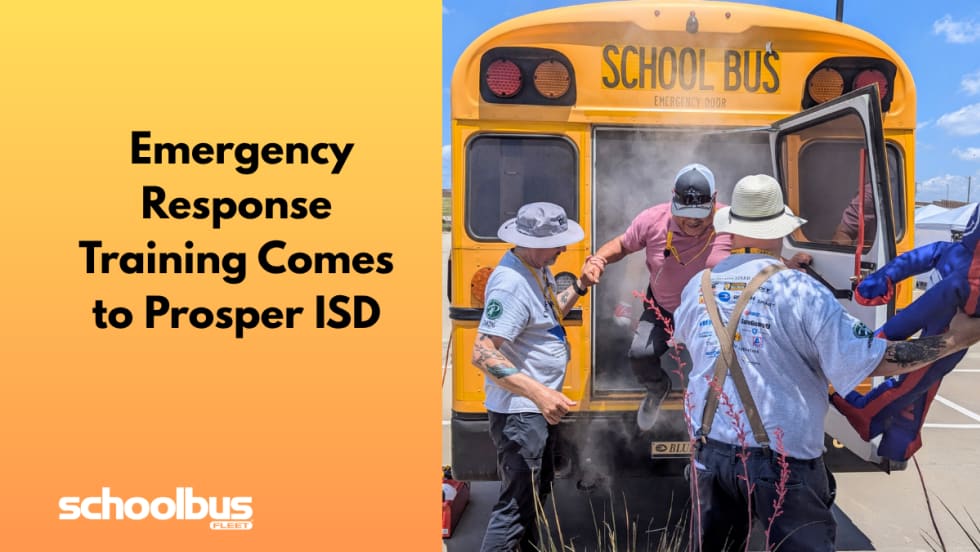
Operation STEER Brings Emergency Response Training to North Texas
Prosper ISD hosted the third annual training for transportation professionals across 67 districts to learn how to respond to emergencies, such as rollovers and evacuations, and proper use of safety equipment.
Read More →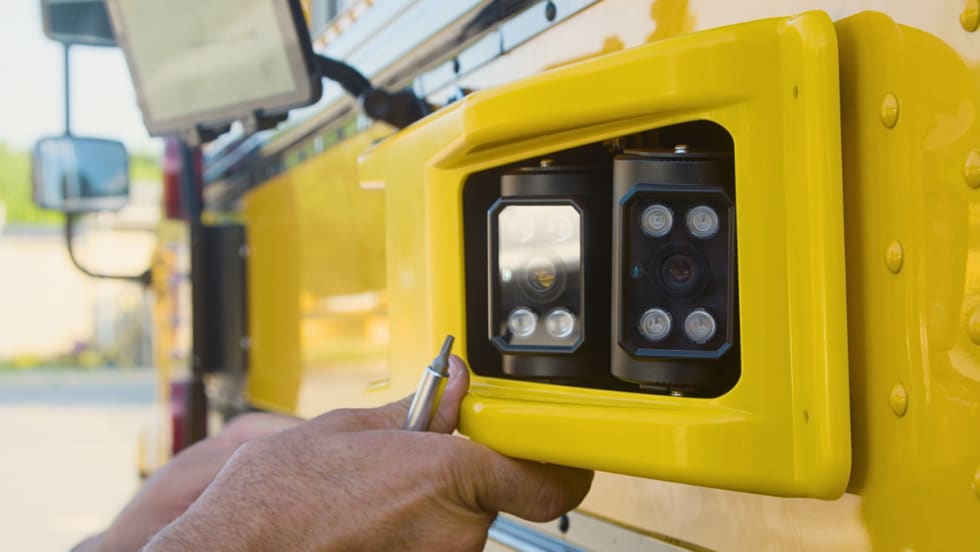
Florida District Relaunches BusPatrol School Bus Camera Program With New Safeguards
After being suspended over due process concerns, Miami-Dade schools and law enforcement are restarting the AI-powered stop-arm camera program with new oversight.
Read More →
School Bus Laws To Watch: Seat Belt Bills, Funding Fights & EV Changes
From national bills on seat belts and driver oversight to driver awareness campaigns referencing “Finn’s Rule” and ongoing transportation funding debates in Alaska, here’s the latest in school bus legislation across the U.S.
Read More →