




NSTA Advocacy in Action — Reforms Should Come Before Safety Fitness Rulemaking
FMCSA’s apparent plan to push forward on the safety fitness determination and then make corrections, if needed, will cause burdensome midstream changes, creating confusion and forcing additional training and expense.
Congress directed a comprehensive review and reform of the CSA Program in the Fixing America’s Surface Transportation (FAST) Act, which was enacted in December 2015.
Congress directed a comprehensive review and reform of the CSA Program in the Fixing America’s Surface Transportation (FAST) Act, which was enacted in December 2015.
The Federal Motor Carrier Safety Administration (FMCSA) released a Notice of Proposed Rulemaking (NPRM) on safety fitness determination earlier this year. In order to explain the proposal, a summary of the issue’s history follows. This column in next month’s issue of School Bus Fleet will delve more into NSTA’s specific concerns with this proposal.
Based on concerns expressed by the industry, Congress directed the Government Accountability Office (GAO) to monitor the utilization of FMCSA’s Compliance, Safety, Accountability (CSA) Program in the Consolidated Appropriations Act of 2012. The CSA Program had recently been implemented to identify the riskiest carriers, replacing SafeStat.
In its study, “Modifying the Compliance, Safety, Accountability Program Would Improve the Ability to Identify High Risk Carriers” (GAO-14-114, published Feb. 3, 2014), GAO found two major concerning issues:
• First, most regulations used to calculate Safety Measurement System (SMS) scores were not violated with enough frequency to create a strong enough association with crash risk for individual carriers.
• Second, most carriers lacked sufficient safety performance data to ensure that FMCSA could reliably compare them with other carriers.
Both of these findings are of concern on their own, but they are of significant concern when looking through the behavior lens created by FMCSA, as the agency has repeatedly stated that the best predictor of future behavior (those that will crash) is to review past behavior (those that have crashed). In addition, FMCSA built CSA upon the premise that performance ratings should be calculated by comparing similarly sized carriers.
Following its review, GAO concluded that due to the concerns raised, misclassifications could cause FMCSA to focus intervention efforts on carriers that were actually operating safely, while missing opportunities to intervene with carriers that were operating less safely.
Furthermore, the U.S. Department of Transportation inspector general issued a report in March 2014, “Actions Are Needed to Strengthen FMCSA’s Compliance, Safety, Accountability Program” (Office of Inspector General Audit Report No. MH-2-14-032, March 5, 2014). The report outlined concerns about the CSA data that would form the basis for safety fitness determinations in the proposed rule. These include the adequacy of data used to rate motor carriers and the extent to which data on regulatory violations by carriers predict future crash involvement or severity.
FMCSA is charging ahead to build a new safety fitness methodology on a flawed program. This is akin to adding another story to a house with a crumbling foundation, and it is simply irresponsible.
Simultaneous to the GAO study and report, FMCSA issued a number of regulatory actions addressing various parts of the CSA and its SMS — pushing forward despite the concerns being raised.
Noting FMCSA’s unwillingness to address the concerns and recommendations raised by GAO, Congress directed a comprehensive review and reform of the CSA Program in the Fixing America’s Surface Transportation (FAST) Act, which was enacted in December 2015.
Specifically, the FAST Act required a National Academy of Sciences study on the CSA Program and SMS. This is a 16-month study that began in February 2016. After the completion of the study, the Department of Transportation is directed to submit a report on the results of the study and a correction action plan to Congress.

Ronna Weber is executive director of the National School Transportation Association (NSTA).
Instead of pausing to address the multitude of concerns raised by the school transportation industry, the many other affected industries, the GAO, the Department of Transportation inspector general, and Congress, FMCSA is charging ahead to build a new safety fitness methodology on a flawed program. This is akin to adding another story to a house with a crumbling foundation, and it is simply irresponsible.
The proper reviews must be completed, all of the concerns and recommendations must be addressed, and the system must be fixed before any further layers should be added or compounding regulatory action should be taken. In addition, FMCSA’s apparent plan to push forward on the safety fitness determination and then make corrections, if needed, will cause burdensome midstream changes, creating confusion and forcing additional training and expense.
Be sure to read next month’s column for a detailed look at FMCSA’s proposal and NSTA’s concerns.
More Safety
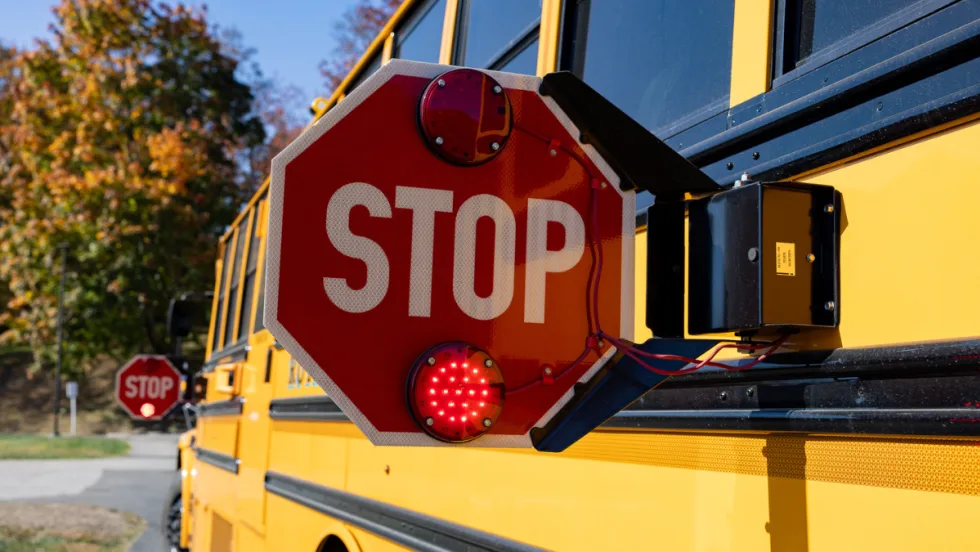
Illegal School Bus Passing Drops 24% in New York Districts
With fewer than 5% of citations involving repeat offenders, Westchester County officials said enforcement, education, and community partnerships are helping change driver behavior.
Read More →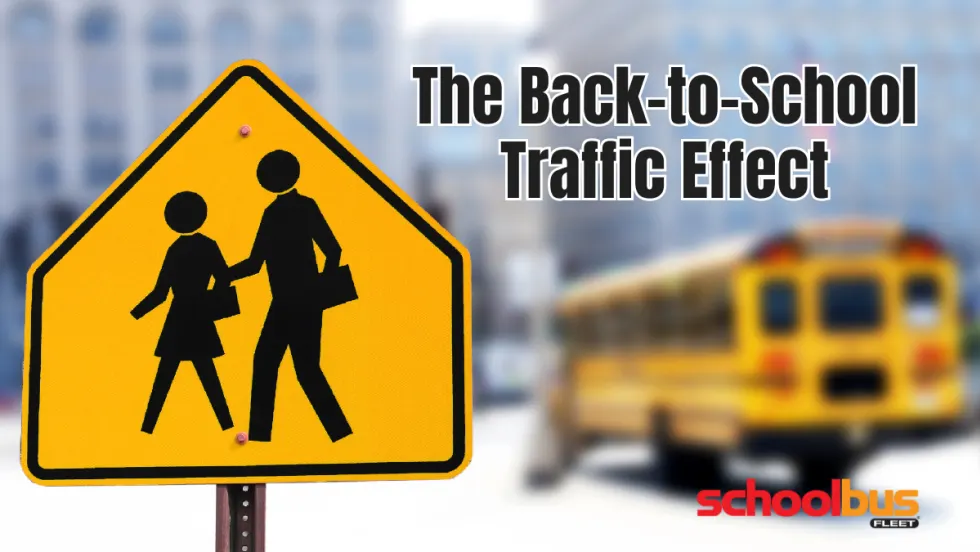
School's Back. Here's What Happened to Traffic, Speeding & Distraction
What happens to traffic when school resumes? New data analysis examines changes in distracted driving, congestion, and speeding around schools.
Read More →
Geotab Expands Fleet Safety Tools With Video Coaching, Risk Insights
New safety and video capabilities aim to help fleet managers assess risk, support drivers, and take targeted action through video coaching, red-light violation detection, and more.
Read More →

How to Build a Better School Bus Driver Training Program
Is it time to strengthen your driver training? Here’s how to pick the right talent and improve recruitment, retention, and safety. This video is brought to you by IC Bus.
Read More →
Recent School Bus Accidents Leave 2 Dead, 2 Injured
Four school bus crashes in Florida, Illinois, and Georgia highlight risks in transportation lots, at bus stops, and during student loading and unloading.
Read More →
When Every Second Matters, Clarity Keeps Routes Moving
From routine delays to urgent incidents, strong communication practices help drivers, dispatchers, schools, and families respond with confidence.
Read More →
What Happens When a School Bus Catches Fire — and What Can Help
School bus fires are rare but can be devastating. Learn how advances in fire suppression and asset protection help fleets detect fires earlier, reduce damage, and improve safety.
Read More →
Geotab Launches Tool to Help Fleets Investigate Road Incidents
Geotab Investigations combines telematics data, video, documents, and other evidence to help fleets reconstruct incidents, resolve claims, and determine what happened.
Read More →
Texas Sixth Grader Wins 2026 National School Bus Safety Poster Contest
Sai Darshana Yekolu of Moseley Middle School in Prosper, Texas, was named the newest winner for her artwork, bringing the theme of “Safe Rides, Everyday Heroes” to life.
Read More →
Doing More With Less: How Transportation Directors Can Prioritize Safety Amid Budget Uncertainty
With diesel prices soaring and nearly one-third of transportation directors expecting budget cuts, maintaining student safety has never been more challenging. Download this guide to learn how leading districts are prioritizing risk, funding critical safety technology, and building stronger budget cases with data.
Read More →