




NSTA Advocacy in Action — How to Seek Funds From the VW Settlements
$2.7 billion will be used to establish a mitigation trust fund to support the replacement or repowering of school buses and other diesel vehicles.

Ronna Weber is executive director of the National School Transportation Association (NSTA).
On June 28, 2016, the U.S. Environmental Protection Agency (EPA), the California Air Resources Board (CARB) and other parties announced a partial settlement agreement with Volkswagen (VW) following alleged violations of the Clean Air Act in connection with emissions from Volkswagen 2.0-liter diesel engines. A separate settlement for the 3.0-liter engines was reached on Dec. 20, 2016.
The final settlement for the 2.0-liter engines requires that Volkswagen pay a total of $14.7 billion in restitution. Of that amount, $2.7 billion will be used to establish a mitigation trust fund to support the replacement or repowering of school buses and other diesel vehicles. This program will be administered at the state level using a funding allocation tied to the number of VW diesel vehicles sold in each state, with states receiving a minimum of $7.5 million and California receiving the most — more than $381 million.
The partial settlement for the 3.0-liter vehicles that were sold with “defeat devices” calls for an additional $225 million for all states except California, where a separate settlement was reached. This brings the total size of the mitigation trust fund to $2.95 billion.
In addition, under the original settlement, $2 billion will be available through the zero-emission vehicle fund and is available for electric and fuel cell vehicles.
The process for applying for funding is different for each of these programs and is still under development. Those interested in applying for funds are encouraged to get involved as follows.
For the mitigation trust fund:
• The process will be run through a trustee who has yet to be named and state agencies that have yet to be designated. Recognizing that each state will operate separately and some will be ahead of others, it will take some time for state agencies to be identified and possibly several months for everything to become operational.
• State programs can set their own priorities for funding as long as they stay within the eligibility criteria established under the settlement with VW.
• Those interested are encouraged to reach out to the governor’s offices in their states of operation to stay informed of the states’ processes.
• State progress tracking is best done by checking with the governor’s office, the state’s attorney general, the U.S. EPA, and similar state sources.
• Follow the process in each state of interest to determine application criteria and deadlines.
• Apply for funds once available.

Ronna Weber is executive director of the National School Transportation Association (NSTA).
For the zero-emission vehicle fund:
• This separate funding source provides $2 billion to advance zero-emission vehicle deployment.
• The process will be run by Volkswagen with oversight by the EPA and CARB. $800 million of the funding will go to the state of California, and the remaining $1.2 billion will be split among the other states and territories.
• Those companies that want to take advantage of this program will first need to engage with Volkswagen and then with the EPA and CARB.
• Follow the process to determine application criteria and deadlines.
• Apply for funds once available.
If you are interested in applying for funding under these programs, it is very important that you involve yourself in the process in order to understand the exact steps and requirements you will be subject to under the settlement terms and in each state for which you are interested in applying.
Funding such as this can greatly assist our industry and fleets in particular, but you have to proactively seek the funding.
More Alternative Fuels

CALSTART and Forth Combine to Form Catalyst Mobility
The new name represents a renewed vision for the nonprofit focused on advancing clean, equitable, and affordable transportation solutions that move people and goods.
Read More →
Alt-Fuel Moves: New Buses, Charging Hubs & Real-World EV Testing
Propane and electric school bus deployments continue to grow as districts add new vehicles, expand charging infrastructure, and gather more real-world operating data.
Read More →
Fewer Electric School Bus Models Reshape the U.S. Market
WRI’s latest buyer’s guide points to a consolidating electric school bus market, but fewer options may reflect a maturing industry rather than fewer meaningful choices for school bus operators.
Read More →
The Fuel Budget You Can Actually Predict: How Propane Autogas Keeps Money in the Classroom
Learn how propane autogas helps school districts manage fuel costs with predictable pricing, lower maintenance, and reduced emissions from former transportation director Joel Stutheit.
Read More →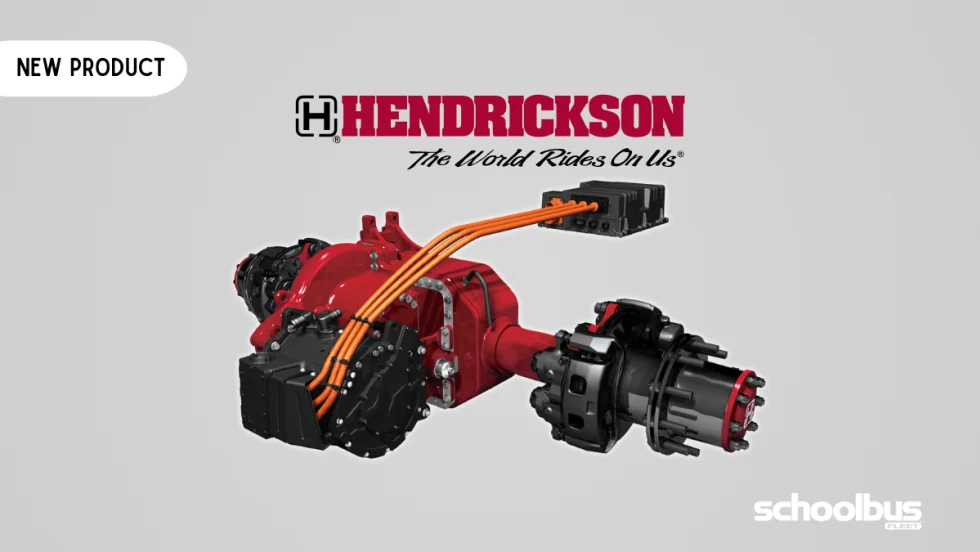
Hendrickson, Driventic Introduce New Electric Powertrain for School Buses
ELECTRAAX, the electrified, lightweight drive axle offers integrated ePowertrain efficiency and modular flexibility for Class 6–7 school bus use.
Read More →
The Mobility House Joins PowerFlex in Fleet Electrification Deal
The acquisition combines intelligent charging software, bidirectional charging expertise, and fleet electrification services to support the growing adoption of electric school buses across North America.
Read More →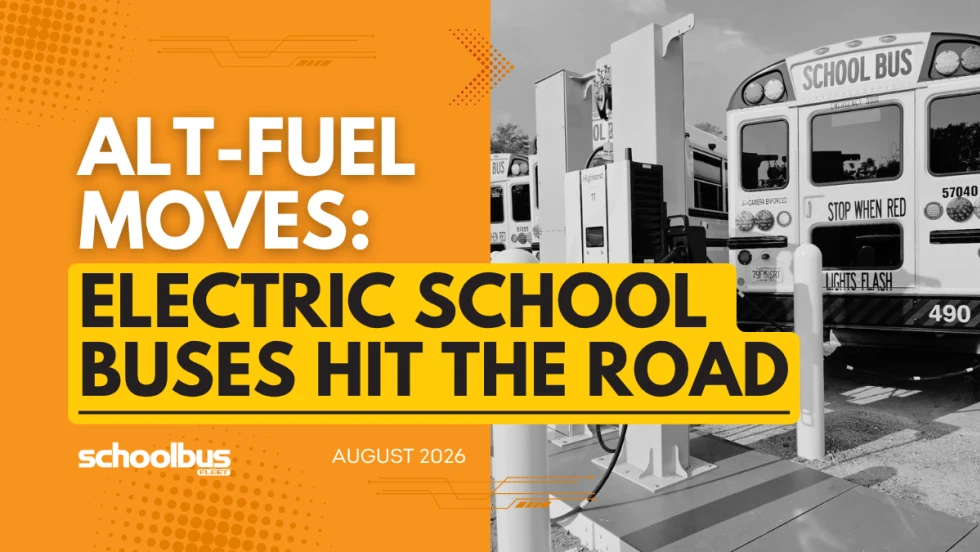
Alt-Fuel Moves: Electric School Bus Investments Hit the Road
See which districts across the U.S. are putting electric school buses into service, expanding charging infrastructure, and planning the next phase of fleet electrification.
Read More →
With Fuel Volatility Ahead, School Districts Turn to Propane
While diesel prices peaked above $5 this spring, districts with propane autogas-powered fleets paid under $2 per gallon, according to PERC.
Read More →
EPA Unveils Proposed Changes to 2027 Heavy-Duty Engine Rules
The federal agency has proposed changes to next year’s targets that would eliminate DEF derates, ease warranty requirements, and retain current NOx emissions standards.
Read More →
Alt-Fuel Moves: EV Charging & Infrastructure Projects Gain Momentum
The latest developments include new funding, charging infrastructure, utility investments, and fleet technologies designed to support the transition to electric school buses nationwide.
Read More →