




News from the World of Pupil Transportation
NHTSA issues ruling on allowable use of safety vests WASHINGTON, D.C. — The National Highway Traffic Safety Administration (NHTSA) ha...

NHTSA issues ruling on allowable use of safety vests
WASHINGTON, D.C. — The National Highway Traffic Safety Administration (NHTSA) has issued an interim final rule and request for comments on the use of safety vests on school buses. The rule amends section 5.3.1 of Federal Motor Vehicle Safety Standard 213 (FMVSS 213) to allow vests that attach to a seat back to be sold for use on school bus seats, though they are prohibited for sale for use in other vehicles.
“Effective immediately, all vests that are manufactured for use on school bus seats are excluded from the prohibition,” the ruling stated.
The exemption comes in response to vest manufacturer E-Z-On Products Inc. of Florida’s request for amendment to the standard. “NHTSA has determined that the requested amendment would facilitate the safe transportation of pre-school and special-needs children,” the rule says.
The interim final rule stipulates that vests only be used on school bus seats if the seat behind the child in the vest is empty or is occupied by restrained passengers. The rule further includes a provision that goes into effect Feb. 1, 2003, requiring a warning label to appear on the portion of the vest that attaches to the seat back saying: “Warning! This restraint must only be used on school bus seats. Entire seat directly behind must be unoccupied or have restrained occupants.”
Industry reaction to the ruling has been mixed. “I am hoping for a reasonable conclusion from NHTSA and not a political one, ”said Ray Turner, special-needs transportation coordinator for Northside Independent School District in San Antonio. “We have in excess of 50 E-Z-On vests installed for our special-needs students. None of those students can be seated effectively in front of an empty seat on our special-needs buses since we are up close to the limit of our seating space.”
Though the use of safety vests has been green-lighted, Alex Robinson, transportation director for San Diego Unified School District, cautions operators to use discretion in deciding which students wear vests. “We need to make sure we are using these vests as positioning devices and not in place of a car seat. I think many districts find it easier and cheaper to interchange the two, but car seats need to be used as long as the student meets height, weight and age requirements. Safety vests are a good option for that population in between,” she said.
To read the rule in its entirety, go to http://dmses.dot.gov/docimages/pdf1a/197974_web.pdf.
The interim final rule will expire Dec. 1, 2003, unless NHTSA issues a permanent final rule exempting school buses from section 5.3.1 of FMVSS 213. NHTSA will accept comments on the interim final rule until Dec. 23, 2002. To post a comment or to read comments posted by others, go to http://dms.dot.gov, click on “simple search,” select “docket number” and type in 12065.
The use of safety vests on school buses was called into question in August 2001 when NHTSA issued an interpretation of FMVSS 213 with respect to safety vests. After issuing the interpretation letter, NHTSA received feedback from numerous school bus operators saying that they rely on vests to help position children in their seats and to meet physical and behavioral needs. “Some [operators] indicated that if seat-mounted vests were unavailable, they might not restrain their children with any kind of child restraint system at all,” NHTSA said in the rule.
In response to petitions for rulemaking from E-Z-On Products and others, NHTSA has issued this interim final rule, in time for many operators to purchase and use vests in school buses during the 2002-2003 school year.
Michigan school bus-tractor trailer crash a ‘near-miss’
ERIE TOWNSHIP, Mich. — On Oct. 10, a school bus carrying kindergarten through second-grade students from a charter school southwest of Detroit was struck by a tractor-trailer during a field trip. Dozens of bus passengers were injured, five critically, but no one was killed. The driver of the truck was treated for minor injuries and released.
The school bus driver, employed by Trinity Inc. of Wyandotte, Mich., failed to yield to a blinking signal at an intersection and was struck by the tractor-trailer, which was hauling 38 tons of steel. The impact pushed both vehicles off the side of the road. The bus had 61 passengers and was the second in a caravan of four school buses carrying a total of 208 children and parents for a Pierre Toussaint Academy field trip.
Several students were pinned inside the bus and had to be extricated by the fire department. “Emergency crews responded in four minutes,” said Michigan Highway Patrol Sgt. Sharon Van Kampen. “they’d been doing regular school bus evacuation practices and responded immediately.” Every child was seen by a medical professional on site, she added.
The aftermath of the crash has given way to a $100 million lawsuit. The suit, filed on behalf of more than 20 of the bus’ passengers, accuses the school district, the bus company, the school bus driver and the truck driver of negligence.
The suit was filed Oct. 16 in Monroe County Circuit Court. The plaintiffs are asking for compensatory and punitive damages, citing conditions such as scarring, cuts, head injuries, severe pain and permanent mental anguish.
Although the Monroe County Sheriff’s Department blamed the accident on the bus driver’s failure to stop, the lawsuit also blames the truck driver. Witnesses initially said that the bus driver stopped before proceeding through.
District tests high-tech inspection tool
LAS VEGAS — An innovative safety inspection system that uses handheld readers and strategically positioned “tags” on school buses is helping to verify that bus drivers at Clark County School District in Las Vegas,, perform their pre- and post-trip inspections. The system developed by Seattle-based Zonar Systems also eliminates the paperwork that goes along with inspections.
Also used on commercial vehicles, here’s how the system works: RFID (radio frequency identification) tags are placed around the vehicle in critical inspection “zones.” Using a handheld reader to activate the RFID tags, the driver inspects the components in a particular zone and is then prompted by the reader to indicate whether the components are “OK” or “BAD.” If a defect is detected, the driver selects a description of the defective component from a list. The entire inspection is easily recorded with simple, one-handed push-button responses.
Reports are stored in the handheld unit and are periodically transmitted to secure servers at Zonar Systems via the Internet. Zonar’s web-based record-keeping system allows supervisors to manage multiple levels of data. For example, data can be sorted by driver, vehicle or inspection results.
“The system compels the driver to do the walk-around,” said Bill Brinton, marketing director for Zonar Systems. “The system ensures, at minimum, that the driver was physically present in the inspection zone.” Brinton adds that the system can also be used to ensure that drivers perform their clearance walk by placing a tag in the rear interior of the bus.
Ronald Despenza, transportation director at Clark County, said his district has been testing the system with five buses and drivers for two months. “The feedback has been very positive,” he said. “The biggest benefit of the system is the amount of time that it saves the driver. It eliminates the tedious and time-consuming paperwork that is associated with inspections.”
Brinton said the system accrues significant labor costs savings and reduces a fleet’s liability exposure as well. “The paperless efficiency cuts costs, streamlines audits and helps to improve the overall safety of the operation,” he said.
Despenza said he’s seen noticeable improvements in the identification of defects during pre- and post-trip inspections. “More defects are detected and immediately reported, which directly affects the overall condition and safety of the school bus,” he said.
Despenza said he’s considering equipping Clark County’s entire fleet of more than 1,100 school buses with the Zonar system. For more information on the system, visit www.zonarsystems.com or call Brinton at (206) 878-2459.
Sniper threat cripples D.C.-area school districts
WASHINGTON, D.C. — During a three-week period in October, a series of 13 shootings by the so-called “Beltway Sniper” terrorized the area surrounding the nation’s capital. Two suspects have since been charged in connection with the attacks, which claimed 10 lives, but the effects were far-reaching.
“It was a very stressful time,” said Darnese Nicholson, transportation director at Gallaudet University in D.C. “It was not uncommon to see individuals kneeling as they fueled their vehicles, and normal errands became meticulously planned events. No one stood still intentionally.”
Although shooting victims appeared to be selected at random, the events hit close to home for the pupil transportation industry. On Oct. 7, a 13-year-old boy was struck by a bullet and wounded while being dropped off at a school in Bowie, Md. Later in the month, a transit bus driver was shot and killed by the assailant.
Widespread concern over the shootings, which occurred in six different counties, led to sweeping operational changes in local school districts. Some schools were closed altogether while districts throughout Maryland, Virginia and D.C. canceled field trips, athletic events and extra-curricular activities.
According to Nicholson, security had to be as tight as possible. “Extra security precautions entailed campus officers stationed at school during the loading and unloading of students, and extra police patrolled the school perimeter during the day,” she said.
Additionally, school officials worked together as often as possible to increase safety. “Our superintendent kept in close contact with school administrators from several other school districts in the Washington-Baltimore area,” said Glenn Johnson, transportation director at Howard County Public Schools in Ellicott City, Md. “There was a tremendous amount of information exchanged, and most districts followed the Code Blue philosophy, which kept people indoors as often as possible and canceled specific outdoor activities and athletic events.”
Regardless of preparation, however, the extreme unpredictability of the attacks caught transportation personnel off-guard. Michael Lunsford, transportation director for Loudoun County School District in Leesburg, Va., reported an unforeseen staffing problem. “We experienced no increase in tardiness, but we lost one driver to fear of being in a bus after the transit driver was shot,” he said.
More Safety
Illegal School Bus Passing Drops 24% in New York Districts
With fewer than 5% of citations involving repeat offenders, Westchester County officials said enforcement, education, and community partnerships are helping change driver behavior.
Read More →
School's Back. Here's What Happened to Traffic, Speeding & Distraction
What happens to traffic when school resumes? New data analysis examines changes in distracted driving, congestion, and speeding around schools.
Read More →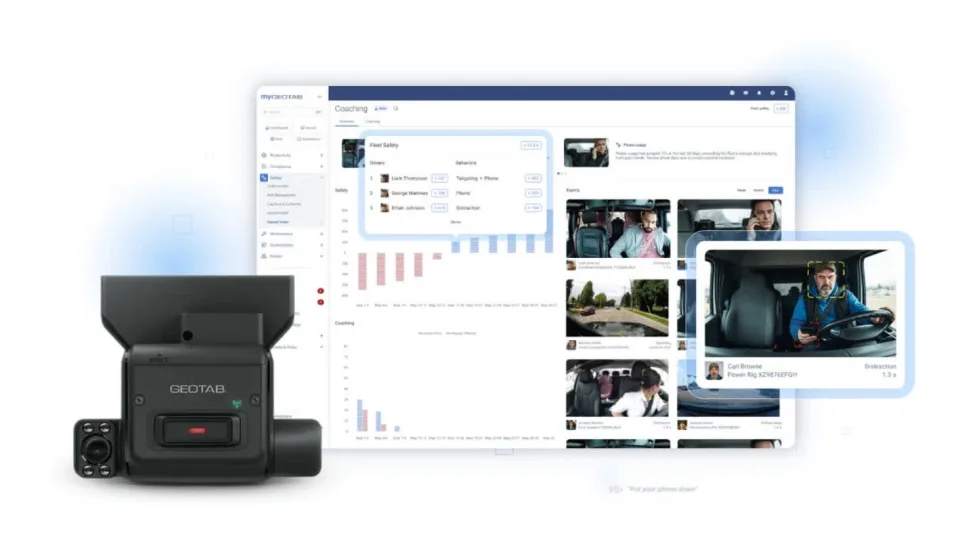
Geotab Expands Fleet Safety Tools With Video Coaching, Risk Insights
New safety and video capabilities aim to help fleet managers assess risk, support drivers, and take targeted action through video coaching, red-light violation detection, and more.
Read More →

How to Build a Better School Bus Driver Training Program
Is it time to strengthen your driver training? Here’s how to pick the right talent and improve recruitment, retention, and safety. This video is brought to you by IC Bus.
Read More →
Recent School Bus Accidents Leave 2 Dead, 2 Injured
Four school bus crashes in Florida, Illinois, and Georgia highlight risks in transportation lots, at bus stops, and during student loading and unloading.
Read More →
When Every Second Matters, Clarity Keeps Routes Moving
From routine delays to urgent incidents, strong communication practices help drivers, dispatchers, schools, and families respond with confidence.
Read More →
What Happens When a School Bus Catches Fire — and What Can Help
School bus fires are rare but can be devastating. Learn how advances in fire suppression and asset protection help fleets detect fires earlier, reduce damage, and improve safety.
Read More →
Geotab Launches Tool to Help Fleets Investigate Road Incidents
Geotab Investigations combines telematics data, video, documents, and other evidence to help fleets reconstruct incidents, resolve claims, and determine what happened.
Read More →
Texas Sixth Grader Wins 2026 National School Bus Safety Poster Contest
Sai Darshana Yekolu of Moseley Middle School in Prosper, Texas, was named the newest winner for her artwork, bringing the theme of “Safe Rides, Everyday Heroes” to life.
Read More →
Doing More With Less: How Transportation Directors Can Prioritize Safety Amid Budget Uncertainty
With diesel prices soaring and nearly one-third of transportation directors expecting budget cuts, maintaining student safety has never been more challenging. Download this guide to learn how leading districts are prioritizing risk, funding critical safety technology, and building stronger budget cases with data.
Read More →