




Nate Thacker of DEMI on How a Silly Name Can Mean Serious Business
In this interview with School Bus Fleet, Nate Thacker of Utah-based DEMI discussed the CowFartBus and how renewable natural gas could be school transportation's fuel of the future.

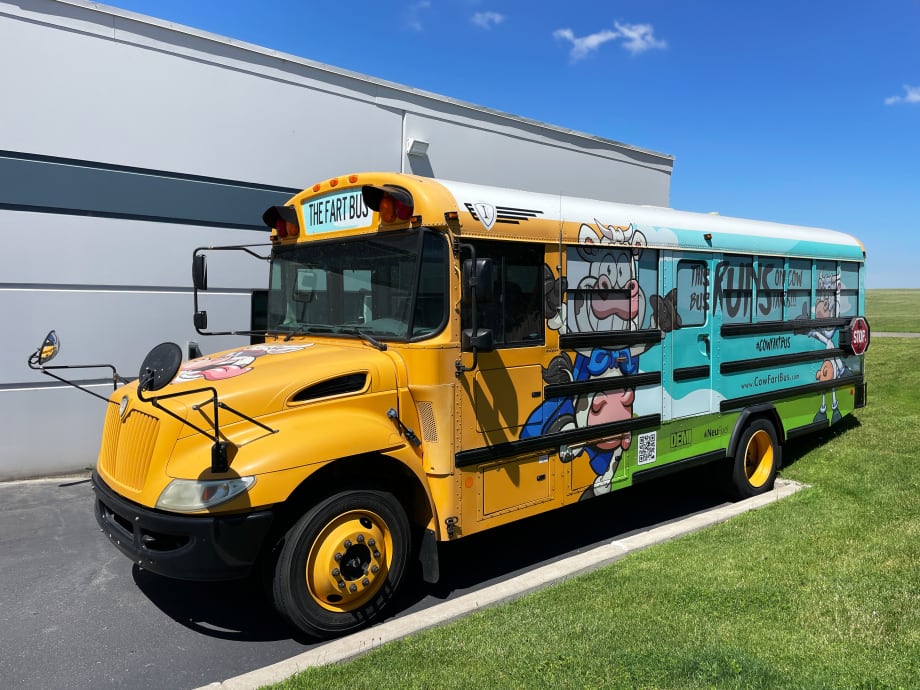
The CowFartBus runs on renewable natural gas and helps DEMI share the moos...er, news, about the benefits of the alternative fuel.
Photo: DEMI
The CowFartBus - a vehicle that runs on renewable natural gas - usually gets its share of laughs when the name comes up in conversation, but that branding just helps Nate Thacker do his job better.
He works for DEMI, a company based in Layton, Utah, which created the CowFartBus brand to focus on alternative-fuel school transportation. He and DEMI's CEO and founder, Sam Johnson, connected through their work together as volunteers with the Church of Jesus Christ of Latter Day Saints.
"We both found a huge opportunity in the market to easily bring renewable energy to the student transportation industry and decided to put all of our efforts into it."
A graduate of Weber State University, Thacker was born and raised in Utah surrounded by mountains and the Great Salt Lake. He and his wife Lindsay, married more than 17 years, have four children, ages 5 to 15. The children all play soccer, a shared passion, and Thacker spends many weekends and evenings coaching and cheering them on.
In this interview with School Bus Fleet, Thacker took the time to share the origins and purpose behind the idea of the CowFartBus - a school bus that sounds stinky, but aims to keep it clean, spreading the word about renewable natural gas.
Five Questions About the CowFartBus and Renewable Natural Gas with Nate Thacker of DEMI
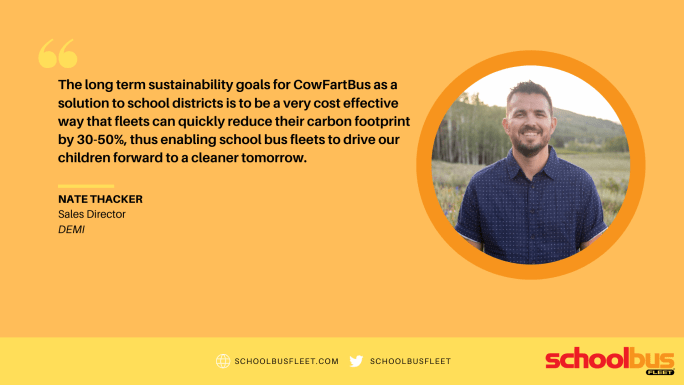
Nate Thacker, based in Utah with his wife and four children, is sales director for DEMI.
Photo: Nate Thacker
SBF: What is renewable natural gas (RNG), and how does it differ from conventional natural gas in terms of environmental impact and sourcing?
Thacker: RNG is actually a by-product of organic material bio-degrading. Methane is released as a part of the decomposition process, so once captured and scrubbed, it is then used as an energy source in our daily lives. Conventional natural gas comes from fossil fuels and is captured from underground stores through the traditional methods of the oil and gas industry. It actually comes as a byproduct of dinosaurs decomposing a millenia ago.
SBF: Can you explain the process of capturing and converting methane emissions from cows into renewable natural gas? What are the key benefits of using this approach for sustainable transportation?
Thacker: One of the best sources for renewable natural gas to be collected is from dairy farms. The manure from the farms is harvested and placed into a digester, which is used to accelerate the decomposition process and collect the methane as it is released. The collected methane then gets cleaned and processed to be injected into the natural gas pipeline to be consumed by transportation fleets across the country.
Methane emissions from dairy farms and other sources are one of the worst sources of greenhouse gas emissions.
SBF: What are the environmental and greenhouse gas reduction benefits of operating a bus on renewable natural gas, particularly in comparison to traditional diesel or gasoline-powered buses?
Thacker: Because renewable natural gas is taking away emissions from the atmosphere, it is the only alternative fuel that has a negative carbon footprint. For reference, a diesel bus has a score of 100.6 carbon intensity, while an RNG bus has a -532.7, according to CleanEnergy.gov.
SBF: Are there any challenges or limitations associated with sourcing and using renewable natural gas for transportation purposes, and how do you address them?
Thacker: As with all alternative fuels, RNG also runs into the challenge of infrastructure availability. The best way for us to combat this is by installing a fueling appliance in the customer's bus yard to help ease the stress of fueling at a RNG station.
SBF: How does the cost-effectiveness of running on renewable natural gas compare to other alternative fuels or technologies, and what are the long-term sustainability goals for this transportation solution?
Thacker: RNG and CNG have historically been at a much lower cost per gallon than diesel and gasoline, typically $2-$3 lower per gallon. Although this number will fluctuate as diesel and gasoline fluctuate, there are also government incentives for districts who choose to run on RNG that help make this cost difference even larger.
The long term sustainability goals for CowFartBus as a solution to school districts is to be a very cost effective way that fleets can quickly reduce their carbon footprint by 30-50%, thus enabling school bus fleets to drive our children forward to a cleaner tomorrow.
More Alternative Fuels

CALSTART and Forth Combine to Form Catalyst Mobility
The new name represents a renewed vision for the nonprofit focused on advancing clean, equitable, and affordable transportation solutions that move people and goods.
Read More →
Alt-Fuel Moves: New Buses, Charging Hubs & Real-World EV Testing
Propane and electric school bus deployments continue to grow as districts add new vehicles, expand charging infrastructure, and gather more real-world operating data.
Read More →
Fewer Electric School Bus Models Reshape the U.S. Market
WRI’s latest buyer’s guide points to a consolidating electric school bus market, but fewer options may reflect a maturing industry rather than fewer meaningful choices for school bus operators.
Read More →
The Fuel Budget You Can Actually Predict: How Propane Autogas Keeps Money in the Classroom
Learn how propane autogas helps school districts manage fuel costs with predictable pricing, lower maintenance, and reduced emissions from former transportation director Joel Stutheit.
Read More →
Hendrickson, Driventic Introduce New Electric Powertrain for School Buses
ELECTRAAX, the electrified, lightweight drive axle offers integrated ePowertrain efficiency and modular flexibility for Class 6–7 school bus use.
Read More →
The Mobility House Joins PowerFlex in Fleet Electrification Deal
The acquisition combines intelligent charging software, bidirectional charging expertise, and fleet electrification services to support the growing adoption of electric school buses across North America.
Read More →
Alt-Fuel Moves: Electric School Bus Investments Hit the Road
See which districts across the U.S. are putting electric school buses into service, expanding charging infrastructure, and planning the next phase of fleet electrification.
Read More →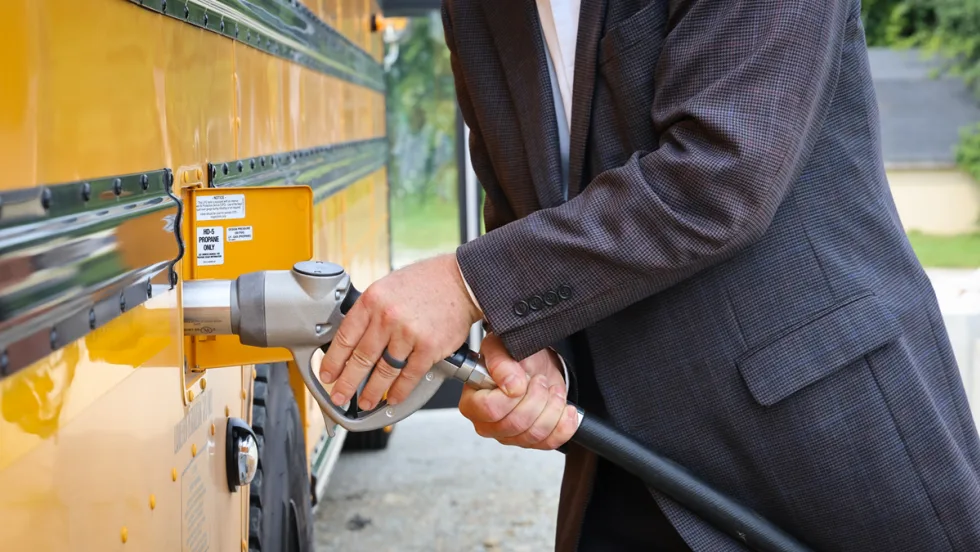
With Fuel Volatility Ahead, School Districts Turn to Propane
While diesel prices peaked above $5 this spring, districts with propane autogas-powered fleets paid under $2 per gallon, according to PERC.
Read More →
EPA Unveils Proposed Changes to 2027 Heavy-Duty Engine Rules
The federal agency has proposed changes to next year’s targets that would eliminate DEF derates, ease warranty requirements, and retain current NOx emissions standards.
Read More →
Alt-Fuel Moves: EV Charging & Infrastructure Projects Gain Momentum
The latest developments include new funding, charging infrastructure, utility investments, and fleet technologies designed to support the transition to electric school buses nationwide.
Read More →