




NAPT News & Views — Follow through on this resolution
Trade associations are a great place to build a name for yourself; NAPT is no exception. Getting and remaining involved in industry and professional activities through NAPT will bring you to another level in your career.
The arrival of Christmas and its related festivities means it’s also time to think about New Year’s resolutions.
Every December, thousands of people resolve to lose weight, exercise more, stop smoking or do something else that’s healthy. Also popular are resolutions dealing with better money management and debt reduction.
While a lot of people who make New Year’s resolutions don’t follow through, research shows that people who explicitly make resolutions are far more likely to attain their goals than people who don’t. While just 75 percent of people who make resolutions maintain their commitments past the first week, 64 percent maintain their commitments for at least one month and 46 percent are still following through six months later. Say what you will about New Year’s resolutions, but they motivate people and produce results.
Here is a resolution I’d like you to make this year: I will join NAPT and volunteer to be on one or more of its committees.
Every successful organization needs members, now more than ever. We’re no different from anyone else in that regard. Members, especially in today’s tough times, determine whether a nonprofit organization like NAPT survives or thrives. Put simply, our members are our backbone, the true strength of our association, especially those who are active volunteers.
I realize volunteer activity is often equated with unpaid work, which is why some people are reluctant to use their precious spare time to volunteer for anything, especially something that seems just like their job. But anyone harboring these doubts needs to know that volunteering is a two-way street. It can provide a satisfying outlet for people’s talents, ambitions and concerns in ways that are different from their regular daily responsibilities.
If you are skeptical, I am not surprised. But consider the following relatively painless ways you can volunteer to help our public policy committee, for example:
• Learn about our public policy priorities. Send us an e-mail, and we will send you information about our public policy agenda. Then read it. It can’t get much easier than that.
• Visit your elected official’s website. You will learn a lot in a small amount of time. If nothing else, reading your lawmaker’s biography will provide you with useful anecdotes and possible connections to our issues that may help you — and us — down the road.
• Sign up for your elected official’s e-newsletters and send us a note if you see something you think we should know about.
• Comment on an online news story related to our priority issues. Elected officials at all levels pay attention to local newspapers and news websites, and new technology makes it easier than ever to raise awareness of our issues.
• Schedule a visit with your lawmaker in her/his district office. Visits with representatives in district offi ces are easier than traveling to Washington, D.C. — and often more satisfying for those who are new to the process. Away from votes and committee hearings, lawmakers typically have more time to discuss issues.
• Educate other members of your state association about NAPT’s public policy priorities. You can’t do it all, and we don’t expect you to! But you can help us spread the word to the masses. We will even provide you with a short presentation that you can make if you are so inclined.
There are lots of additional things you can do to help us accomplish our public policy agenda — some easy and some more difficult. E-mail us if you don’t see anything here that strikes your fancy. If just 50 new people engage in just a few of these activities, we will start to see real progress.
If you are interested in getting involved and public policy isn’t your thing, but you aren’t sure where to begin, try asking yourself the following questions to determine what kind of volunteer opportunities will be best suited to you:
• What problem would you like to solve, what would you like to change or what would you create that would make our industry better?
• What kind of time commitment are you willing to make? Are you looking for a regular/weekly volunteer commitment or a short-term/one-time/project-specific opportunity?
• Would you like to volunteer with other people or by yourself?
• Would you like to travel or volunteer from your home or office?
• What are the specific skills or talents you would like to share with your peers?
• Would you like to develop a specific skill?
• What are your personal goals?
Trade associations are a great place to build a name for yourself; NAPT is no exception. Getting and remaining involved in industry and professional activities through NAPT will bring you to another level in your career.
NAPT and its volunteers have a wide variety of resources and information available to you when you need help. You will save time and money in the long run because you won’t have to reinvent the wheel at every turn.
Peter Mannella is executive director of the New York Association for Pupil Transportation and Region 1 (Northeast) director on the NAPT board of directors.
More Management

Walton County Schools Adds Gatekeeper Stop-Arm Enforcement System
The Florida district will deploy Gatekeeper’s updated Student Protector technology, which now incorporates AI to improve video evidence.
Read More →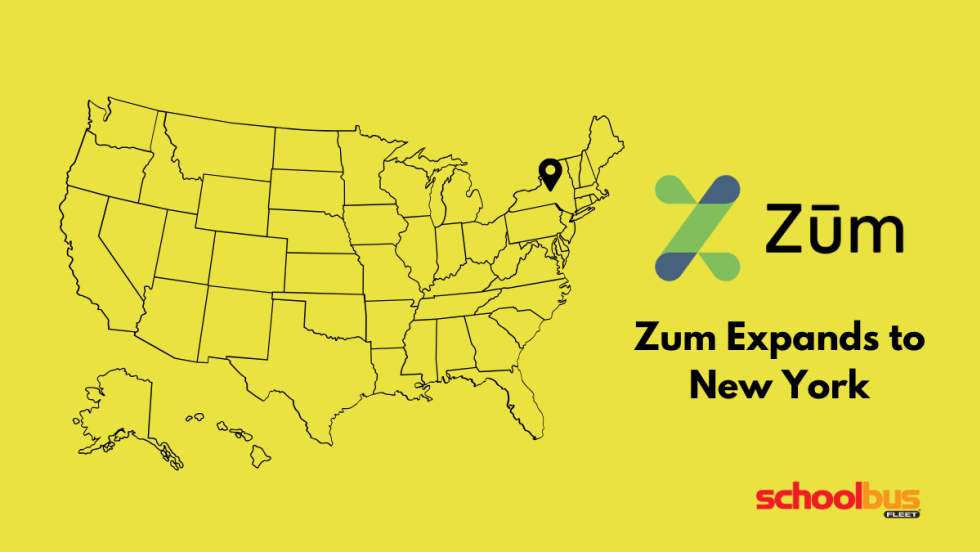
Zum Reaches 19 States With New York Expansion
The addition of the Empire State to the student transportation company's roster marks a growing expansion in the Northeast as it scales its tech and school bus services.
Read More →
First Student Updates Its Parent App
First View connects both yellow bus and alternative transportation, giving families one platform to track student trips for the new school year, with 15 languages supported.
Read More →

The Back-to-School Checklist Every Director Should Complete Before the First Bell
Help your transportation team start the school year strong with these tips for contingency planning, communication, fleet visibility, technology, and trip management.
Read More →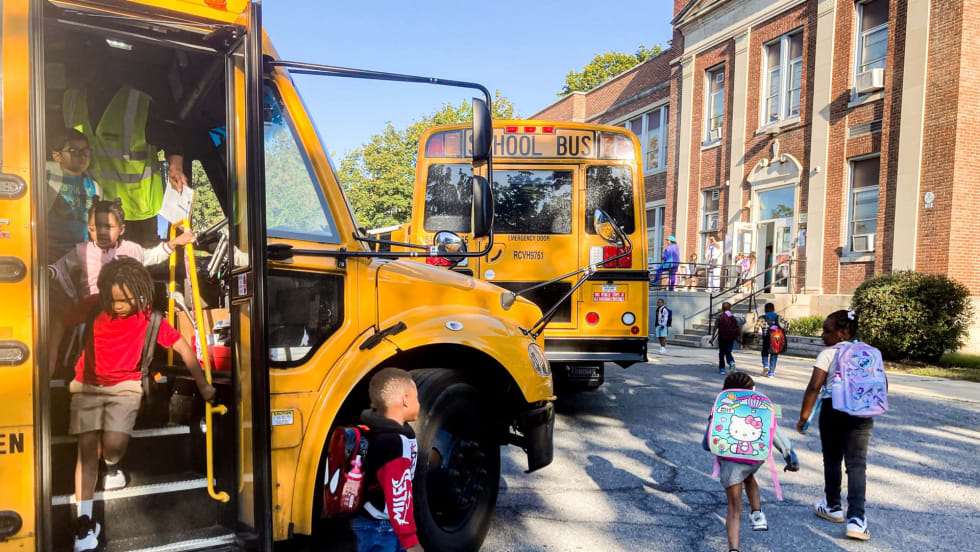
How a New York District Cut Nearly $1M in Transportation Costs While Expanding Bus Access
A data-driven overhaul with BusRight reduced Poughkeepsie City School District's planned routes from 26 to 17 while extending school bus service to about 1,200 additional students.
Read More →
Budgets Down, Enrollment Shifting: What the Data Says Districts Should Watch
School transportation departments face two converging challenges this year: tightening budgets and shifting enrollment. Most districts still address these issues separately, but the assumption that either trend will simplify operations is proving incorrect.
Read More →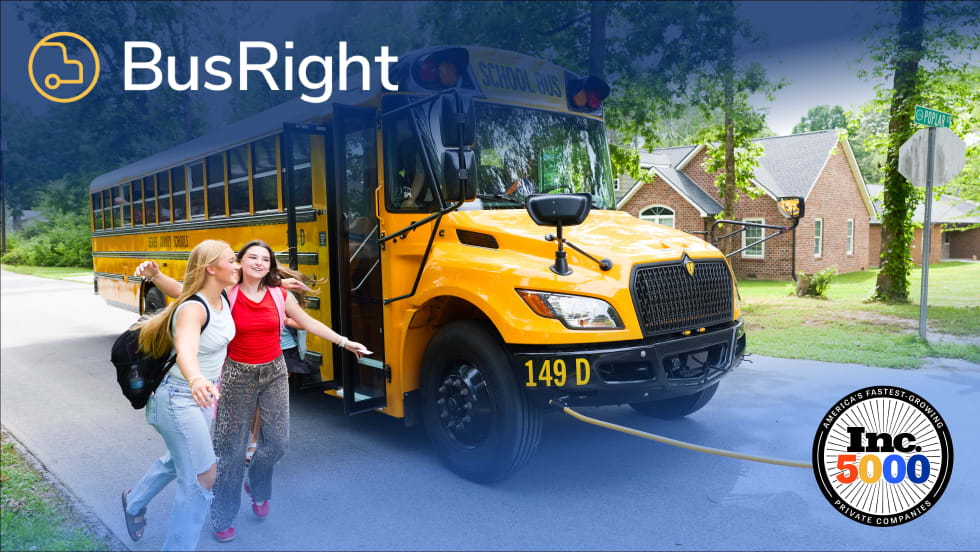
These 8 School Transportation Companies Made the 2026 Inc. 5000 List
Find out which school transportation contractors, technology providers, and suppliers ranked among America’s fastest-growing private companies.
Read More →
The Link Between Emotional Intelligence and School Bus Safety
How can emotional intelligence help transportation pros navigate stress, manage change, and build stronger relationships? Listen to find out.
Read More →
What Emotional Intelligence Has to Do With School Bus Safety
In this video, discover how emotional intelligence can help transportation leaders and drivers navigate stress, manage change, and build stronger relationships. The Route is sponsored by IC Bus.
Read More →
Beyond Two-Way Radios: School Bus Communications Evolve With Push-to-Talk Over Cellular
PRYME Radio and PositionPTT join forces to advance hands-free radio use and reduce distracted driving. See how PoC compares with traditional radios on range, cost, safety, and connectivity.
Read More →