




NAPT News & Views — Court: School bus fees unconstitutional
After voters declined referendums to raise property taxes to increase revenues for schools, Franklin Township in Indianapolis tried discontinuing their school bus service and contracting with a private firm to transport students, charging parents a fee for the service. The Indiana Court of Appeals ruled that the township violated the state constitution.

Michael Martin is executive director of NAPT.
Syndicated columnist Thomas Sowell once said, “Balanced budget requirements seem more likely to produce accounting ingenuity than genuinely balanced budgets.”
School bus professionals would agree, especially in recent years as local governments struggle to make budget ends meet (or at least appear to meet), with pupil transportation frequently in the crosshairs.
But we’d bet they would also agree with Henry Ford: “When everything seems to be going against you, remember that the airplane takes off against the wind, not with it.”
In a recessionary and often contentious fiscal atmosphere, where raising taxes is unpalatable if not impossible politically, there is a lot of newfangled creativity in how budget pies are sliced.
Many states require balanced budgets; some already have staggering debt to service, tax caps and other elements that impact their operations and fiscal policies.
Adding to financial woes are sky-high fuel costs, federal requirements for improved emissions and safety, and calls from some quarters for voluntarily equipping buses with seat belts. These costs are substantial, and in many jurisdictions so much so that they are unaffordable regardless of the merits.
When the budget hammer drops on pupil transportation, children and their parents usually take the hit.
Some communities are slashing school bus routes, expanding walking distances, flirting with allowing commercial advertising on/in buses, and delaying new bus purchases.
Others are seeking bond referendums to raise additional revenue dedicated to educational expenses. But this taxing alternative is often fractious and not always successful.

Barry McCahill is president of McCahill Communications Inc. and NAPT public affairs consultant.
Then, there’s what Franklin Township in Indianapolis tried after voters declined referendums to raise property taxes to increase revenues for schools: discontinuing their school bus service and contracting with a private firm to transport students, charging parents a fee for the service.
The fee was $450 per child per year for the first student. Each additional child was $405, plus a $20 fee per child. A family with three children would be hit with $1,320 a year for school transportation for their children.
A new tax by any other name … disguised by “accounting ingenuity.”
Many parents were outraged and filed a class action lawsuit against the school district. In early June, the Indiana Court of Appeals ruled that the township violated the state constitution when it discontinued school bus service and contracted with a private firm that charged parents.
It’s unknown at this writing if the school district will appeal. But if the decision stands, it will prevent other jurisdictions in Indiana from trying the same tactic, and may send a caution signal to districts in other states.
The court decided as a premise for the ruling that transportation is part of the public education system (emphasis added). It cited state requirements that schools must provide bus service for homeless, foster care, special-needs and even some private school students.
“It is hard to imagine that the legislature meant to require our school corporations to transport these students but exclude all others,” the court said.
We salute the Indiana Court of Appeals for affirming the long-standing position of all in the school bus industry that yellow school bus transportation should not be considered an option. It’s integral to the school day and learning experience by providing safe, reliable and predictable transportation to and from the school facility.
Eliminating or restricting school bus transportation is false economy that triggers many undesirable community outcomes:
• Reduced child safety. Students are forced to get to and from school by some other means. Whether walking, bicycling or riding with parents in the family car (or, worse, teens riding with other teens), none is as safe as the big yellow school bus.
• Less orderly school day. Without the predictability of school buses, the course of the school day is more complicated for teachers and students alike.
• Inconvenienced parents. A yellow school bus provides a huge bang for the buck and direct consumer benefit — unequaled convenience for parents and other child caregivers. This is especially true for families in which both parents work outside the home and would have no other way to get their children to school and home.
• Increased traffic congestion and emissions. School buses are the largest mass transit system in the country. Every yellow school bus you see replaces dozens of cars that otherwise would be on the roads transporting children during rush hours.
So, again, we roundly applaud the Indiana Court of Appeals for its common-sense decision that puts the yellow school bus squarely back where it belongs — as a vital community asset and educational necessity that facilitates learning by providing the safest and easiest way for children to get to and from their schools.
More Safety

How to Build a Better School Bus Driver Training Program
Is it time to strengthen your driver training? Here’s how to pick the right talent and improve recruitment, retention, and safety. This video is brought to you by IC Bus.
Read More →
Recent School Bus Accidents Leave 2 Dead, 2 Injured
Four school bus crashes in Florida, Illinois, and Georgia highlight risks in transportation lots, at bus stops, and during student loading and unloading.
Read More →
When Every Second Matters, Clarity Keeps Routes Moving
From routine delays to urgent incidents, strong communication practices help drivers, dispatchers, schools, and families respond with confidence.
Read More →

What Happens When a School Bus Catches Fire — and What Can Help
School bus fires are rare but can be devastating. Learn how advances in fire suppression and asset protection help fleets detect fires earlier, reduce damage, and improve safety.
Read More →
Geotab Launches Tool to Help Fleets Investigate Road Incidents
Geotab Investigations combines telematics data, video, documents, and other evidence to help fleets reconstruct incidents, resolve claims, and determine what happened.
Read More →
Texas Sixth Grader Wins 2026 National School Bus Safety Poster Contest
Sai Darshana Yekolu of Moseley Middle School in Prosper, Texas, was named the newest winner for her artwork, bringing the theme of “Safe Rides, Everyday Heroes” to life.
Read More →
Doing More With Less: How Transportation Directors Can Prioritize Safety Amid Budget Uncertainty
With diesel prices soaring and nearly one-third of transportation directors expecting budget cuts, maintaining student safety has never been more challenging. Download this guide to learn how leading districts are prioritizing risk, funding critical safety technology, and building stronger budget cases with data.
Read More →
Walton County Schools Adds Gatekeeper Stop-Arm Enforcement System
The Florida district will deploy Gatekeeper’s updated Student Protector technology, which now incorporates AI to improve video evidence.
Read More →
How To Build a More Secure School Bus Yard During and After Hours
As thefts and overnight security threats continue, school transportation leaders are combining stronger operational practices with AI-enabled surveillance to better protect buses, facilities, and staff.
Read More →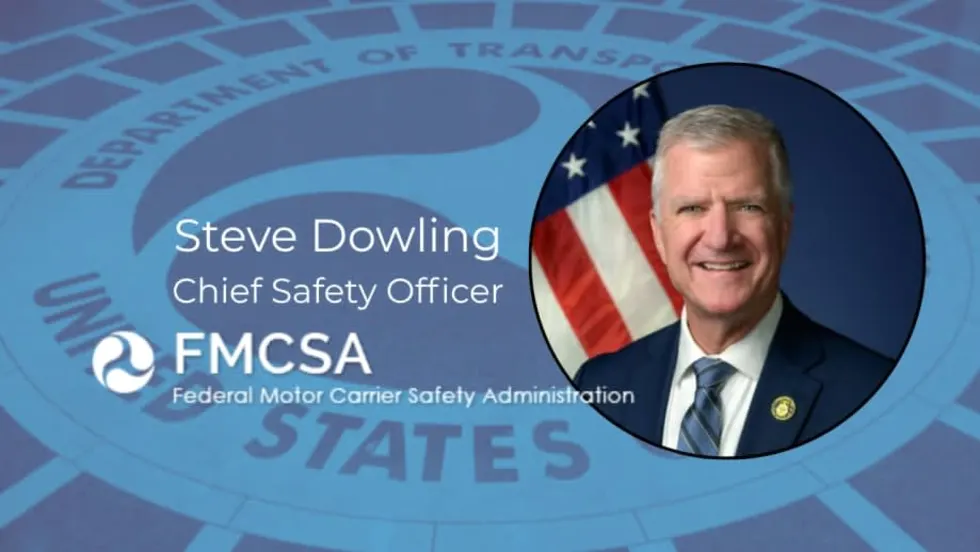
FMCSA Names New Chief Safety Officer: What School Bus Operators Should Know
Steve Dowling is set to lead the federal agency's efforts to advance commercial motor vehicle safety and reduce crashes, fatalities, and injuries on the nation's roadways.
Read More →