




NAPT News & Views
It’s what we do today and tomorrow that contributes to preventing future accidents. Tight budget situations are not a reason to retreat but to become even more engaged in the conversation locally and nationally about why yellow bus transportation is vital to learning.
Don’t just sit there — do something
The school bus industry is a critical component of America’s public education system — the link between home and classroom that enables academic attainment.
Much of what we do and how we do it is dictated by federal laws, policies and regulations. What you may not realize, however, is that stories by the major media about events involving our vehicles and/or our employees or about our industry can also have a deep and lasting impact on our operations. So, NAPT closely monitors the national scene to stay abreast of comments made by important national figures. We also try our best to connect the dots between what’s happening and what people are saying, particularly inside the beltway.
In a recent keynote address at the 90th Annual Meeting of the Transportation Research Board, National Transportation Safety Board (NTSB) Chairman Deborah Hersman said, “The NTSB will always be there in [the] aftermath of an accident to figure out what happened. But that’s only half the job. The other half is prevention. It’s not too late to stop future accidents.
“We know that history repeats itself when lessons are not well learned,” she added, and called on transportation officials to create “a culture of safety” and to make sure “aging infrastructure is not exempted from safety requirements.”
I have had the pleasure of working with Chairman Hersman. She is one of the brightest and most approachable people ever to hold the job. In a city where “I’ll have to get back to you” is a common response, Chairman Hersman is a refreshing exception — an extremely busy person holding an important job who picks up the phone and answers her e-mail promptly.
As a mother of young children, she understands the value of the yellow school bus and is very interested in all that we do.
So when she issues a reminder to the transportation community to make even more efforts to prevent accidents, it is important for our industry especially to show that we get the message and remember that no matter how good we are, and how good our record is, it’s never OK to rest on our laurels.
A yellow school bus on any road is the product of a culture that pairs transporting children and safety as professional passions. Not mere goals, but required performance.
Day in and day out, more than half a million dedicated men and women go about the job of transporting children as safely as humanly possible. And when the U.S. Department of Transportation releases each year its rack-up of safety statistics, our industry invariably stands out as a top performer.
But all industries today are struggling with daunting economic realities. Many budgets are being slashed. Educational dollars are among the most difficult cuts politically, but not sacrosanct in the current fiscal environment.
Because pupil transportation receives no federal funding, our budgets are in the middle of the economic storm. Accordingly, it could be easier to cut corners and rationalize it as being unavoidable because of budgets.
Reading between the lines of Chairman Hersman’s message, it’s clear to me that she believes now more than ever we must be extra vigilant against this sort of thing.
Are school bus drivers getting continuous training not just about driving the bus safely, but also dealing with bullying, transporting children with disabilities and not leaving children unattended on the bus?
Is your school district still investing in cameras and electronic inspection and monitoring systems to improve operational efficiency, safety and security, or have these advances been “back-burnered” because of tight budgets?
Are illegal bus passing violations being enforced by local police, or are budget cuts also affecting this serious safety problem? If enforcement is lax, are you sounding off about it?
Finally, are you involved in evaluating and making decisions about the infrastructure in your state and community? You should be. The condition of roads and bridges directly impacts your operation. It’s vital that states and the federal government invest in the infrastructure needed to promote safe road travel.
Historically, when new ideas about further improving school bus safety are floated, it is members of our industry who first advance them. So even when money is tight, we should bring to the table an open mind.
It’s what we do today and tomorrow that contributes to preventing future accidents. Tight budget situations are not a reason to retreat but to become even more engaged in the conversation locally and nationally about why yellow bus transportation is vital to learning, and making the case for the resources we need to do the job right.
We can watch what happens, or influence what happens. Our culture demands the latter. So don’t just sit there — do something.
Mike Martin is executive director of NAPT.
More Management
Samsara Launches Free Driver Rewards Program
The new Driver Perks program gives eligible professional drivers access to discounts and offers without adding a cost for participating fleets.
Read More →
How Tax-Exempt Municipal Leases Can Help Finance School Buses
Let’s explore school bus financing options, including municipal leases, vendor payable accounts, and balloon payments, and how they can help stretch fleet budgets.
Read More →
Nominate Rising School Transportation Pros Under 40!
We’re searching for the next generation of leaders making an impact across the K-12 student transportation industry to recognize as SBF’s 2027 Trailblazers. Nominations are open now!
Read More →

Changing Lanes: BusWhere, EverDriven, InterMotive, Summit School Services, Switzer-Carty & Thomas Built Buses
Check out who's been hired, promoted, and appointed to leadership positions at various school transportation suppliers, contractors, and manufacturers.
Read More →
The Most Expensive Thing You Do Before Selling a School Bus: Wait
When should you sell an aging school bus? Learn how maintenance, mileage, corrosion, specifications, and timing can affect resale value long before the auction.
Read More →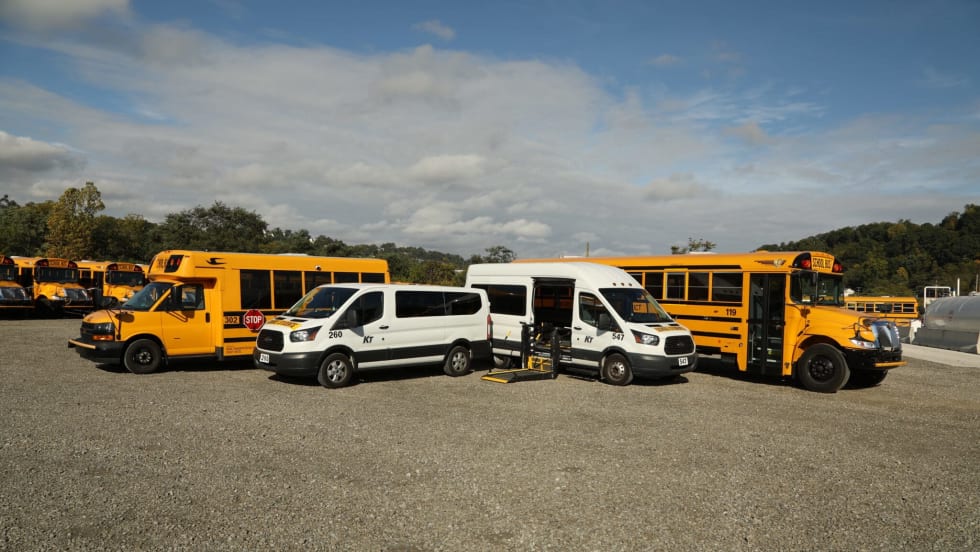
American Student Transportation Partners Acquires AJ Myers and Sons
A new deal brings a 75-year Pennsylvania student transportation provider into one of the nation’s largest private school bus contracting groups.
Read More →
What I Brought Home From SBFX: Relationships, Leadership, and Preparing What's Next
Who could lead your transportation operation tomorrow if you couldn't? Bernando Brown explores succession planning, mentorship, and preparing emerging leaders to step up.
Read More →
Inside School Bus Fleet ConneX 2026: Industry Leaders Connect in Scottsdale [Photos]
See highlights from SBFX 2026 in Arizona, where school bus operators and suppliers gathered for meetings, education, networking, awards, and more.
Read More →
School Transportation’s Biggest Pressures and Opportunities: SBFX Attendees Weigh In
School bus operators point to rising costs, staffing, and vehicle prices as immediate pressures while identifying technology, training, and routing as opportunities for growth.
Read More →
STA Acquires Sunrise Transportation
Student Transportation of America expands in Illinois and Connecticut through Sunrise's fleet of nearly 1,000 vehicles.
Read More →